waterfalls

Award-Winning Project Showcase: Turning Challenges Into Benefits

When creating this beautiful backyard retreat, the first challenge facing Deck and Patio Company’s Outdoor Living Expert, Bill Renter, was meeting the expectations of both the husband and wife: he wanted a place to take full advantage of the sun; she wanted a cool place to relax with friends.

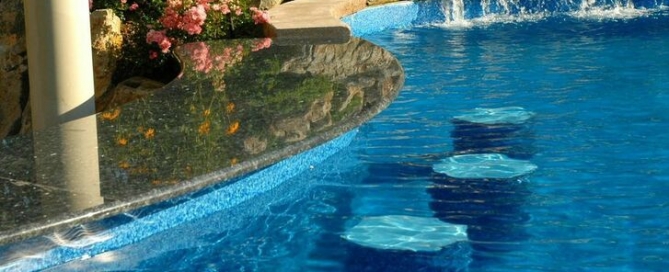
The solution was (1) to position the pool in the sun, in order to gain the most sun exposure during the day and, (2) for congregating in comfort, create a shady pergola, over a granite swim-up/walk-up bar and patio.

The second challenge was ensuring the plan would fit in the 12-foot elevation change from the rear of the home to the back of the property. To alleviate this problem, we built a multi-tiered Techo-Bloc system of patios, including a raised patio, with a wide, wrap-around stair, leading to the pool, lower patio, and a sunken swim-up-bar patio.

We did all this without using rails and fences, which would obstruct views of the natural stone waterfall and vibrant landscaping. By designing wide stairs, multi-level stone walls and generous planting beds, we were able to create a colorful buffer between the upper and lower levels.

Both husband and wife were delighted with the design, and the property’s most difficult challenge — its rising elevation — was turned into a benefit.

This project won several awards, including the prestigious Gold prize from the National Spa and Pool Institute (NSPI).


Patio Landscaping:

Patio Landscaping:

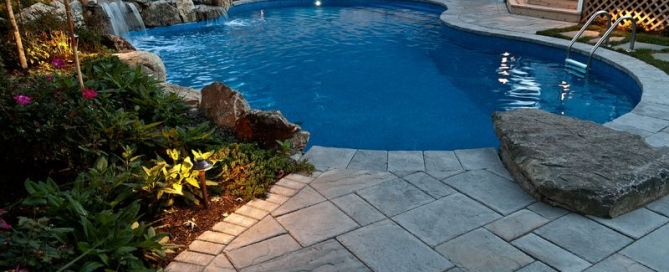
Matching steps, walls, coping and moss rock add elegant finishing touches to the Techo-Bloc patios that surround this inviting free-form vinyl pool.


Pool-Side Bar

Pool-Side Bar:

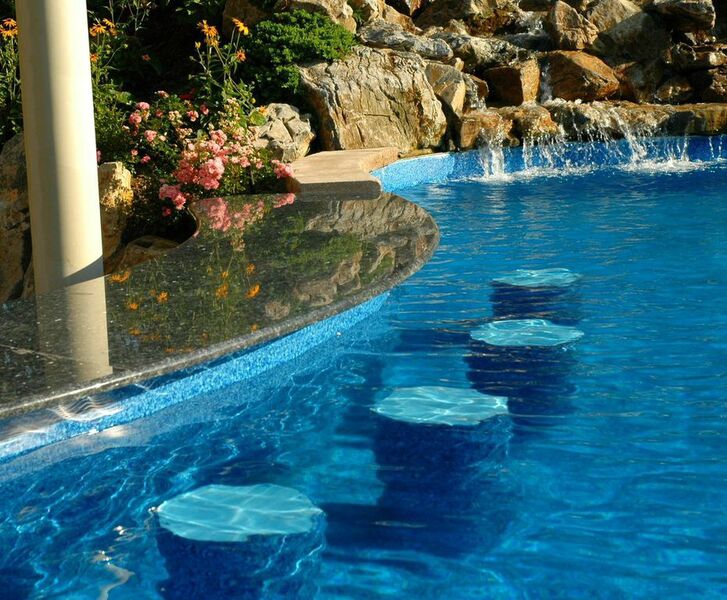
This 32-foot, U-shaped swim-up granite-topped bar, in cultured stone and rock facing, curves around to be enjoyed from patio as well.


Techo-Bloc Patios

Techo-Bloc Patios:

Techo-Bloc’s Elena/Sandlewood, with its warm gray and tan earth tones, in random sizes, creates welcoming spacious patios around new free-form vinyl pool.


Vinyl Pool Swim-Up Bar

Vinyl Pool Swim-Up Bar:

For the ultimate in outdoor socializing, guests can walk up to, or swim up to, this U-shaped bar and sit on patio or in-pool stools.

Keeping Pond Fish Safe and Healthy in Winter

Updated 11-30-23

Fall Backyard Maintenance: Along with covering your swimming pool at the end of summer, it is helpful in due course to put up pond netting to collect foliage debris; nets also offer an extra layer of safety for your pond fish by protecting them from birds and other animals.

Fall Backyard Maintenance:

If you’ve seen to fall maintenance for your pond already, you’re on your way to ensuring a safe and healthy pond in winter. By fall maintenance, we’re referring to cleaning the skimmer basket, trimming any dead or dying foliage, preparing your waterlilies for winter, etc. 

And you also need to add cold water bacteria to help keep the water clean and clear.


Getting Ready for Winter

It is a common myth that you can’t leave your pond fish outside once the cold sets in. Actually, fish do just fine during winter. That said, Deck and Patio’s own Dave Stockwell does caution to be alert. When ice covers the pond, the fish might not be getting enough oxygen.

This can be remedied as long as you give them:

  • two feet of water to swim in,
  • oxygenate the water,
  • and keep a hole in the ice with a heater, bubbler and an aerator. This allows the naturally produced gasses to escape from under the ice.

If the above efforts fail to keep it from freezing, Aquascapes Inc. designs manager suggests using a pond de-icer. “This will keep a little hole in the ice so gases can escape,” he says. “While some recommend boiling water to create an opening in frozen-over ponds, that should be discouraged. It will only ice up again quickly.“

Gronwick also says to avoid chopping or sawing the ice to open a hole. The noise and vibrations will stress out the hibernating fish to a point they could die.

That done, Mother Nature will do the rest. The fish will spend the entire winter hibernating at the bottom of the pond, or in a cave designed for this, and then will slowly wake up as the water warms in the spring.  The fish do not need to eat during this time and, in fact, shouldn’t be fed at all.  


Prepare Ponds in Fall for Winter:

Prepare Ponds in Fall for Winter:

As mentioned above, before winter sets in, fall maintenance is important. For example, carefully look over your plant material and remove dying plant material. These materials rot and build up poisonous gases that can’t escape through ice when it forms. Such conditions might mean the koi are no longer simply hibernating, but are in a dangerous state of torpor.


Pond Waterfalls in Winter: (Photo/Aquascapes Inc.)

Pond Waterfalls in Winter: (Photo/Aquascapes Inc.)

Keeping any waterfalls running during cold months helps move the water so ice doesn’t form. But if ice builds up, pond aerators can put bubbles back in the water to add oxygen for the fish.


Contented Pond Fish in Winter: (Photo/Aquascapes Inc)

Contented Pond Fish in Winter: (Photo/Aquascapes Inc)

This pond has been cleared of excessive plant material and ice does not cover over the pond so that the fish are happily hibernating.


Aquatic Plants in Winter:

Aquatic Plants in Winter:

Hardy water lilies (shown here) that float on the water’s surface and have a short blooming period can withstand the cold winter months nicely. Lotuses also can withstand the cold winter months because they bloom in summer and go dormant in winter. Note that frost kills water hyacinths; water lettuce, which fights algae, should be wintered in a warm spot that is well lighted as they will not survive in the pond over winter.


Prepare Pond Fish for Winter:

Prepare Pond Fish for Winter:

To be on the safe side, take water temperature regularly once it hits 55 or lower. If your pond jewels are hungry and moving about and you haven’t fed them, they will find something in the pond to eat and soon will be dormant anyway.


Pond Caves for Fish:

Pond Caves for Fish:

Ask your pond designer/builder to create a small cave, or caves, where the fish can hide and also lay dormant during the winter months. Caves are easily made from the way rocks are positioned in and around the pond.


If you have any questions, or require assistance in preparing your pond for winter, give us a call:

631-549-8100


How Are You Using Fall’s Harvest For Outdoor Displays?

When it comes to Fall’s bounty, Mother Nature’s harvest — rich with gorgeous plants, fruits, vegetables and even berries — is perfect for decorating yards and front door entries.

For ideas in what makes the best outdoor displays, we spoke with horticulture buyer Alison Caldwell at Hicks Nurseries (Westbury, Long Island).

“Come Fall, it’s all about hardy mums, winter pansies, and ornamental grasses such as Maiden Grass or Fountain Grass,” she says. “Also, switch grasses start to set their seed heads about now and get a great Fall color.”

Caldwell adds that grouping interesting plants together in combo planters present a bigger punch of color and interest: beauties like Montauk daisies, with their white petals and yellow centers, hardy mums (also ideal for mass plantings on their own), and ornamental peppers. Of course, cabbages and kale are great options, which she says can last all through winter, if the weather isn’t too bad.

“Changing out your petunias or other summer annuals with Fall colors offers a great welcome at your front door,” says Caldwell. “Mums are ideal for this. It’s also common for people to decorate their mail posts with corn stalks or add hay bales around.”

Other tips: wheat sheaves can look great on an entry door, pumpkins in different colors can be mounded together in a planter on the veranda, or, if you’re crafty, you can make a wreath of small gourds and autumn berries for your door.

Post (here or on Facebook) your own ideas for using Fall’s harvest to decorate outdoors.


Outdoor Decorating for Fall:

Outdoor Decorating for Fall:

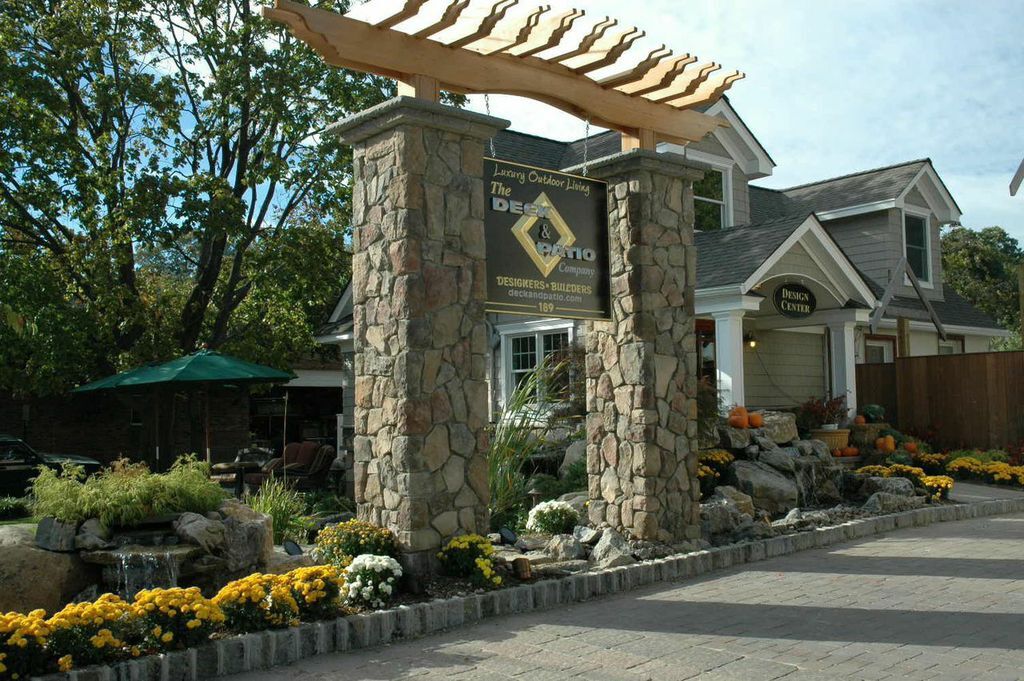
Believe it or not, the pumpkin is not a vegetable — it’s a fruit, and a berry at that! Along with hardy mums in bright yellow, at Deck and Patio’s design center in Huntington Station, we’ve added lots of these Fall “berries” for pops of bright orange.


Fall Decorating-Mums the Word: (Photo: Hicks Nurseries)

Fall Decorating-Mums the Word: (Photo: Hicks Nurseries)

At Hicks Nurseries, mums are on great display. Because of their hearty color, they catch the eye at a distance as well as close up. Consider grouping them in only one or two colors for the most impact.


Grouping Fall Plants: For this nice grouping, cabbage, deep red mums, and winter pansies make a bright, bold statement. (Photo: Hicks Nurseries)

Grouping Fall Plants: For this nice grouping, cabbage, deep red mums, and winter pansies make a bright, bold statement. (Photo: Hicks Nurseries)


Decorating for Fall:

Decorating for Fall:

Outside our design center, we have waterfalls flowing from a stream. Deck and Patio added white, yellow and orange mums along its banks. The full bush of green leaves shown at the top of the yellow mums is a marginal aquatic plant — the clump-forming Iris Versicolor.


Ornamental Peppers (Photo: Hicks Nurseries)

Ornamental Peppers (Photo: Hicks Nurseries)

Aren’t these ornamental peppers beauties! Grown for their decorative value, although edible, they are rather lacking in flavor, as are the leaves and flowers of the deep red Celosia Cristata (aka cockscomb) behind them.


Cabbage and Kale (Photo: Hicks Nurseries)

Cabbage and Kale (Photo: Hicks Nurseries)

Believed to be one of the world’s healthiest foods, kale and its looser central leaves is really cabbage that doesn’t form a head. Ornamental kale is ideal for your Fall garden; with its sister cabbage, they reach their best color when it gets cold. Note: ornamental kale isn’t quite as tasty as the supermarket kind, so best leave it in the garden.


Have a great day!

Have a great day!

Wishing everyone happy gardening from The Deck and Patio Company, Huntington Station, NY!


Closing Down Pools: What It Means to Have You Covered

With temperatures hovering close to 80 during September, summer has lingered here on Long Island. And while most have already closed their pools, a few diehards are squeezing every bit of enjoyment out of them. Most agree, however, that the time has come to close the pool down.

To the uninitiated, closing a pool takes a few steps, says Deck and Patio’s Outdoor Living Expert, Bill Renter. To get a full picture of what’s involved, our team spoke with a pool contractor who works with Bill on a regular basis — Michael Truehart, CSB, owner of True Blue Swimming Pools in Deer Park.

“In climates like the Northeast,” says Michael, “the most important reason for closing a pool is pipes and other pool equipment can freeze in cold months. Part of what we do is administer a chlorine shock, or algaecides, or phosphate remover to the pool water. Then the pool/spa equipment is taken apart and cleaned, drained of water, and underground pipes are blown out so no water can freeze in them.”

Because our changing seasons cause a lot of falling twigs and leaves especially in the Fall, a pool cover is imperative, says Michael. “We don’t recommend a plain tarp cover that sags under the weight of rain collected on it. We suggest a mesh-type cover that allows rain to seep through it. This does require another step: lowering the pool water level to about 12-18 inches below the coping. Then, as rain water seeps through the mesh cover, the pool can accommodate it.”

Our own Bill Renter adds that he finds these mesh covers, such as the Loop Loc brand, are also important to help ensure that no one gains access to the pool when it’s unsupervised. The mesh covers are very taught he explains. “A plain tarp type cover that holds water on it will collapse if a pet or child walks on it. But mesh covers, with strong straps to hold them in place, allow for water to drain through into the pool.”

“These covers are so taught, they act almost like a trampoline,” confirms Michael.


Measuring for Pool Covers

Measuring for Pool Covers:

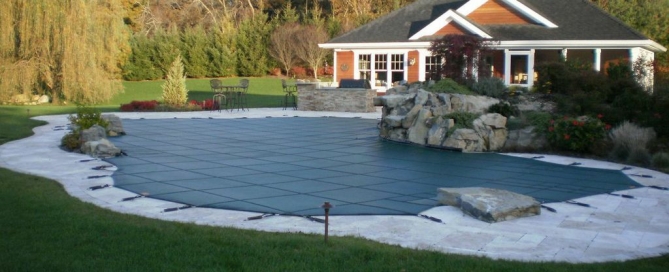
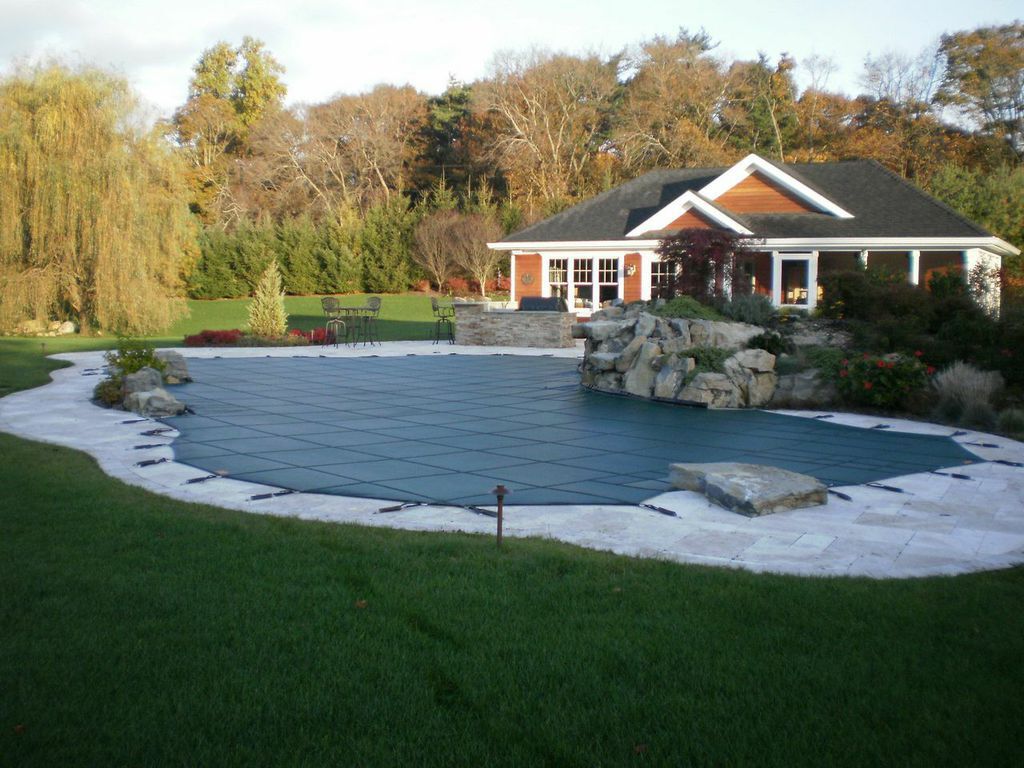
Installing and measuring a mesh pool cover that involves freeform shapes, waterfalls, etc., must be exact. A mesh cover is strong because its straps with tension springs are connected to anchors set in the patio. For this pool’s water feature area, stainless steel eyelets were drilled into rocks where a cable secures it.


 Pool/Spa Covers:


Pool/Spa Covers:

For this job, because of the number of rocks involved, a separate Loop Loc cover for the spillover spa was required. Also: installing a hose and cord under the cover permits pumping water out later should too much rain fill up the partially drained pool.


Pool Surrounds:

Pool Surrounds:

A bluestone area (with grass pepping through) forms part of this pool’s surround. In such areas where there is no hardscape to secure the necessary tension, little anchors are set into a pipe which, in turn, is set deep into the ground. To secure the pool around the grotto on the left — where the cover wraps inside it — the only way to install that was from in the pool on an inflatable raft.


Gravel Pool Surrounds

Gravel Pool Surrounds

Without strong patio masonry to grip, the pool cover straps and anchors for this pool are set in a pipe anchored into the gravel. For all these jobs, the pool contractor used “Image Loc,” a special measuring process where taking photos from several views are input into a computer which does the measuring. This system works much like forensic technology.


A Reservoir of Water — Come Rain or Come Shine

Collecting the water at the lower level of this lovely water feature (stream and waterfalls) is a pondless reservoir. The Aquascape RainXchange reservoir was designed by Deck and Patio to seemingly disappear into the gravel instead of being collected.

“Instead of an above ground pond, the stream and waterfall water is totally collected below ground. This rainwater harvesting reservoir acts as a ‘green’ maintenance-free source for the water feature that can run from March through December, 24-7,” says our Outdoor Living Expert, Bill Renter. “City water is not used. The water is harvested totally from rainfall on the roof of the house. Gravity alone collects it into pipes.”

The pondless system is also valued for safety reasons. With no above-ground collecting pond, our clients, who have three young children, preferred this system. The four-foot-high-by-eight-foot-wide waterfall spills into a large landing area, and then travels down a narrow stream, around the side of a lounging patio where it disappears behind evergreens into our pondless reservoir.

This water feature’s harvested rainwater not only supplies the stream and waterfall, but it can provide water for plants during droughts — helping to keep things green (in every sense of the word): Come rain or come shine.

Anyone watching the fabulous new reality series on NatGeo WILD — Pond Stars — will have seen this very Aquascape RainXchange system highlighted in its first episode.


Eliminating Backyard Noise Problems:

Eliminating Backyard Noise Problems:

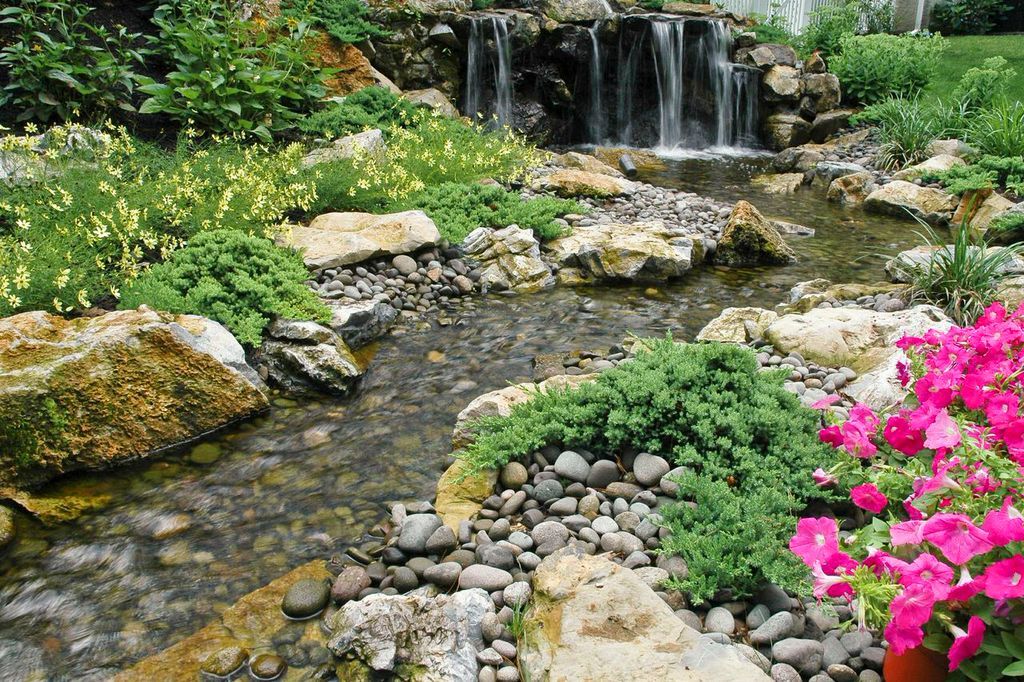
Pondless waterfalls cascading over imported moss rock boulders helps eliminates noise. Waterfall’s pristine clear water is collected at end of feature in a pondless reservoir.


Water Feature Landscaping:

Water Feature Landscaping:

Bright plantings with green ground cover and water plants, along with river stone gravel, contribute to the natural look and serenity of this setting. The feature gets winterized in December and starts up again in March. Every spring we come in to spruce up the plantings, adding perennials, annuals and mulch.


 Techo-Bloc pavers were used to make this idyllic small patio sitting area next to the water feature. Engineered in Canada, these pavers can well handle the freeze/thaw that occurs in our corner of the Northeast.

Techo-Bloc pavers were used to make this idyllic small patio sitting area next to the water feature. Engineered in Canada, these pavers can well handle the freeze/thaw that occurs in our corner of the Northeast.

Techo-Bloc pavers were used to make this idyllic small patio sitting area next to the water feature. Engineered in Canada, these pavers can well handle the freeze/thaw that occurs in our corner of the Northeast.


Backyard Wildlife Habitat:

Backyard Wildlife Habitat:

Backyard Wildlife Habitat: Because the water stored in the Aquascape RainXchange™ System is constantly moving and being aerated, it naturally becomes a sanctuary for wildlife.


Rainwater Harvesting:

Rainwater Harvesting:

This ‘green’ RainExchange process combines a decorative water feature with a completely sub-surface collection system — thereby creating a beautiful backyard oasis that is very eco-friendly.


Destination Backyard Retreat Makes a Splash

The owners of a very large property on Long Island’s North Shore asked The Deck and Patio Company to plan a new destination pool large enough for volleyball. Also, because the pool area would be a distance from the house, they wanted the ability to cook by the pool, as well as have a place to relax — bug free.

Deck and Patio’s plan included:

  • 50-foot-long and 26-foot-wide pool (approximate),
  • spillover spa, waterfalls,
  • 800-square-foot pool house with a 20-by-20 screened room and bathroom
  • elegant Travertine patio, and
  • outdoor kitchen with natural stone facade
  • outdoor shower.

However, our comprehensive plan came in way over budget for the clients. They declined our bid and sought estimates elsewhere. We were thrilled when they came back to us, because, in the end, they loved our ideas. Their judgment must have been right, since the completed project won a 2010 International Silver Pool Award from the Association of Pool & Spa Professionals (APSP) the very next year after winning a 2009 Bronze Pool Award from the Northeast Spa & Pool Association (NESPA).

When designing the pool house, our Outdoor Living Expert, Bill Renter, consulted with a good friend and architect, James DeLuca. Their collaborative effort inspired a building that is in keeping with their home’s overall elegance,which inspired the reverse gable.

Bill Renter also worked with Outdoor Lighting Perspectives to create the stunning nighttime scenes.


Pool House:

Pool House:

This pool house boasts two 20-by-20-rooms: one great room with sofa, flat screen television, refrigerator, washer/dryer, and storage closet; the other is a 20-by-20 room with screens on two sides where they can enjoy nights by the pool without pesky insects.


Destination Pool

Destination Pool:

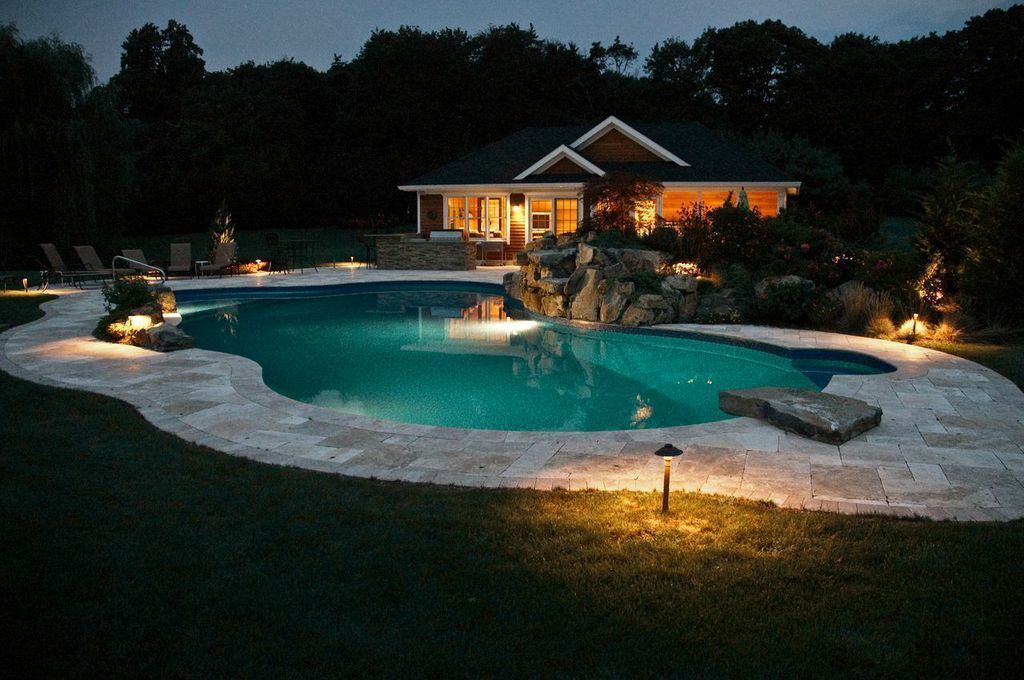
At night, the destination pool area is as romantic as it is serene. It is an idyllic spot for parties that begin in the day and continue long into the night.


Pool House

Pool House:

An expanse of cedar planks allows for drama and a clean natural look inside the pool house.


Vinyl Pool:

Vinyl Pool:

With concrete wall and a vinyl liner, the approximately 50’-long-and-26’-wide pool offers a spillover spa, tanning shelf, volleyball court, diving rock and moss rock waterfall.


Outdoor Kitchen

Outdoor Kitchen:

The outdoor kitchen (and indoor bathroom) required a second septic system to support such amenities as a kitchen sink, built-in barbecue, storage, and small refrigerator. A real stone veneer adds natural elegance.


Backyard Sanctuary Offers No Hint of Hi Tech Underpinnings

Incorporating the latest outdoor living technology, beautifully hidden in natural surroundings, is one of my passions,” says Deck and Patio’s Outdoor Living Expert, Bill Renter.

That passion is vividly expressed in this backyard sanctuary comprised of a new in-ground vinyl-lined pool, large patio area, outdoor kitchen, outdoor shower, fire pit, two streams and two waterfalls.

Its first, and most challenging, major hi tech component is an automatic pool cover attached to the vinyl free-form pool. These covers are difficult to attach to the free-form pool style and shape. In fact, previously, the homeowners were told it wasn’t possible to do so.

“We were glad to assure them that we could bring together all the expertise necessary to design and build it all,” adds Renter. “And when not in use, the cover retracts out of sight.”

Other technology: To heat the pool, we added a hybrid system that uses both a gas heater and an electric heat pump. The heat pump acts like a reverse air conditioner, pulling in warmth from the air and transferring it into the pool. This design not only adds heat taken from the air — and not from electricity — but the gas heater can act as back up when the air temperature is very low or when creating heat more quickly is required.

The “variable speed pump” Deck and Patio used is an extremely efficient pump that allows low energy use by slowing down the motor dramatically. It decreases the amount of energy the pump uses. It can run twenty-four-seven much more efficiently than others pumps that are used only a few hours a day.


Backyard Sanctuary:

Backyard Sanctuary:

This serene backyard sanctuary gives no hint of high-tech energy-efficient components supporting it all. Our biggest challenge was creating a four-inch ledge around pool which secures closed pool cover.


Hi Tech Pools:

Hi Tech Pools:

The gentle sounds of two streams leading to two separate waterfalls, as well as the splash of jet sprays, screen out any sounds from high-tech pool equipment. Outdoor shower stands at base of stepping stone pathway (right) that leads up to pool equipment.


Hiding Pool Equipment:

Hiding Pool Equipment:

High-tech pool equipment is well hidden behind berm, at end of the stepping stone path.


Automatic Pool Cover:

Automatic Pool Cover:

Automatic pool cover, when closed, supports clients’ young children should they walk on it unsupervised. This particular ‘rigid slated plastic’ pool cover, however, had never been fitted to this type of pool in this part of the world before.


Automatic Pool Cover:

Automatic Pool Cover:

Pool covers reduce evaporation of water — thereby reducing the chemical usage required. Because automated pool cover is so easy to use, it is more likely to be closed when not in use — increasing energy-efficiency as well as safety.


Outdoor Kitchen:

Outdoor Kitchen:

The mechanics of this outdoor kitchen’s amenities are hidden handsomely within a work station with stone facade; outdoor kitchen includes ample work area, barbecue, sink, refrigerator and eating bar with bar stools.


Are You Afraid to Keep Koi in Your Pond?

When a pond water feature is well designed and built, koi will naturally help balance the entire pond ecosystem. However, many pond owners fear that the fish will be harmed or will not survive.

Deck and Patio’s Outdoor Living Expert, Bill Renter, offers encouragement: “While it’s true that koi can be tempting to cats, raccoons, and herons, etc., there are precautions one can take that will mitigate these threats.”

For example, adding koi castles and tunnels at the bottom of the pond will give fish a safe place to hide from many predators. Also, including rock overhangs around the outside of the pond, which first and foremost will make any pond appear more natural, also discourages cats and raccoons from reaching into the water after the fish.

In addition, planning a water feature with sufficient water depth can dissuade raccoons and cats further, since neither enjoy swimming to get their dinner. Plus deeper water at the edges (more than 18” deep) discourages heron wading. Another helpful idea is adding a waterfall feature. The continuous movement of its water, or even water from nearby sprinklers, we have found will put off many avian predators.

Other precautions koi pond owners can take is including scarecrows, such as owl statues. In the end, if all else fails, a netting can always be installed over the pond.

Here’s some of The Deck and Patio’s favorite award-winning pond features. And, yes, even if not picked up in the pictures, there’s koi in each and every one.


Pond Ecosystems:

Pond Ecosystems:

Koi is a healthy part of this pond’s natural ecosystem; they have lots of room to hide as well as swim. There are also plenty of rock overhangs to discourage predators.


Reflecting Pond:

Reflecting Pond:

The homeowner wanted to accentuate the beautiful 1880 stone bridge structure with a reflecting pond. To allow the entire stone gazebo to reflect in the water, the pond had to be more than 250 feet long and 45 feet wide. This created the perfect habitat for koi. Lots of flowing water, rock overhangs, and lots of space to hide.


Natural Ponds:

Natural Ponds:

When creating a new pond, we consider each rock’s form, texture, shape and height. In addition, incorporating such finishing touches as plant material and gravel helps it appear as if it was created naturally.


Where to Position Ponds:

Where to Position Ponds:

We always look over the property for any new pond — both from inside and outdoors — in order to place the pond in the perfect location. Since in the northeast, we spend more time indoors that in our yards, it is essential to see, and perhaps hear, any water feature from key indoor locations.


Pond Water Movement:

Pond Water Movement:

Having the force of moving water into your pond is not only an aesthetic choice, but will deter many natural koi predators. Also —even if it comes from nearby sprinklers — pond water movement helps keep the pond ecosystem healthy by eliminating stagnation.


Creating Backyard Retreats: Size Doesn’t Matter

Feeling like you can’t have a backyard oasis because you don’t have enough room? Here’s some good news. The Deck and Patio Company works a good deal in parts of Long Island, NY, where backyards are often small. And one thing our Outdoor Living Expert, Bill Renter, enjoys most is surprising homeowners with what can be accomplished.

Some yards are seemingly so cramped that families rarely use them. In hot weather, some live indoors. Discovering much more was possible than they originally thought, the wife for this project worked closely with Bill Renter and the pool builder to design their new pool’s shape, which wraps around close to the house, almost into its corner. The design required variances, but it allowed Deck and Patio to fit in an expansive two-level patio, a raised spa, two waterfalls, a stepping stone path, and beautiful lush plantings — in other words: a true oasis.

When working with tighter spaces, our team ensures the chaise lounge, dining and outdoor kitchen patio areas are all large enough for furniture, and have room enough to walk around, sufficient even when entertaining. We also try not to over-build or paver the whole space. It is also important to leave room for plantings and lawn, add landscape-lighting, and make sure the overall project looks interesting, by designing curvy or geometric patterns.

There’s no need to feel because you don’t have a large yard, you can’t have your own bit of paradise. It just takes a little creativity.


Patio Design:

Patio Design:

Instead of one-sized brick being placed throughout an entire patio or retaining wall, we recommend attractive designs: this project’s random pattern is in lieu of straight lines, flat images, or a running block pattern. Also, manufacturers often offer a wide list of product materials, so matching stones are readily available for complementary retaining walls, steps, risers, pool coping, etc.


Limited Backyard Space:

Limited Backyard Space:

Manipulating the grades by adding different levels (upper and lower patios, raised spa. etc.) is one of the things we do to create a larger sense of space. Such gradations are not only attractive and spatially functional, but, when done correctly, they can make smaller yards appear considerably more expansive.


Family Spa:

Family Spa:

True Blue Swimming Pools worked with Deck and Patio to build this vinyl pool and spa for our clients. The clients’ children use the spa all the time; after enjoying the pool, if they get a chill, they go to the spa with their friends. In fact we’re told everyone retreats to the spa after swimming. Go into there w/friends. On chilly days, even though the pool is heated, they say in the spa on.


Pool Lighting:

Pool Lighting:

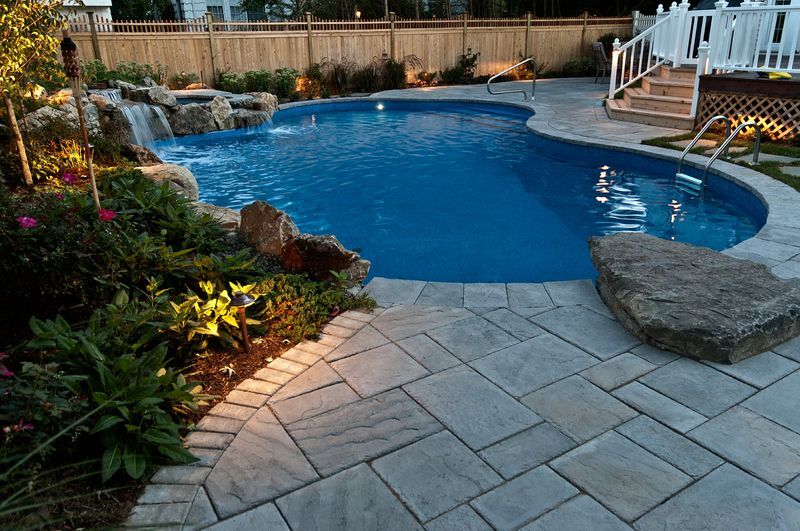
In the ‘gloaming,’ as a poet described ‘twilight,’ is a beautiful time of day to enjoy a new pool. Outdoor lighting glows warmly — like the sun’s final rays as it drops below the horizon. Artful lighting generates the first tranquil water reflections of the evening and continues to sketch nightfall with romantic hues.


Waterfalls:

Waterfalls:

Every stone and moss rock boulder was chosen carefully to create the most natural looking waterfall possible. The water spills are coaxed over them causing flows of water just like in nature.


When Should Your Landscaper and Architect Begin Working Together?

The simple answer to ‘when should your landscaper and architect begin working together’ is: from the start.

This Deck and Patio backyard oasis is a good example of that wisdom. Having garnered two prestigious awards for our firm, we believe such accolades are partially due to our early collaboration with the architect and builder in the planning stages. Working hand-in-hand with them, and with the owners, both the home’s architecture and the outdoor landscape became one seamless integration.

Our outdoor living expert, Bill Renter, supervised and helped plan and execute the project which included the landscape’s seven-foot-high cascading waterfall, meandering stream with three-foot-high “sheetfalling” waterfall, and two-foot-high spillway from the spa into the pool. Initial plans by the project’s architect for the house’s turret inspired our team to create curves in the backyard’s multi-level terracing design, as well as in the backyard’s centerpiece: a glorious freeform pool and spa.

In fact, the architect changed his own plans for the home’s turret so that views from inside the turret of our planned pool area oasis could be fully appreciated. In reference to this, the architect said, “Deck and Patio’s landscaping plan was so beautiful that the windows had to be larger to fully appreciate the view. Now, when you stand inside the bay of the turret, it is just like standing in the backyard.”


Design/Build Collaboration:

Design/Build Collaboration:

Our collaboration with the architect and builder resulted in a seamless integration of landscape and nature with the architecture of the new house.


Design/Build Creativity:

Design/Build Creativity:

Our design and planning team also took into account what the view would be from inside the house as well as outside. For example, the eight-foot-high pondless waterfall can also be seen from inside. It is not just a beautiful focal point; it hides the pool equipment that local regulations require be put in the middle of the backyard.


Harmony in Landscaping and Architecture:

Harmony in Landscaping and Architecture:

The project’s patios and driveway, made of stunning natural earth-tone concrete tumbled pavers, were created by Bill Renter to appear as extensions of the geometric patterns and hues of the home’s Glen Gary brick.


Backyard Waterfalls:

Backyard Waterfalls:

The waterfall is powered by a 10,000 GPH pump and is center-lined on the main axis of the house. It creates an enjoyable audio-visual impact which runs virtually year-round and can be enjoyed both day and night.


Design/Build Town Permits:

Design/Build Town Permits:

Being able to use our 3-D animation program before the Town’s architectural review board was an enormous help in explaining our detailed plans.The Town board was in awe of what we showed them. This aided in getting the permit granted, and is one of the reasons all our permits were approved in a fairly timely fashion.


Go to Top