Updating Landscape

Coming ‘Back Down to Earth’ for Earth Day 2016

Earth Day is once again upon us. And isn’t it heartening that so many countries and citizens around the world will be considering the needs of our planet at the same time? One of the special celebrations taking place this year on Earth Day (April 22)  is the signing ceremony for the international Paris Agreement on Climate Change, which many agree is a step in the right direction for safeguarding our shared home.

But Earth Day is also celebrated each and every day  — a ‘coming back down to earth’ so to speak — where individuals and communities regularly act in useful and practical ways to nourish their own corners of Mother Earth. Some are diligent about recycling, others capture rainwater for irrigation, still others install solar panels, or use organic fertilizers.

For Deck and Patio, protecting the earth is a priority as we create beautiful outdoor living spaces. Indeed, we specialize in helping clients design/build outdoor amenities that are as eco-friendly as they are enchanting. In some cases, these not only do no harm to the local environment, but the projects actually help to improve it.

Aquascape RainXchange Reservoirs

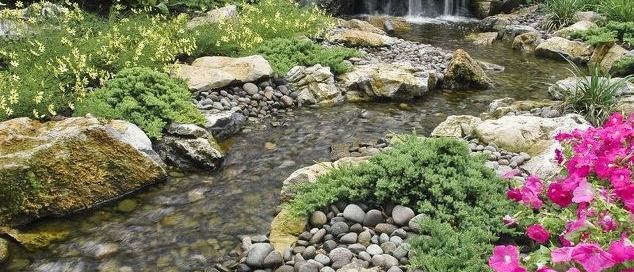
As Certified Aquascape Contractors, Deck and Patio strives not to only make serene water features look natural, but also be natural. One way we do this is by using an Aquascape RainXchange reservoir. The reservoir, which stores water underground to be recirculated, can be used as part of a “pond-less” water feature system. Instead of falling into a pond, the flow from waterfalls and streams seemingly disappears into gravel, where it is filtered, and eventually recirculated. (Examples: see first two photos below)


Pristine Water Features:

Pristine Water Features:

This “pond-less” waterfall and stream was installed with all Aquascape Inc. components, so it is eco-friendly: the water is kept clean and healthy without the use of any chemicals.


Eco-Friendly Water Features:

Eco-Friendly Water Features:

For this “pond-less” waterfall and stream, the water required to keep it topped off and refreshed is harvested from the roof of the clients’ house. “Such a water feature is run entirely without using city water,” says Dave Stockwell, owner of Deck and Patio. “It acts as a ‘green’ maintenance-free source that operates daily March through December. “And any excess harvested rainwater can be used for irrigation of the property.”

Environmentally-Friendly Backyard Ponds

Backyard ponds with waterfalls and streams can also be created in eco-friendly ways so they not only do no harm, but also help improve the environment. Fish ponds, for example, naturally attract — and provide a haven for — other wildlife that children (as well as adults) love: frogs, salamanders, song birds, etc.

Of course, all these creatures are delightful to watch and listen to. More than that, their presence offer natural ways to a healthier environment. Frogs eat algae in the water which contributes to keeping the water clean; adult toads aid in controlling insects, as do the birds the water attracts; and the koi, which are so much fun to feed, eat any mosquito larva that might develop.


Healthy Pond Eco-Systems:

Healthy Pond Eco-Systems:

It is essential to choose the right stones and gravel (which provide the correct ph value for fish and plants), in order to keep a pond healthy in a natural way. For this project, we also planted a beautiful Japanese maple that shades the pondscape’s bridge; bright red geraniums add a strong burst of color (bottom right of photo.)


Public Sustainable Water Feature:

Public Sustainable Water Feature:

Not all sustainable water feature projects are for private use. Deck and Patio created this stream and waterfall spot in cooperation with the Town of Huntington (Long Island) where we installed it with a paver pathway at the area train station parking lot. The pathway is made of permeable pavers by Techo-Bloc, which were put over gravel and a rubber liner, which capture and filter the path’s rainwater runoff before it reaches the underground Aquascape Inc. reservoir installed at the end of the stream.


Public Sustainable Water Feature:

Public Sustainable Water Feature:

There is enough captured water at this train station water feature to not only sustain itself, but to also irrigate all the plantings around the water feature. Plus, this eco-friendly system keeps any non-filtered rainwater from going into the Town’s sewer system and on into beautiful Huntington Bay.


Day 2016 coincides with the signing ceremony for the Paris Agreement on Climate Change. Photo from WMO.

Day 2016 coincides with the signing ceremony for the Paris Agreement on Climate Change. Photo from WMO.


This is the second of a two-part series in honor of Earth Day 2016 (April 22nd). 


Earth Day 2016: Attracting Butterflies to Home Gardens


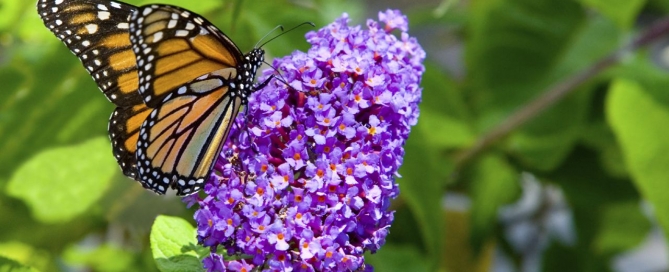
Monarch Butterfly

Monarch Butterfly

As landscapers, Deck and Patio’s team is frequently asked by homeowners to plant flowers that will attack butterflies. Yet even we were surprised at how widespread the desire for butterfly gardens has become.

In speaking recently with our friends at Hicks Nurseries, in Westbury, we learned that they have seen a huge spike in the purchase of pollinator-friendly plants, as well as a large uptick in the size of audiences attending seminars on the subject.

“Those interested are outdoor people, who traditionally enjoyed creating gardens that brought in birds to feeders and provided opportunities to watch butterflies,” says Caldwell. “More and more, however, we’re seeing a desire to create safe havens for butterflies, as well as other pollinators, including bees and hummingbirds.”

Caldwell says the growing awareness in how pesticides has affected the pollinator populations has helped stir this awakening. “Butterflies and other animal groups are having trouble with repopulation because it is so hard for them to find pure food sources. Butterflies, for example, often use too much energy hunting for food.

“It’s also key to create a safe habitat for their caterpillars. Some herbs are ideal for that; Dill and Dutchman’s Pipe, for example, not only provide caterpillars food, but also protective cover before they turn into butterflies.”

Organic gardening and environmentally-friendly lawn care products go hand-in-hand with protecting and attracting the pollinators, Caldwell adds. Dave Stockwell, owner of Deck and Patio, agrees.

“Earth-friendly lawn and plant care is very possible,” he says. “It isn’t essential to go for a fast kill of plant disease and pests. In doing that, you might also hurt helpful organisms in the process. Heavy use of toxic chemicals are also dangerous to pets and children. It is much healthier to control them — and protect butterflies and other pollinators in the process — through a more organic approach.”

As for ideal food, tubular-shaped plants or “Umbrels” provide a wonderful sanctuary for butterflies. “These give them a landing plant filled with nectar just waiting for them,” says Caldwell. She also suggests a seasonal approach that not only provides multi-seasonal color in gardens, but extra months of safe, bountiful habitats.

“In spring, you can plant Columbine, Bachelor Buttons, Bleeding Hearts, and Dianthus, for example. In summer, there’s 30-40 plants to choose from, including Black Eyed Susan, Butterfly Weed, Butterfly Bush to name just a few. In fall, there’s Sedums, Joe Pye Weed, Asters, and Golden Rod.”


Butterflies will get plenty of moisture from droplets left from sprinklers, morning dew, etc. “However, they do seem to love oranges, not only for food, but to quench their thirst,” says Caldwell. Note: To keep ants away from the fruit, put the slice on a smaller dish and insert it into a larger one with water. Also, cut fresh slices into the fruit every day.

“We were delighted to learn that so many Long Islanders are helping, in their own quiet way, to help the environment” says Dave Stockwell. “They’re celebrating Earth Day, every day, by creating safe, beautiful habitats for butterflies and other pollinators.”


Butterfly Bush (Photo: Hicks Nurseries)

Butterfly Bush (Photo: Hicks Nurseries)

As the name implies, Butterfly Bush is a great choice for attracting butterflies in the summer. “They can reach up to 6-8 feet in height,” says Caldwell. “They’re fast growing and don’t need a lot of care.”


Lavender and Butterflies:

Lavender and Butterflies:

Dave Stockwell (Deck and Patio) says that Lavender (shown here) is another plant butterflies love. “It also gives off a calming peaceful scent. There are several types of lavender that bloom at different times — so you can have its perfume from spring nearly through fall.”


Black Eyed Susans (Photo: Hicks Nurseries):

Black Eyed Susans (Photo: Hicks Nurseries):

Great for attracting butterflies, these biennials are also a haven for other pollinators like bees. Their bright yellow petals and dark centers can’t help but make you smile.


Earth Day 2016 Earth Day coincides with the signing ceremony for the Paris Agreement on Climate Change. Photo from WMO

Earth Day 2016 Earth Day coincides with the signing ceremony for the Paris Agreement on Climate Change. Photo from WMO

This is the first of a two-part series in honor of Earth Day 2016 (April 22nd). Next week, our blog will cover sustainable water features and rainwater harvesting. 


Geometric Swimming Pools: The Shapes of Things to Come

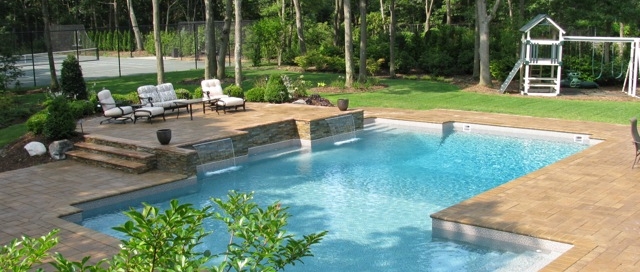
In recent years there has been a growing re-appreciation of swimming pools in a geometric design (straight lines, triangles, circles, or similar regular shapes) and this trend is predicted to continue well beyond 2016.

The reasons for the renewed appreciation could be that “geometrically” shaped pools are sleeker and more contemporary than freeform pools. They also are more traditional and, therefore, suggest permanency — a comforting image in times of rapid change.

Perhaps an even bigger factor is that today’s pool builders can incorporate deluxe features in any pool design, e.g., baja or tanning shelves, waterfalls, beach or sloping entries, swim out steps, in-water ledges and spas, providing extra interest to plain geometric shapes.

In the first two photos below, Deck and Patio’s Marc Wiener worked with Michael Truehart of True Blue Swimming Pools to create a sleek and elegant modern geometric design. Indeed, the completed pool won a Gold medal from the Association of Pool and Spa Professionals’ (APSP) International Awards of Excellence Program.

However, despite geometric design’s simplicity, these pools are not simple to build.

“With freeform pools, there really is no right or wrong,” says Truehart. “But with parallel and perpendicular angles, geometric designs have to be exact. Plus, vinyl liners, which are so popular today, these are measured and cut by computer and require that everything be on the money.”


Geometric Salt Water Pool and Surround:

Geometric Salt Water Pool and Surround:

Deck and Patio’s Marc Wiener’s chose sandy-hued Techo-Bloc pavers to harmonize with the ‘Sand Pebble’ vinyl pool liner by Loop-Loc installed by True Blue Swimming Pools. (Photo: True Blue Pools)


Geometric Salt Water Pool Amenities:

Geometric Salt Water Pool Amenities:

This same salt-water pool includes a generous amount of interesting corners and notch-outs, a “cuddle cove” in between two sheer descent waterfalls, and clean-lined pool steps at each end (swim-outs at the deep end). (Photo: True Blue Pools)


Roman Ell Geometric Pool:

Roman Ell Geometric Pool:

True Blue Swimming Pools also built this lovely geometric pool in a Roman Ell shape with a long shallow and full deep end. It is also a vinyl pool with a liner by Loop-Loc; Also note the Wild Ride water slide by Interfab. The pool boasts a Cambridge Ledgestone XL paver surround/patio and sheer descent waterfalls. (Photo: True Blue Pools)


Geometric Pool with Seating Ledge:

Geometric Pool with Seating Ledge:

Deck and Patio’s design for this sleek vinyl pool included an in-pool seating ledge and swim-out steps. Vinyl refers to the method used to line the pool’s interior. Its base construction, however, is the same as any other. The pool surround/patio was created in a warm chestnut-hued random pattern using Cambridge pavers.


In-pool Hot Tubs:

In-pool Hot Tubs:

Another trend in pool design is to make the spa or hot tub disappear within the pool. For these Deck and Patio clients, such an option wasn’t just for beauty. With young children, for safety reasons they wanted an automatic cover that would overlay both bodies of water; special automation also allows them to isolate the spa and heat only the spa water.


Geometric Pool with Landscaping:

Geometric Pool with Landscaping:

The steps Deck and Patio installed just above the far end of the pool are part of a natural retaining wall of boulders; they lead to a delightfully landscaped wilderness where pool equipment has been artfully hid. Pool includes sheer descent waterfalls and is surrounded by a patio with complementary random geometric patterns.


Landscaping Trends 2024: The Benefits of Harvesting Rainwater

Updated 1-4-24

Living in the northeast, we don’t usually experience a shortage of rain. So why bother harvesting rainwater you might ask? 

Major Benefits to Rainwater Harvesting

Major Benefits to Rainwater Harvesting

As the Washington Post reminded us this week in their report, capturing rainwater isn’t just about saving water for potential droughts. Capturing rainwater — and using it for tasks such as watering the garden or landscape, topping off water features, washing the car, etc. — has some major benefits that should be very dear to the hearts of Long Islanders.

When rainwater rushes along our roads and byways into sewers, it picks up contaminants along the way. By the time it makes it to our waterways, The rainwater is not healthy and is deposited where swimming, surfing, boating and other water sports are a passion for many. 

But when homeowners capture and use rainwater, it stops a lot of that runoff from flooding or carrying pollutants into natural bodies of water, says the Washington Post. This helps avoid flooding as well.’


Average Homeowner Water Use


Rainwater will not soak into asphalt or concrete.

Rainwater will not soak into asphalt or concrete.

Did you know that according to statistics the “average” homeowner uses approximately 3,000 gallons of water weekly with about 70% used outdoors?

And have you considered that freely available rainwater does not soak into asphalt and concrete for us to capture, but, instead, flows away, picking up contaminants as it goes, on into over-burdened sewer systems (and hence on into our area waterways)?

Well, this runoff is not just water over the dam, if it highlights how valuable rainwater is to us as an, albeit, neglected, but available precious resource. The trick is: how to keep the rain where it falls to be reused.


Rain Runoff: Instead of being just runoff like pictured here, the trick is to capture rain where it falls to be reused.

Rain Runoff: Instead of being just runoff as pictured here, the trick is to capture rain where it falls to be reused.


# 3 insertHarvesting rainwater is not a new idea. People have been collecting it for generations, frequently storing it in rain barrels.

And this is still a viable method. But there’s a lot more that can be done with falling rain than saving small amounts in unattractive above-ground  containers.


Healthy Ecosystems:

Healthy Ecosystems:

Through our Rainwater Harvesting Group, Deck and Patio specializes in installing rainwater harvesting systems that capture rainwater as part of a complete self-sustaining eco-system.


Beautiful Backyard Water Features:

Beautiful Backyard Water Features:

Captured, filtered and recirculated rainwater, in sufficient amounts to supply attractive water features, work together with carefully chosen plants, fish, rocks and gravel, to maintain a balanced system for long-term sustainability.


Rainwater Harvesting:

Rainwater Harvesting:

Using Aquascape’s RainXchange, and sometimes permeable pavers as pictured here, today’s rainwater harvesting systems capture sufficient rainwater to also wash your car and/or hose down the deck and patio. And when you consider that  local Long island water companies frequently charge an incremental rate, based on the amount of water used, capturing all the non-ingestive water you need from rainfall, the lower your rate will be.


Harvesting Rainwater Roof Runoff:

Harvesting Rainwater Roof Runoff:

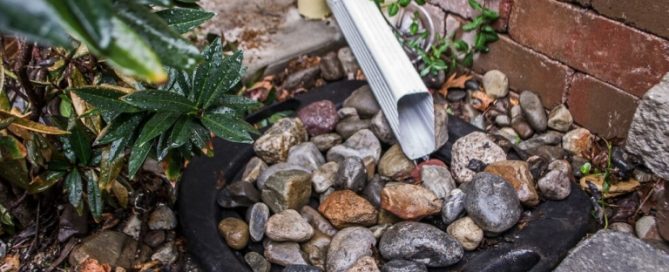
For this project, four downspouts collects about three quarters of the clients’ roof runoff, which goes through containers with filters to screen out twigs and small debris before sending the rainwater down into the reservoir for reuse in irrigation and to top off a backyard pond when needed.


Backyard Wildlife Refuge:

Backyard Wildlife Refuge:

This water feature by Deck and Patio includes a stream and multiple waterfalls — all recirculated through the same RainXchange water collection system. City water is not used. Such a feature attracts desirable wildlife such as frogs, butterflies, birds etc. creating one’s own wildlife refuge.


Fall/Winter Garden Color for Long Island and the Northeast


Did you know that even during winter northeastern gardens can be full of color and interest? Have you spied any of the gorgeous berries blossoming right now around Long Island?

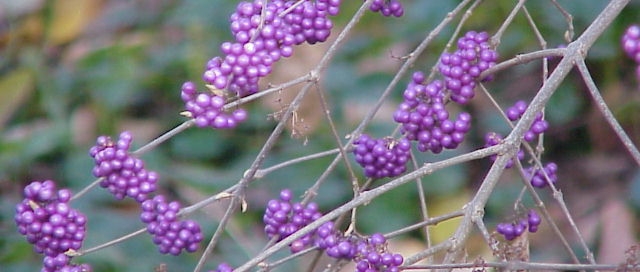
For example, Callicarpa bodinieri, aka “Beautyberry,”  is one of Mother Nature’s delights that thrive locally and is offering lovely color right now (see large feature image above). This ‘beauty’ not only makes a sublime colorful statement in fall, but the berries remain through winter.
To obtain a comprehensive list of what will lift winter doldrums with outdoor color and texture, Deck and Patio spoke with Sandra Vutaggio, Horticulture Consultant at the Cornell Cooperative Extension in Riverhead, NY. She shared a substantial list of choices that will provide either bark interest, colorful berries/seedheads, late-season foliage, flowers or evergreen (see list below).

Some of the listed flora actually fit under multiple categories: Skimmia, for example, offers crimson-red berry interest in fall and winter, and also bright white flowers in spring.

“Deciduous plants like Oakleaf Hydrangea have late season foliage and later offer nice bark in winter,” says Vutaggio.

“All on the list grow well in the northeast, although some can be a little fussy. The Skimmia are an example of those that are a little temperamental and harder to grow. Camellias, which thrive much further south, can be marginally hardy, if planted in a good protected spot where they will get a wind break; then they’ll do fine on Long Island.”

Vutaggio adds that any winter interest in the garden should include some evergreens because they will be the backdrop to anything else that you plant.

Other Tips from Vutaggio:

For perennials — e.g., Hellebore (listed under Flowers) and Rudbeckia (under Seeds): if instead of cutting them down you leave them planted, they provide interest amid snow; the Rudbeckia will provide seed heads which will draw birds to them during winter.

You can still get perennials into the ground right now, but for the larger trees and shrubs, you should wait until early spring until the ground is workable to give them time to grow roots and adjust to your property.

Trees like the Crepe Myrtle, which offer beautiful pink spring flowers and, in fall, finish flowering when the leaves pod up into pretty berries, also provide interesting bark color in winter. More on Crepe Myrtle: https://deckandpatio-uz5hx1gru4.live-website.com/for-fiery-fall-foliage-are-you-barking-up-the-right-trees/

Evergreens of all shapes, sizes and variegation add winter interest. Many junipers turn a bronze/purple in the winter as well. Just google the names on the following list to discover all the wonderful options available for winter color and interest.


Cornell Coop Ext List jpeg


Callicarpa (or Beautyberry):

The beautiful purple berries of the Callicarpa begin in fall and last through winter. Photo: Missouri Botanical Garden


Crepe Myrtle:

Crepe Myrtle:

Thriving on Long Island and the northeast, the Crepe Myrtle brings delicate clusters of pink blossoms in late spring (shown behind waterfall); in fall, it offers bright red-orange leaves and in winter interesting bark. Photo: With Permission: Southern Lagniappe)


Skimmia:

Skimmia:

These evergreen shrubs sport bright green leaves and, in spring, bring vibrant white flowers; in fall, they offer up crimson red fruits (berries) that last all through winter and are especially fine in December. In fact, they make great Christmas or Thanksgiving hostess gifts as they are slow growers that are ideal starting out in pots and containers.  Photo Credit: Musical Linguist at the English language Wikipedia


Rainwater Harvesting: Savings from a Rainy Day

Have you ever considered that one way you can save for a rainy day is by saving water from a rainy day? Depending on the municipality that supplies your water and how much water you need for irrigation, etc., capturing rainwater can significantly reduce water bills.

With over 1/2-acre of wooded gardens, these homeowners had a well that operated a sprinkler system. It maintained their vegetable garden along with their entire property’s landscape. After the well stopped working, they asked us to provide another way to irrigate it all without using city water. In addition, they wanted a playground beside a pond, with waterfalls and stream. They hoped captured rainwater would help maintain these as well.

The Rainwater Harvesting System

The system we installed provides two ways to capture all the necessary rainwater. First, water from the roof is collected and sent to an underground 1,000-gallon reservoir. Because the clients also needed a new patio, this presented the ideal opportunity to use “permeable” pavers that collect water underneath what is now a new 1,000-square-foot patio.

Challenges

The home is located in an historic area in central Brooklyn, so all changes to the property and home had to be approved by the local historical society. Also, the property sloped and we needed a series of perforated pipe and bulkhead fittings to get all of the water to flow the correct way. Lastly, the New York City location made for difficult logistics. Excavated materials going out and truck loads of new material coming in was complicated, and we heard many beeping horns.

Results

With the Aquascape RainXchange rainwater harvesting system, 100% of their irrigation water comes from what falls from the roof and onto the patio. At any given time, there is now about 1,000 gallons of water in the reservoir and about an equal amount of water underneath their permeable pavers. In addition, we installed an automatic valve; when the water gets low in their new pond, waterfalls or stream, water in the irrigation system flows in and replenishes them.


Installing Rainwater Harvesting Systems:

Installing Rainwater Harvesting Systems:

The site was pitched the wrong way which made it difficult to get roof water, and water from the permeable pavement, to the 1,000 gallon reservoir. There was also a large pergola with a 30-year-old-grape vine right next to the reservoir that could not be damaged. The peaceful scene of the patio and its surroundings gives no hint of the work involved and the underground systems supporting it all.


Capturing Roof Rainwater:

Capturing Roof Rainwater:

Four downspouts collects about three quarters of the clients’ roof runoff, which goes through containers with filters to screen out twigs and small debris before sending the rainwater down into the reservoir.


Permeable Pavers:

Permeable Pavers:

Voids between the pavers are filled with crushed stone; when rain passes through the pavers’ joint spaces, it flows down into an underneath layer of bluestone gravel and about an inch of crushed stone which filters the water. Under all that, a liner captures the rainwater, and it is pitched so it pushes water towards the underground reservoir.


Rainwater Harvesting Process:

Rainwater Harvesting Process:

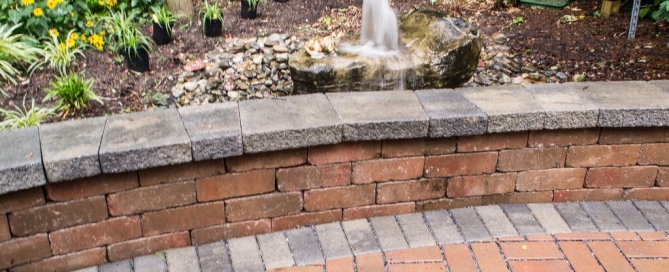
Just off the patio, a bubbling rock, which aerates and cleans the water, is connected to the reservoir system and pumps the water through the gravel to clear out impurities. That pump is hooked up to a high-pressure booster pump which operates the irrigation system for the yard.


Backyard Waterfalls and Stream:

Backyard Waterfalls and Stream:

When water gets low in the clients’ water feature, harvested rainwater in the irrigation system replenishes them.


Aquascape RainXchange™ Harvesting Systems:

Aquascape RainXchange™ Harvesting Systems:

Aquascape’s systems are a revolutionary design that combines a recirculating decorative water feature — like the bubbling rock we installed here — with a sub-surface rainwater harvesting collection system. The clients just enjoy it as a water feature, while the system filters and aerates the stored water to prevent stagnation.


Natural Playscapes: Plan a Kid-Friendly Oasis this Holiday Season

Updated 11-16-23

Families in our area will soon be enjoying 2023’s big holiday season.  You may be traveling for some of it, but no doubt you’ll be home some of the time. So why not involve the kids in helping plan a backyard oasis?

Vortex Slide

Vortex Slide


Of course, a backyard oasis that includes, say, a pool or spa etc. will get most kids pretty excited (and we’re here for that!).

But should you want to go in a different direction — planning an oasis with their interests in mind — could offer a whole other experience.


Consider the following backyard pond playscape we built in Brooklyn awhile ago.Even though they live in a bustling, high-traffic part of Brooklyn, NY, this client wanted her children to experience the same interaction with nature that she had as a child,.

The finished natural playscape we created is reminiscent of a secret cove on a desert island. It boasts a swimming pond with a beach-style entry, three waterfalls, a rock climbing wall, a pirate-ship-style tree house, rope bridge, swings, exercise rings/bar, and three bubble-rock water features.

The heart of the project is, of course, its eco-friendly pond, which for the present is shallow — only 8” deep. It is deep enough so the young children can swim and play in it. However, we also constructed the pond to “grow” with them. It is actually a deeper pond with boulders that are covered with fabric and gravel which, when they are older, can be removed, exposing a full-sized pond they can stock with koi, offering an entirely different experience for more mature children.


Natural Playscape with Pond:

Natural Playscape with Pond:

Deck and Patio designed/built this city oasis (above), as a temporary 8” shallow pond, for younger children which can be easily turned into a full-size koi pond when the children get older. Stepping stones lead from the playhouse across the pond to a patio at the back of the house.


Pond with Beach-Style Entry:

Pond with Beach-Style Entry:

Crushed stone used elsewhere on the property for rainwater harvesting was also used to make a fabulous beach-style entry into the pond. Such entries are an ideal element of a natural swimming pond that is bordered by plants and natural boulders.


Natural Swimming Ponds:

Natural Swimming Ponds:

Instead of using any chemicals to keep the pond healthy, it is designed as a natural eco-system. To accomplish this, we used all Aquascape Inc. (St. Charles, IL) equipment and components: Skimmer, Biofalls, Pump, and Liner. Aerated by three beautiful waterfalls, the water stays pristine and healthy; much to the joy of the children, the pond attracts beneficial wildlife like frogs, which also eat unwanted insects.


Backyard Rope Bridge:

Backyard Rope Bridge:

What young child doesn’t enjoy imagining they are one of the Swiss Family Robinsons…or Jack Sparrow himself! From this rope bridge, they can watch for other pirates, ferocious child-eating animals, and all fearsome enemies.


Home Rock Climbing Wall:

Home Rock Climbing Wall:

Children who have to fight pirates and wild animals need to keep in shape. What better way than to have a rock climbing wall as part of their tree-house getaway.


Rope Ladder:

Rope Ladder:

No self-respecting defender of a tree-house castle would enter any other way but on a rope ladder.


Bluestone Patio:

Bluestone Patio:

At the edge of the children’s inter-active playground is a bluestone patio with deep seating and fire heater where adults can hang out and enjoy the waterfalls and bubble-rock features, while the children save the world from pirates.


Landscaping: The Connection Between ‘Contemplation-Scapes’ and Well-Being

According to recent news reports, studies from Stanford University are only the latest part of an ongoing body of research “exploring the connection between nature and human well-being.”

Indeed, outdoor living experts such as our own Bill Renter at Deck and Patio — not to mention our clients — have long been aware of this connection to well-being.

“I think I always understood the relationship between inner peace and the harmony and order of the natural world,” says Bill Renter. “Since a very young age, I have been inspired by how Mother Nature creates and how this beauty relaxes me. For example, as an avid outdoor enthusiast — mountain-biking, skiing, nature walks etc. — I’ve always gotten my best ideas when outdoors in beautiful surroundings.”

In his book, “Landscape as Spirit: Creating a Contemplative Garden,” landscape architect Martin Hakubai Mosko echoes Bill’s sentiments. He writes: “Inner harmony is expressed as outer beauty” and his various projects, although different in style, are “a reflection of the mind of clarity and calm.”

Bill adds that almost all his design work includes a ‘contemplation-scape’ aspect to it. This involves creating landscaping vistas or focal points that look like Mother Nature created them.

“Bringing the natural world to people’s homes through beautiful ponds, streams and waterfalls, including pools with waterfalls, all surrounded by lush landscaping, does contribute to well-being. Indeed, we strive to create harmony in a simple small patio or deck. The idea is always to create a space that inspires, uplifts, and rejuvenates — no matter the size.”

The first project we’re showcasing today was a property upgrade for a special pair of Dix Hills, Long Island clients. Here, Deck and Patio helped them create a variety of ‘contemplation-scapes’:


Backyard Pondless Waterfall:

Backyard Pondless Waterfall:

A pondless waterfall alongside the deck and pool area creates a luxurious and soothing highlight. River stones, moss rock, and plenty of green ground cover add to its natural appeal. Positioned between the driveway and upper patio, it acts as the first stage of a broader ‘contemplation-scape’ that culminates in the upper patio and pool area.


Fountain-style Water Feature:

Fountain-style Water Feature:

Above the pondless waterfall, where once stood a moss rock waterfall, now stands a sophisticated and elegant fountain-style water feature with three-spilling sheets of water. The pool area’s contemporary design, with Asian influences and sounds from the waterfalls — tied together with lush colorful perennials throughout — inspire restful contemplation before and after swimming.


Walking Quiet Spaces:

Walking Quiet Spaces:

As was indicated in the Stanford study mentioned above, walking in natural surroundings has a healing effect. For this project, as part of a larger backyard retreat, and to provide contemplation moments even when walking from space to space, we took advantage of the need to hide their pool equipment by making this walkthrough private woodland path.


Small ‘Contemplative’ Patio:

Small ‘Contemplative’ Patio:

We used Techo-Bloc pavers to make this idyllic small patio sitting area next to a water feature. It’s a great spot to read or just listen to nature and let the movement of water and natural surroundings uplift you.


Man-made Natural Pond:

Man-made Natural Pond:

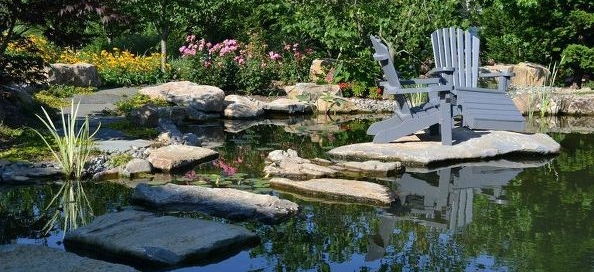
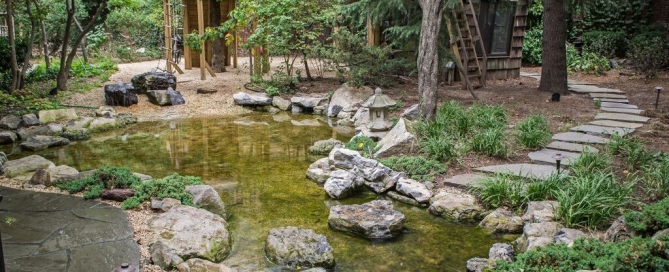
These clients asked us to put smaller stepping stones out to a larger stone island — in the middle of the man-made natural pond we created for them. The irregular stepping stones hail back to ancient Japanese gardens. Because nature doesn’t create beauty through strict symmetry, but much more organically, such irregularity was an element of their ‘contemplative world.’ Stepping stones also serve to draw you in as they lead to a special focal spot. Here, two Adirondack chairs were positioned for periods of contemplation, while enjoying the pond and feeding the koi.


Backyard Contemplation-Scape:

Backyard Contemplation-Scape:

Here a gentle stream is coaxed over rocks into several waterfalls. Lily pads wait on croaking frogs to rest on them. Ornamental grasses wave in the breeze, and flowering perennials add color and charm — a perfect spot for calm thoughts and relaxation.


Landscaping: How the Experts Do It

This is Part II of our two-part feature on professional landscaping.


“The design, construction and preserving of the natural environment takes on many facets. For luxurious outdoor living, these components need to be thought through thoroughly during the design phase,” explains Marc Wiener, director of design and sales at Deck and Patio.

With a degree in landscape architecture, Wiener knows of what he speaks. His education has given him an abundance of knowledge of plant material — the basis of such expert designs.

“We’re talking about an in-depth knowledge of how plants will grow, sequentially bloom and react to soil conditions, solar exposure, irrigation, etc,” says Marc. “To accomplish the best results, moss rock and pavers will also be built into the design. It becomes imperative, then, to soften the impact of these massive structures by scalloping plants into the hillside etc. — in a wide variety of colorful perennial, deciduous and evergreen plant material — for year round impact.”

For the first project we’re showcasing today, Marc says that even after the pool is closed for the season, it’s nice to see an impact during the winter months and he planned it that way.

Wiener used a unique combination of tumbled pavers, natural rock steps, Long Island boulders and retaining wall systems to help create a supple transition from the house, pool and spa patios, and captured the similarities in the earth tones throughout.


Landscaping Experts:

Landscaping Experts:

Beautiful results like this require a hands-on approach to grasp every aspect of the site’s characteristics, architecture, building codes, its impact to the surrounding environment and to be able to incorporate a client’s wish list into the design. It’s a culmination of these factors that separate a good design from an award-winning design as was achieved here, says Marc Wiener.


Professional Landscape Design:

Professional Landscape Design:

“To design and build this 22’ x 42’ freeform pool and raised spa, with waterfalls nestled into a 20-foot hillside, and to incorporate multiple patios at different elevations with landscaping, required more than just lines on paper,” says Wiener.


Second Project

Here, the landscape design was by Bill Renter, Deck and Patio’s Outdoor Living Expert and Marc Wiener. Their achievement garnered us a gold medal from the Association of Pool and Spa Professionals (APSP).

In addition to professional recognition, our work also amazed the clients, because their yard’s beautiful and nature-friendly transformation had been accomplished so quickly.

“I have lived here over 40 years,” says the wife. “Our property had become overgrown. It wasn’t messy but it wasn’t well done anymore. I have always loved birds and flowers and a very natural setting. And we hadn’t seen birds in a long time.

“A full-time bloom was important, as I wanted to attract, in addition to birds, lots of butterflies,” she says. “I also looked at many ponds that other landscapers had done elsewhere. In the end, I felt Deck and Patio’s work looked the most natural, which was extremely important to me.”


Landscaping in Harmony with its Surroundings:

Landscaping in Harmony with its Surroundings:

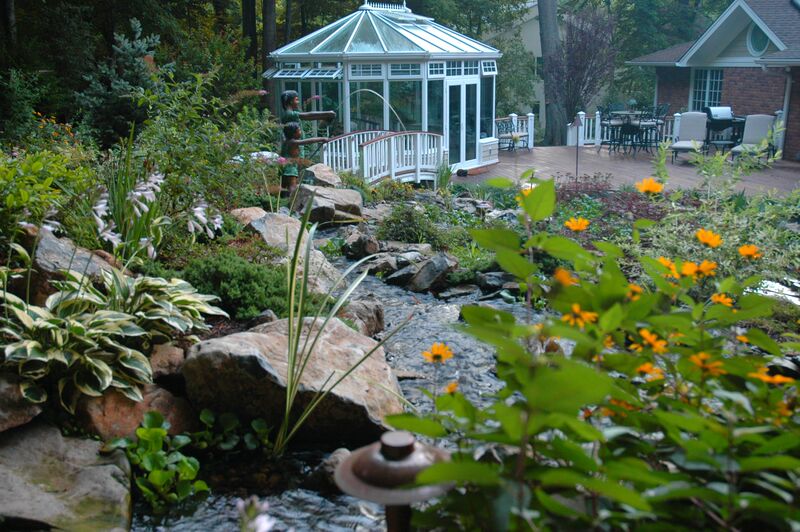
Renter says he also considered how our work would fit with the additional elements the homeowners had hired other companies to do, such as a conservatory and a small bridge — while always taking into account how everything would appear in nature.


Using Rocks and Boulders in the Landscape:

Using Rocks and Boulders in the Landscape:

The rocks used in this inspired pond installation – some of which weigh over three tons — were imported from farmers’ fields in New Jersey, says Renter. Each rock was hand picked for its particular use, sometimes for their ideal crevices in which garden perennials could be planted.


Beautiful Landscaping:

Beautiful Landscaping:

According to Wiener, The Deck and Patio Co. planted over 4,000 bulbs, 300 species of deciduous woody plants, evergreens, and perennials, including 150 different varieties of these species.

“The layout of the project detailed different settings and focal points,” says Wiener. “In some cases you are sitting next to a pond observing a waterfall; in other cases you’re walking through a woodland path.”


Professional Landscaping: When to Hire a Landscape Contractor

Updated 8-3-23

The popular home website Houzz recently shared what their managers suggest are the “10 Times To Hire a Landscape Contractor.”

Here’s their list (not in any particular order):

— When You Want a Built-In Fire Feature

— When Updating Hardscaping

— You Want a Garden Structure

— You Want a Swimming Pool

— You Want to Remove a Swimming Pool

  You Have a Site Plan From a Landscaper Architect

  You Need to Work With a Hilly Lot

  You Began a DIY Project but Ran Out of Steam

  You Need Help Setting Up Your Backyard Farm


Deck and Patio agrees the above Houzz list is a good one to go by. 


Why Professional Expertise?

Most importantly, professionals have the equipment needed to properly remove trees and shrubs, till soil, and remove rocks or boulders that are in the way. They understand soil, and what is needed to nourish a particular property’s soil. They are also expert at conceiving a well-thought out design.

And beyond major construction, to create idyllic landscapes, professionals know which plantings work well together, their bloom periods, which will thrive in full or partial sun and shade, as well as which ones need the least care.


Spectacular Landscape Design

Another trademark of spectacular design is the artful combination of ‘softscape’ (or ‘landscape’) with ‘hardscape.’ Our use of moss rock, which has contributed to our firm’s many awards, adds dimension and texture while creating a natural appearance.

“In our design plans, we also take into consideration a home’s architecture and the clients’ style preferences, as well as property grades,” adds our own Dave Stockwell,.“We plan so that the landscape will flourish and last for years. Our designs also apply a layering technique for privacy on the periphery, and vibrancy where it will be best enjoyed.”

Below are a few examples of our team’s expertise — which also showcase Houzz’s recommendations.


Pergolas Define Outdoor Space

Pergolas Define Outdoor Space

This Deck and Patio project (immediately above) incorporates three times that Houzz’s list says one should turn to a professional landscape contractor:  handsome Travertine hardscapes, a garden structure (pergola and a swimming pool.

“As you can see from this project, once a pool is in place, sometimes all that needs adding is a handsome pergola, comfortable furniture, and an elegant patio for the perfect level of contented breathing room,” says our own Dave Stockwell.


Manhasset/NY: Custom Built-In Sunken Fire Structure

Manhasset/NY: Custom Built-In Sunken Fire Structure

Built-in fire structures are one of Deck and Patio’s specialities. And in addition to a pavilion with fireplace, we designed and built the clients a large sunken fire pit next to the pool. Of course, you don’t have to get this elaborate, but like the Houzz list suggests, it’s important to use a professional landscape professional for this amenity.

The veneer of the fire pit was also used on the pavilion’s fireplace, as well as on the face of this project’s outdoor kitchen and exterior of the custom spa. It’s all Bucks County Country Ledgestone.


 Landscaping Long Bloom Periods:

Landscaping Long Bloom Periods:

Deck and Patio has the machinery and expertise to lift and place very heavy boulders and rocks which add to the beauty of landscape design, especially when waterfalls are involved. For this project we also incorporated creeping evergreen ground covers that cascade and wind over and between the rocks we used.


Landscaping for Visual Impact:

Landscaping for Visual Impact:

In order to preserve the surrounding landscape for this project, instead of clear-cutting the half-acre property, the clients built their home among mature oaks, maples and pines. While space had been left for a pool and spa,  doing the landscaping required professional expertise like Deck and Patio. It was  essential to plan in such a way so that any construction of the pool etc. would not disturb existing work and their beautiful woodland property.


Adding Water Features to Existing Landscaping:

Adding Water Features to Existing Landscaping:

Here Deck and Patio incorporated water features into the existing landscape. When considering color and texture expert knowledge of how plant material will eventually grow was essential. Here we see low-lying evergreens and ground cover perennials in and around the stream and rock outcroppings to soften the large boulders — in a way that does not stand out or detract from the overall intent of looking natural.


Go to Top