Unique Ideas

Conserving Rainwater: One Raindrop at a Time

Despite the inconvenience of rain being forecast over Labor Day weekend, while we’re home enjoying some time off, the rain does offer a teachable moment.

Rainfall is important, isn’t it. Just about all Long Island’s water comes from local aquifers, replenished by rain and snow. As we can see in California, where they are long suffering from droughts, it’s frightening that their aquifers are depleting.

In speaking a while back with Nick Menchyk, assistant Professor (Urban Horticulture & Design) at SUNY Farmingdale, he reminded us:

“On the east coast, while we typically get plenty of rain, any time we can harvest and use rainwater for irrigating our landscape — as opposed to pulling it from our aquifers — is going to be beneficial.”

Deck and Patio’s Dave Stockwell adds that this is even more important as sea levels rise and the concern that salt water will encroach on our landscapes.

Professor Menchyk says that while he does not consider himself an expert in rainwater harvesting and rain gardens, he told us he is convinced that it’s only a matter of time when the greater eastern seaboard will be looking to how we irrigate.

“Whether we like it or not, the future holds limitations in the amount of water we use. Rainwater harvesting is a way we can be responsible stewards of our environment now.”


Outdoor Water Use

Outdoor Water Use


Outdoor Water Use

The “average” homeowner, according to statistics, uses approximately 3,000 gallons of water weekly with about 70% used outdoors.


Deck and Patio’s Rainwater Harvesting Division

Deck and Patio’s Rainwater Harvesting Division


As landscapers, maintaining water quality is one of our passions at Deck and Patio.

We have a special division — Rainwater Harvesting Group — dedicated to installing rainwater collection systems that alleviate demand on municipal systems, reduce water bills — all while beautifying and enhancing landscapes and properties.


Capturing Rainwater

Self-Sustaining Eco-Systems

Self-Sustaining Eco-Systems

Deck and Patio specializes in installing systems that capture, filter, and recirculate rainwater, in sufficient amounts that also supply and keep topped off peaceful water features.

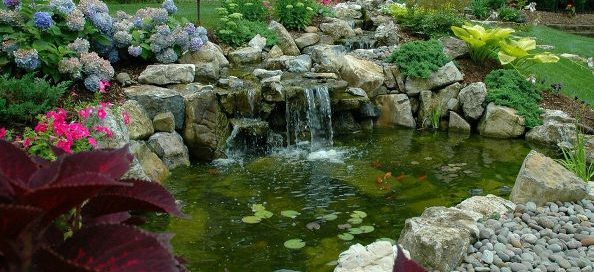
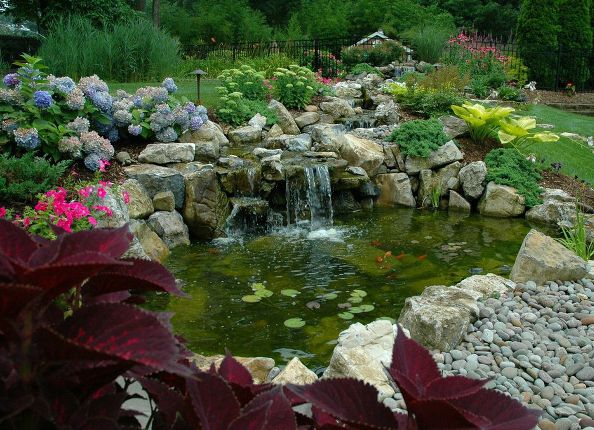
This project, for example, includes a stream and multiple waterfalls — all recirculated through the same Aquascape Rainwater Harvesting water collection system. City water is not used. The feature attracts desirable wildlife such as frogs, butterflies, birds etc. creating a delightful wildlife refuge.

The captured rainwater works together with the carefully chosen plants, fish, rocks and gravel, to maintain a balanced system for long-term sustainability.


Permeable Pavers Will Capture Rainwater

Permeable Pavers Capture Rainwater

Sometimes, as shown here, we also use permeable pavers to ensure we capture sufficient rainwater to maintain the landscape — as well as allow clients to wash their cars and/or hose down their decks and patios. 

And when you consider that local Long island water companies frequently charge an incremental rate, based on the amount of water used, capturing all the non-ingestive water you need from rainfall, the lower your rate will be.


Capturing Roof Runoff

Harvesting Rainwater Roof Runoff

Harvesting Rainwater Roof Runoff

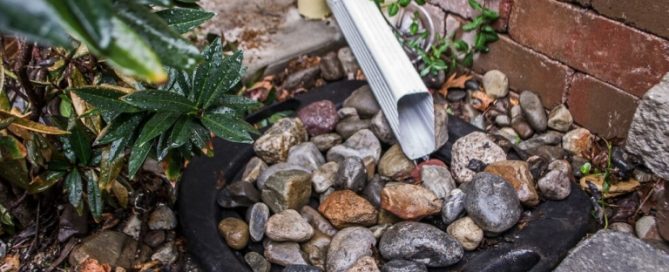
For this project, four downspouts collects about three quarters of the clients’ roof runoff.

It then falls through containers with filters to screen out twigs and small debris before sending the rainwater down into the Aquascape reservoir.

There it is recycled for reuse in irrigation and to top off a backyard pond when needed.


Rainwater Harvesting (Long Island/NY):

Rainwater Harvesting (Long Island/NY):

Rainwater Harvesting (Long Island/NY): The Aquascape ‘green’ Rainwater Harvesting process for this feature combines a decorative water feature with a completely sub-surface collection system — thereby creating a beautiful backyard oasis that is very eco-friendly.

Ponds and pond-less water features can be more than picturesque. They provide an opportunity for rainwater harvesting, thereby saving water and aiding the local ecology.


US Green LEED Grants:

US Green LEED Grants:

These Brooklyn clients have a four-story walk-up and they wanted to collect all the water that comes off their roof. In addition to the obvious “green” aspects, they hoped to take advantage of certification from the U.S. Green Building Council’s LEED (Leadership in Energy & Environmental Design) program. 

According to the Council, certification may allow property owners to qualify for a host of incentives like tax rebates and zoning allowances. Not to mention they retain higher property values.

With the system we installed, they collect enough rainwater to take care of their landscape and vegetable garden. More on this Brooklyn, NY, project in future blogs.
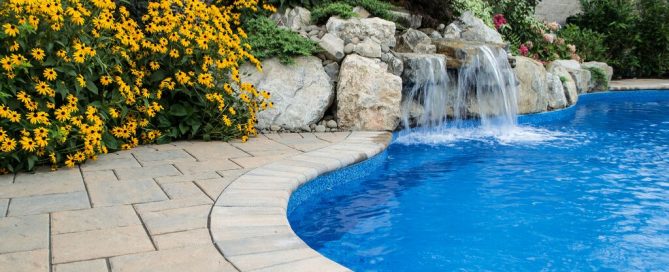
Even City Life Can Boast a Backyard Refuge

Whether it’s the long Labor Day holiday weekend created for workers, or simply the few scattered hours you squeeze out of a relentless workweek, it’s nice to enjoy some free time in blissful leisure at home.

Location, Location, Location

However, what if your property isn’t located in a pastoral area that allows for inviting quiet time? What if your locality is all hustle-bustle? Such was the case for these Deck and Patio clients. Their home is tightly surrounded by apartment buildings, traffic and noise — in the very heart of Queens, a teaming borough of New York City.

In this atmosphere, even adding a pool and patio wouldn’t provide the escape the homeowners desired. To create for them a real backyard oasis, we had to block out the noise and oppressive atmosphere.

Solutions, Solutions, Solutions

One of the best ways to screen out noise is a sizable waterfall and the clients opted for one to provide splashing sounds into their new pool. In addition, our clients asked us to build a 12-foot-high concrete block wall. While useful as a noise and environs barrier, a wall can be a bit oppressive in itself.

So the next challenge was to soften the wall’s appearance. First, we planted bamboo around its perimeter. Bamboo can be invasive so we encased the woody grass with concrete blocks to limit its spreading.

Special Feature

One thing great about interior and exterior walls is they make an ideal canvas. Taking full advantage of the wall, Deck and Patio designed and supervised the layout of a “living wall” that can hold multiple-sized pots for plants. When completed, the living wall became living art — changing in color and shape almost daily. (For details on living wall – see photos 5, 6, below.)

 The result: the clients may live in a busy part of New York City, but their Labor Days — and every spare moment they can muster— will be spent in blissful leisure right in their own backyard.


Backyard Noise Barriers (Queens/NY):

Backyard Noise Barriers (Queens/NY):

Water cascading over rock into another water pool is a natural sound barrier that is peaceful and soothing to the soul. 


Backyard Refuge (Queens/NY):

Backyard Refuge (Queens/NY):

The sounds of the waterfalls, the colorful landscaping and the dramatic concrete block wall together give a sense of refuge in this bustling part of one of America’s five largest cities.


Pool Waterfalls (Queens/NY):

Pool Waterfalls (Queens/NY):

The free-form vinyl-liner pool includes boulder coping, and a moss rock waterfall with robust plantings that help beautify the wall. 


Techo-Bloc Patios (Queens/NY):

Techo-Bloc Patios (Queens/NY):

The pool’s surrounding patio is made from Techo-Bloc pavers that handsomely complement the 12-foot-high wall and smaller concrete encasement for the bamboo.


'Plug n Play’ Living Walls (Queens/NY):

‘Plug n Play’ Living Walls (Queens/NY):

“There are many types of Living Walls; interior and exterior, permanent or seasonal walls, and then there is the ‘Plug n Play’ (manufactured and trademarked by Green Living Technologies, International or GLTi) that we used here.


'Plug n Play’ Living Walls (Queens/NY):

‘Plug n Play’ Living Walls (Queens/NY):

The Plug n Play is very versatile and can be manufactured to accept multiple-sized pots (3” to 12″). Drip irrigation is set up on alternating rows and trickles down to each row below; excess water is either captured or drains. Plants are set on an angle with their holes faced downward so the roots/soil can sap up water via wicking effect. These units can be fastened to any type of wall; using the right type of fastener for each respective wall type.


Recipe for a Delightful Garden: Just Add Water!

Just add flowing water, that is!

As garden designers and landscapers, we know flower beds take thought. Color, textures, soil, how much sun or shade, etc. But there’s one easy garden complement that makes any flower bed transformative in how it delights the soul. Even small gardens become something wonderful when the sights and sounds of flowing water are added.

Those who know Deck and Patio for our larger pond/water feature installations (we’ve done over 300 on Long Island alone) may be surprised that we also specialize in smaller water features such as fountains.

Why Are Garden Water Features So Desirable?

First. By bringing the sounds of nature as close as your doorstep, flowing water immediately makes any garden feel more like a part of the natural landscape. 

Second. Not only will you enjoy the sights and sounds of water, but butterflies and birds, and other desirable critters will appreciate your efforts. It feels really good to know you’re supporting such lovable wildlife — and you get to watch them as they take advantage of it. 

Third. A fountain can fit just about anywhere. No need to plan or find room for an elaborate pondscape or another expansive water feature. A fountain (which comes in all sizes) can be added just about anywhere — although we recommend installing it where you can enjoy it from both your patio and inside your home. (More on that below.)

Fourth. A water fountain can run most of the year — including winter. Even when your fall plantings are gone to seed, so to speak, you’ll have something beautiful to look at.


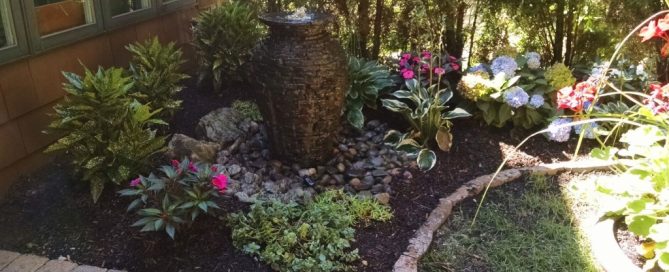
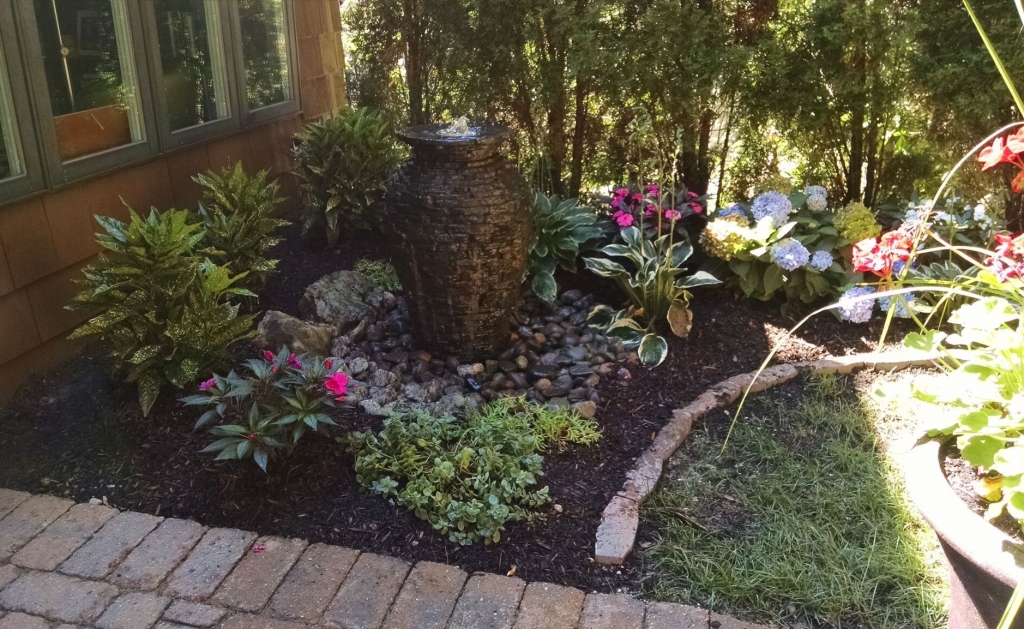
Stacked Stone Urn fountain

Stacked Stone Urn fountain

This photo is one such garden fountain that we added for clients who had recently moved to a new home. (This fountain is also seen above as our feature photo) 

When working at their property, one of our team members mentioned that it felt like the garden was missing something — a feature that would offer both the sound and relaxing sight of water movement. 

The clients agreed that a garden fountain would be an ideal finishing touch in such limited space.


And here’s a 5-second video for you to hear the water music of that installation:  


DIY Fountain Projects

If you’d like to add one of these fountains on your own, all you need is a shovel, a wheelbarrow and a level. 

Then, adding a bag of decorative gravel and mulch, you have a picture-perfect-and-sound-perfect-fountain that not only you will enjoy but so will many of Nature’s lovable wildlife.

Here is a step-by-step DIY video from Aquascape, followed by a link to the various fountains they have available. You can contact them directly — or give us a call to help you make the right choice for your garden, and also install it for you, if you would rather not do it yourself.


And for a video of the various fountains available from Aquascape or Deck and Patio:


Inviting Pool Amenity: Hidden Grotto with Dramatic Waterfall

This backyard upgrade came our way as a referral from someone working with the clients. It went on to win an award, making it all the more special.

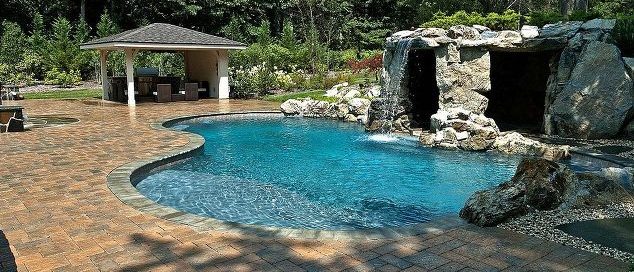
The overall project included a free-form concrete pool and spa. But a special part of the design is where the spa was placed — it’s actually hidden inside a large grotto with a high waterfall cascading over it into the pool. 

“We constructed the grotto from large moss rock boulders,” says Deck and Patio’s Dave Stockwell. “The ceiling is of structural steel and concrete. We also added a tanning shelf inside the pool in the shallow end large enough so that lounge chairs can rest in the water.”

The pool was then surrounded with a handsome Techo-Bloc tumbled paver patio and Deck and Patio finished it all with lush landscaping.


Pool Grotto:

Pool Grotto:

A key element in giving the pool grotto a natural feel was the extensive use of moss rock. Placing these rocks requires skill and experience. They need to be positioned in a way so that water spills over them like it would appear in nature — like something you’d see on a mountain hike or woodland stroll.


Pool Waterfalls:

Pool Waterfalls:

The majestic high waterfall spills into the free-form concrete pool — just outside the spa. The waterfall doesn’t flow out from the walls of the pool, but is fed by a meandering man-made stream overhead.


Spa Inside Pool Grotto:

Spa Inside Pool Grotto:

This is the view of the pool seen from inside the spa grotto. Note how private the spa is because it is nestled inside a cove made from moss rock boulders. 


Techo-Bloc Pool Patio:

Techo-Bloc Pool Patio:

The beautiful design of these paving stones was also inspired by nature as well. The clients chose them for their handsome earth-and sand-tones which we laid out in a random pattern. They offer the perfect contrast to the blue water of the lagoon-style pool.

This project won Deck and Patio a prestigious Silver Medal from the Northeast Spa and Pool Association (NESPA).


Landscape Upgrade: Before, After and In-Between ‘Spool’ Construction

When we previously highlighted this Deck and Patio backyard ‘spool” (a cross between a spa and pool) several years ago, our blog posts showcased only the finished project.

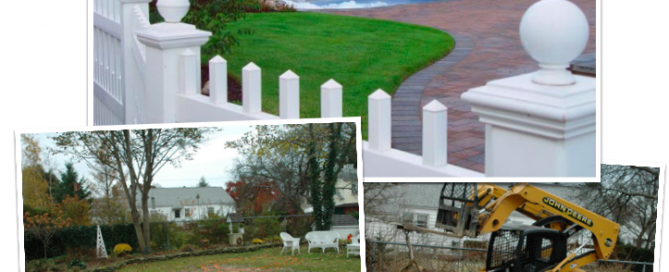
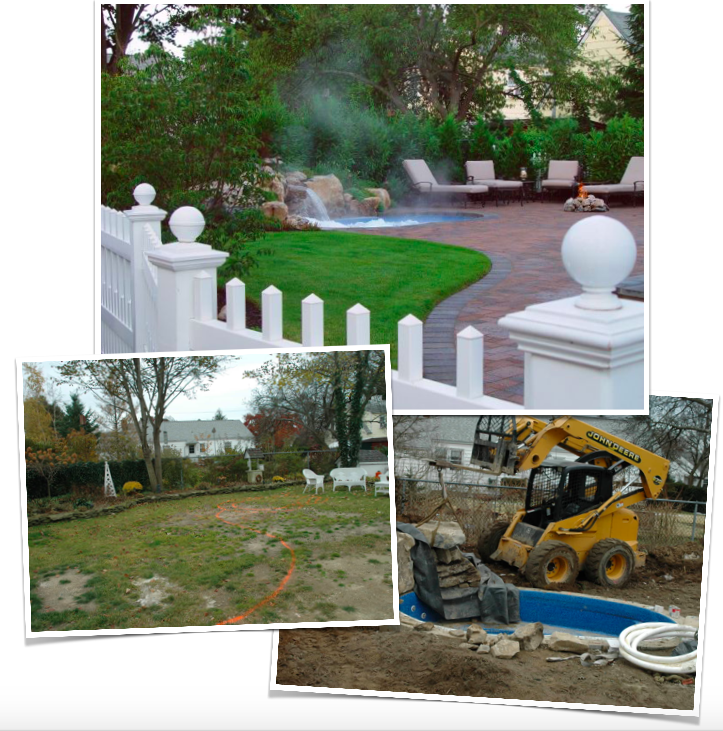
However, because this spool has remained a popular download across our social media platforms even today, we thought readers would like to see some of our file photos (below) for this project. They capture its various stages — from the first marking of the grass, to the finished landscaped custom spool with waterfall.

Short Summary of Project

The homeowners decided on a ‘spool” for their yard  because they didn’t have room for a full-sized pool.

A spool would also allow them to enjoy it year-round. They could opt to run cool water in the spool during warm months, and hot water during cold months and cool evenings.

In addition, the mechanics of a spa provides the benefits of hydrotherapy massage — not to mention the amazing experience of sitting under flowing water from an added waterfall.


Spool: Before, After, and In-Between


'Before:' Deck and Patio used orange paint to mark the areas for the spool, waterfall, patio and landscaping.

‘Before:’ Deck and Patio used orange paint to mark the areas for the new spool, waterfall, patio and landscaping.


“During.” Winter was upon us not long after we began the project. We did have time to dig out the area for the spa. Then we covered the hole while we all waited for spring to continue.

“During.” Winter was upon us not long after we began the project. We did have time to dig out the area for the spa which would give us a head start come spring. Then we covered the hole while we all waited for it to arrive.


“During Spring” As soon as spring came, we began building the concrete shell. As you can see the ground was still hard but the hole was already dug so we could do this.
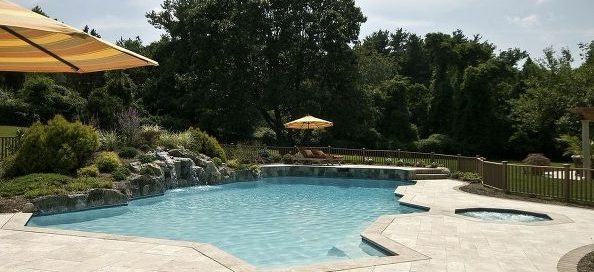
“During” Spring
As soon as spring came, we began building the concrete shell. As you can see the ground was still hard but the hole was already dug allowing us to proceed early.


“During” Waterfall Addition: The boulders needed for a good-looking waterfall can weigh tons and special machinery is needed to put them in place.

“During” Waterfall Addition:
The huge boulders required for a natural-looking waterfall can weigh tons and special machinery is needed to put them in place.


'Before' the Landscaping: Here a member of our team is marking out the landscaping areas for behind the waterfall up to the garage. You can see on the right the spool and waterfall are already complete. You can also see a small piece of the new patio.

‘Before’ Landscaping: Here a member of our team is marking out the landscaping areas for behind the waterfall up to the garage. You can see (on the right) the spool and waterfall are already complete. You can also see a small segment of the new patio.


‘During’ Testing of Waterfall: This is day we tested the waterfall. The completed spool is 8’ x 10’ and is vinyl-lined. Note the patio was complete also. The patio was built using Techo-Bloc paving stones (Elena in Sandlewood) which are durable and will withstand a lot of activity and weather changes.

Testing of Waterfall:
This is day we tested the waterfall. The completed spool is 8’ x 10’ and is vinyl-lined. Note the patio was complete also. The patio was built using Techo-Bloc paving stones (Elena in Sandlewood) which are durable and will withstand a lot of activity and weather changes.


 “After” Landscaping: First angle of “after” job complete. A new fence was added for contrast and a bit of drama; a rushing stream flows through the large moss rock boulders to become a waterfall flowing into the spa.

“After” Landscaping:
First photo angle of “after” job complete. A new fence was added for contrast and a bit of drama; a rushing stream flows through the large moss rock boulders to become a waterfall flowing into the spa.


“After” Landscaping Second angle of “after” job complete. Here you can see the garage, fence, patio and spool; you can almost feel the warmth from their natural gas campfire. The end result is a beautiful backyard oasis tucked nicely into a corner of their new backyard patio.

“After” Landscaping
Second angle of “after” job complete. Here you can see the garage, fence, patio and spool; you can almost feel the warmth from their natural gas campfire. The end result is a beautiful backyard oasis tucked nicely into a corner of their new backyard upgrade.


Landscaping Trends: Purple Is ‘the’ Color for 2018

Rihanna Wearing Lavender Eye Shadow

Rihanna Wearing Lavender Eye Shadow

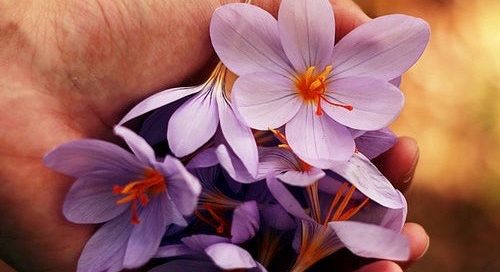
Purple is seen everywhere these days.

Ultra Violet is Pantone’s 2018 color of the year.

And from hair color, eye shadow and  clothing, purple is taking center page in style magazines: People, InStyle and Essence to name but a few.

Not to mention, Rihanna, a true style icon, has been seen wearing lovely lavender shadow to accent her eyes.


Top Gardening Trends

Top Gardening Trends


So. It’s not surprising that one of HGTV’s top garden trends for 2018 is purple plants.

And we’ve got a few ideas today to help you choose bright pops of purple that can be planted throughout the 2018 season — beginning this spring.


Spring Purple.


1. Salvia Sylvestris May Night


Deck and Patio Pondscape

Deck and Patio Pondscape

Blooming in late spring, perennial Salvia Sylvestris May Night (May Night Meadow Sage), seen here in the right foreground, boasts deep purple-blue blooms.

The good news for gardeners in our Long Island, NY, area is how hardy this beauty is for our area of the Northeast because it claims superb cold hardiness, is a vigorous plant, and is tolerant of heavy clay soils.

If the robust color isn’t enough to make you rush to pick up some of these Salvias, consider: these plants attract butterflies and hummingbirds, and are deer and rabbit resistant. They make glorious cut flowers for inside and they bloom more than 4 weeks.


2. Soapwort

Soapwort

Soapwort


Another easy to grow stunner for spring is Soapwort. It’s also called Bouncing Bet which is a clue on how prolific it is.

It prefers full drainage and full sun and if you have a wall or trellis, it’ll make a home there.

It’s also available in low ground cover form that spreads nicely and is ideal around a water feature: stream, pond or waterfalls.

Its family name is Saponaria officinalis and offers good cut flowers.


Summer Purple.

1. Verbana

Verbana

Verbana

Available in annual and perennial varieties (a total of 250 varieties in fact), this stunning flora is at its best during the hottest of summer heat.

With so many varieties, it’s a cinch to find a glorious purple specimen for your garden.

Often used in herbal teas, it’s beloved by more than humans. Yup. Butterflies and hummingbirds adore its blooms as well.


2. Purple Allium

Deck and Patio Landscaping Project

Deck and Patio Landscaping Project

Although planted in fall, the Purple Allium Sphaerocephalon seen in the foreground of this Deck and Patio project is a summer blooming delight.

Its robust color thrives beautifully on Long Island and in the Northeast in general.

Deck and Patio landscape designers chose the Purple Allium for its height, as well as the lovely color contrast it made against the green and yellows around it.

The plants first open green, and then mature to a bright crimson-purple. More good news. It’s rabbit, deer and rodent resistant and is loved by pollinators.


Autumn Purple.

1. Aster

Purple Dome Aster

Purple Dome Aster

The Purple Dome Aster (novae-angliae) is a beautiful autumn plant that blooms from late summer in to autumn.

It is a dwarf variety of the more common New England Aster. And as you can see from the photo, it makes a wonderful impact as an accent among fall grasses.

Needless to say it can be cut for beautiful indoor bouquets. Indeed, there’s lots to cut as these plants boast masses of daisy-like deep purple flowers. They also have a sunny yellow center.

These beauties will bloom for over 4 weeks in fall; in spring and early summer they show off gray-green leaves. These disappear under the royal purple daisies in fall.


Autumn/Winter Purple.


1. Callicarpa dicotomía (Purple Beautyberry)

Callicarpa. Photo: Missouri Botanical Garden

Callicarpa. Photo: Missouri Botanical Garden

The Callicarpa dichotoma or purple beautyberry shrub’s colorful purple berries are a treasure in winter. They begin to bud in fall and last throughout winter.

The shrubs grow up to 4 feet tall. The branches boast pinkish to light purple flowers in summer which mature to these delightful berries in autumn.

These plants accept full sun and partial shade, which is good news. It gives you more options for planting and are not very demanding when it comes to growing conditions.

So as your starved eyes search for color in winter, your beautyberries, in bright purple, will satisfy that need. Do any pruning in late winter, just before spring. And as for your winter birdies — they’ll eat some of the purple berries.


And as a last little gift to our readers:

We all know what makes a purple garden grow: a little Purple Rain.

Now it’s Prince, after all, so you’ll have to be a little patient for the video to begin (at about 1.08 mins). But oh, his Purple Rain. Enjoy!


(Note: Our feature photo at the top of the page is the annual Globe Amaranth. Its bright pom-poms last well into the fall.)


By |2018-04-26T14:44:59-05:00April 26th, 2018|Backyard Refurbishments, Gardening, Koi Ponds, Landscaping, Outdoor Living, outdoor maintenance, Plantings/Pondscapes, Seasonal Landscapes, Unique Ideas|Comments Off on Landscaping Trends: Purple Is ‘the’ Color for 2018

Time to Update Your Backyard Pool Area?

Design/Build Showcase: Deck and Patio transforms cramped backyard into perfect landscape for parties and entertaining


Old Unattractive Retaining Wall.

Old Unattractive Retaining Wall.

 New Natural Looking Retaining Wall

New Natural Looking Retaining Wall


When this Dix Hills family decided to update their dated backyard pool area, their main problems were that their old wood deck and red brick patios (above left photo) beside the pool were too small and unusable for parties and entertaining.

In addition, the old retaining wall took away from the attractiveness of the pool area.

Our creative team introduced a unique concept to deal with this area: re-grade the slope, turning it into a “natural” retaining wall (above right photo) including a dramatic waterfall, stream, and woodland garden in its place.

For the seven-foot-high “sheet” waterfall and stream, we used Aquascape Inc.’ pondless waterfall system, which allows for a good deal of water volume to create the dramatic effect.

“We particularly value Aquascape’s waterfall systems because they focus, like we do, on an ecosystem approach to water features,” says Dave Stockwell, owner of Deck and Patio. “For this project, the pondless system relies on a natural balance of circulation, filtration, plants, rocks and gravel to ensure sustainability.”

Deck and Patio creates natural looking waterfalls

Deck and Patio creates natural looking waterfalls

Another reason our waterfall retaining wall system looks so natural is our waterfall installation team understands how water flows over rock and how it releases from the rock in order to create a natural look and feel.

We avoid the look of steps in the waterfall by making the water change directions in the waterfalls and streams.

Once the stream and waterfall was complete, we pressed boulders into the surrounding slope. After that, we addressed the landscaping. Our crew installed natural woodland plantings to tie in with the tall oaks that exist on the property’s perimeter and added evergreen shrubs to ensure year-round color.


Refurbished Pool and Patio

Refurbished Pool and Patio

With the slope stabilized, our team addressed pool renovation. After draining the pool and removing the original liner, a poorly built concrete block wall was uncovered.

The solution was to straighten the wall and fill the block in with concrete and steel rebars for strength. New vinyl covered stairs were then added, as well as new pipes, returns, skimmers, pump, filter and new liner was installed.

After this, the pool was carefully backfilled and tamped. We compacted the soil back around the pool in three-inch lifts to allow for the immediate installation of new pavers around the pool.

This compacting process is not done by many contractors. The idea is that using compacted soil the base will not settle, so you don’t have to wait to install a patio around a new pool. Many contractors still install concrete slabs under their patio. In our experience we find this does not work well. Settling still occurs under the slab allowing the patio to crack or settle.

After the base materials were finished, we installed chestnut-hued durable pavers from Cambridge (Sahara). These particular pavers have little or no color fade and the random design pattern adds interest to the patio. The pavers’ protective coating means these clients will have a clean-lined modern look. Even after being subjected to snow plowing, de-icing salts and normal wear, they will keep their color and beautiful appearance.


Close up of Installed Patio

Close up of Installed Patio

The clients chose elegant clean-lined pavers in a random pattern for the new patio areas surrounding the pool.

The clients love their new patio and pondless waterfall. Not only do they find themselves outside more often enjoying nature’s sights and sounds, they have room for parties and entertaining.

In fact, their perfect backyard was there all along — it just needed a vision to bring it out.


Is Travertine Right for My New Patio?

Understanding what Travertine is, its strengths and weaknesses, and how it reacts in different areas, is something members of our team have discussed with stone experts from around the world.

We have also studied existing Travertine projects over a period of years to see what actually holds up — and what doesn’t — in our climate.

Coliseum, Rome, Italy

Coliseum, Rome, Italy

Travertine natural stone has been in existence for thousand of years.

It comes in many different colors, ranging from reddish orange, beige, to white, and is sometimes mistaken for marble.

Italian Travertine, revered for its hardness and porosity, is what the Coliseum in Rome was constructed of, so the durability of Italian Travertine is not in question, although it can be expensive.

However, Travertine is quarried from around the globe and is widely used beyond Italy —  mostly in tropical locations for patios, walks, terraces, etc. Although it is typically used indoors in colder climates, there has been an increase in its usage outdoors, in and around pools and homes.

But can all Travertine stone be used this way?

The answer is no, or at least it shouldn’t for best results. The three most common locations where Travertine comes from are: Italy, Turkey, and Mexico. Mexico’s Travertine is a much softer and much more porous and does not hold up well in our frost zone.

Turkish Travertine, is very common and, in most instances, is less expensive than the Italian. It does hold up quite well in our Northeast’s freeze/thaw climate.

Be aware, however, that some companies offer very inexpensive Travertine for use outdoors and may seem to be a great deal. However, they may be using stone quarried in, say, China, where the qualities of such stone differ considerably and will not stand up to certain climates. Just because a stone is called “Travertine,” don’t assume it’s all the same. It’s not.

Below, we are highlighting an example of a Travertine (from Turkey) patio we built for clients.


Travertine Patio

Travertine Patio

For this expansive Travertine patio, Deck and Patio installed Travertine from Turkey — for its beauty, density and porosity — which we could guarantee would withstand our area’s severe climate changes and maintain its elegance.


Travertine’s Appeal

Travertine’s Appeal

The look of Travertine is exquisite. It has a smooth surface with small pores and dimples that give it an “old world finish.” This particular project used well over 2,500 square feet of Travertine, and over 180 linear feet of fullnose coping for the pool and spa.

In our area of the Northeast (Long Island, NY), the summer sun gets intense. However, Travertine does not absorb the heat like brick or bluestone, and is similar to light-colored concrete pavers where heat is not retained in the paver. This makes it ideal as a pool surround, where being barefoot is unavoidable.


Outdoor Kitchens:

Outdoor Kitchens:

Deck and Patio used a natural stone for the veneer of the bar/barbecue and constructed a seat wall made of the same veneer, with the same edge-restraint as the capstone for the seat wall. This created a unique contrast between the patio, bar area and the extensive back veneer used for the house.


Using Travertine Outdoors:

Using Travertine Outdoors:

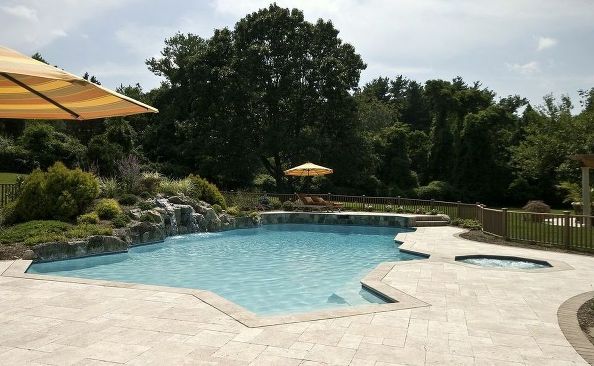
The Travertine stone we used for this project enhanced the geometric shape of the pool and it was decided to elevate the diving area for added interest. This raised area offers a quiet escape for relaxing; bright plantings add to the pleasure of it all.


Under the Umbrella Sun:

Under the Umbrella Sun:

Travertine doesn’t absorb heat like other materials and offers an elegant contrast to robust lawns and plantings.


More Than Beautiful: Self-Sustaining Water Features

Rainwater Harvesting

Rainwater Harvesting

It’s true: the sounds and sights of moving water turn any property into a restful escape.

But ponds and pond-less water features can also include rainwater harvesting components — offering a great way to save water and aid the local ecology.

Such rainwater harvesting systems support all types and combinations of water features  — fountains, waterfalls, ponds, streams.

The captured rainwater can also replenish a water feature’s surrounding landscape, wash a car, rinse down a deck or patio, etc., and it is especially helpful during droughts.

As certified installers of renowned Aquascape Inc. products, the water conservation systems and other water garden products Deck and Patio uses are both technologically and biologically efficient.


Project # 1

Koi is a healthy part of this pond's natural ecosystem

Koi is a healthy part of this pond’s natural ecosystem


The Aquascape products Deck and Patio used for this project include high efficiency pumps, skimmers, biological filters, and gravel beds.

Note: Koi can also be a truly beneficial part of a pond’s eco-system, including this self-sustaining one.


Project # 2


Deck and Patio Rainwater Harvesting (Long Island/NY):

Deck and Patio Rainwater Harvesting (Long Island/NY):


The Aquascape ‘green’ RainExchange process for this Deck and Patio feature combines a decorative water feature with a completely sub-surface collection system — thereby creating a beautiful backyard oasis that is very eco-friendly.

“The collection system is located completely below ground,” says Deck and Patio owner Dave Stockwell. “The reservoir is a truly maintenance-free source that keeps topping off the water feature.There is no requirement for City water. It comes completely from rainfall on the roof of the clients’ house — where gravity alone draws it into pipes.”


Project # 3


Deck and Patio Water Feature (Long Island/NY)

Deck and Patio Water Feature (Long Island/NY)

This Deck and Patio water feature includes a beautiful pond, waterfalls and stream with a bridge across it.  Along with the right water plants, everything works together to create a very healthy eco-system — underpinning the peaceful vistas that restore the soul.

Why is this important? Well, such products create a total natural biological system around ponds and waterfalls that can be replenished and maintained entirely through rainfall.


Project # 4


Deck and Patio Pondless Water Feature (Long Island/NY):

Deck and Patio Pondless Water Feature (Long Island/NY):

With a “pondless” waterfall, the waterfalls and stream do not drop into a pond, but seep through gravel where it is first filtered and then collected in an underground reservoir and continually recirculated. Because you are continually filtering and recirculating water, such a project is definitely eco-friendly.

However, natural evaporation of the water feature will require, like this Deck and patio one, that the recirculating water be “topped off” and refreshed occasionally. So for those who would prefer to go totally “green” and not use any town water by even occasionally replenishing your stream/waterfall, Aquascape also makes the RainXchange reservoir system we used here.

With RainXchange, runoff rainwater — either from a roof or permeable pavers is collected to maintain the water feature’s system through completely green rainwater harvesting methods. This captured rainwater can also replenish the surrounding landscape, wash a car, rinse down a deck or patio, etc., and is especially helpful during droughts.


There are many routes to sustainability. And the beautiful water feature you choose for a restful respite will be truly that…having no tinge of guilt about its impact on the environment.


2018 Landscaping Trends: ‘Forest Bathing’ on Long Island, NY

Those in the know, like HGTV, have spotted a Japanese-inspired landscaping trend that’s expected to remain hot in the U.S. throughout 2018 and beyond.

It’s called: forest bathing.

No, it doesn’t require a bathing suit. Or wild evening romps in the moonlight.


Forest bathing

Forest bathing

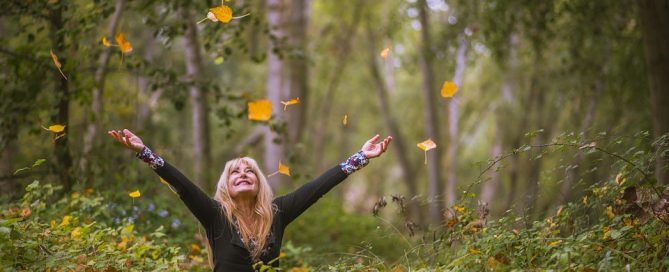
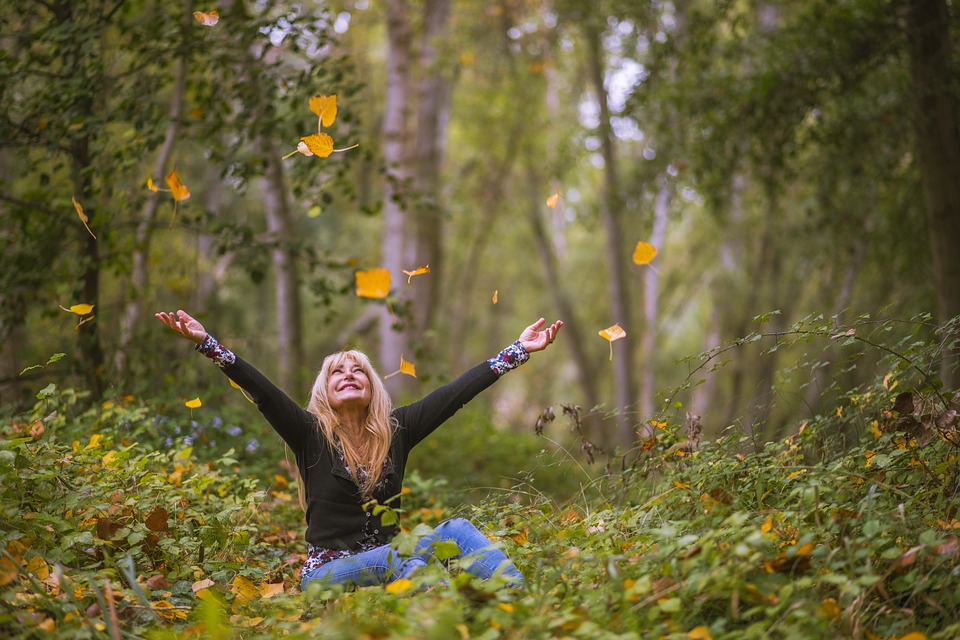
Forest bathing simply means bathing yourself in the beauty of a wooded area via a nature walk. The idea is to allow your inner spirit time to breathe — and any inner tensions to find release.

This uplifting experience might also include spiritual moments of divine worship. But the essential key is to just give one’s technology-driven life a break. And no place offers a better space for that than a quiet woodland area.

Forest bathing, by the way, is a translation of the Japanese term “shinrin-yoku” — a new philosophy that began in Japan in the 1980s and has been growing as fast as, well, a bamboo forest.

At Deck and Patio we were delighted to learn of this “trend.” But our Huntington Station, NY-based firm — in collaboration with many of our nature-loving clients — has been designing such restful woodland backyard escapes all across Long Island for many years.

There are two ways we accomplish this.


  1. If a property already has beautiful woodlands, our goal is, first, to safeguard as much of this precious space as possible when creating nature walks and any other outdoor living areas.

    Plus, we often add man-made environmentally-friendly water features and plantings to make the wooded areas feel complete. The goal is always to enhance the experience of the parklands without doing harm to the surroundings.

  1. A second option — which can be more expensive — is to import new trees, shrubs and flowers to create an entirely new wilderness area where one does not exist.


Here’s a few examples of Deck and Patio-landscaped ‘forest bathing’ areas we created for a few of our Long Island, NY clients.


Forest Bathing on Long Island, NY:

Forest Bathing on Long Island, NY:

Here’s a great example of a pre-existing wooded area on a local property. Within this already beautiful setting, we added stone steps, streams and waterfalls. The clients already had a bridge so we designed water features and stepping areas to fit around it.

We also added additional plantings and lots of green ground cover. It’s the perfect space for them to bathe in natural beauty before they start their day and when they return home.


Forest Bathing Offers Great Escape (Long Island/NY):

Forest Bathing Offers Great Escape (Long Island/NY):

The key to forest bathing is to create or update spaces as they appear in nature — and add only amenities that fit naturally in that environment.

In this case, Deck and Patio added a bridge, water feature, imported boulders and rocks and landscaped it with robust plantings. It feels like you are in upstate New York, in the mountains. Yet, it’s right in our clients’ backyard.


Protecting Woodlands on Long Island/NY

Protecting Woodlands on Long Island/NY:

As you can see from this Deck and Patio-designed backyard refuge, we were careful to safeguard the existing woodland areas on the property.

Extending out from the parkland areas, the new water feature was brought forward to the entertaining areas through the addition of a pondless waterfall.

The new multi-level patios were carefully designed so that each patio space had a specific use. The complete project was a perfect blend of softscapes with hardscapes.


Long Island/NY Backyard Nature Walk:

Long Island/NY Backyard Nature Walk:

Many believe that walking in natural surroundings is not only peaceful but by providing moments of peaceful contemplation, such walks can have a healing effect.

For this space, we took advantage of the family’s desire to hide their pool equipment by creating a private woodland path. We brought in bushes and plantings and fit them among existing old-growth trees. Adding bluestone stepping stones that lead to a larger woodland area contributes to an extended nature walk that is perfect for forest bathing.

Here’s two quotes to leave you with today:


“Wilderness is a necessity”     — John Muir, environmental philosopher

“Look deep into nature, and then you will

understand everything better.”     — Albert Einstein


Happy forest bathing!


Go to Top