Koi Ponds

The Benefits of Aquatic Plants and Water Garden Landscaping


Water Gardens, and the plants installed in and around them, are delightful to look at. They also attract creatures that offer a daily open-air symphony: chirping birds, flapping butterflies, and croaking frogs.

For an ideal water garden eco-system, the key is maintaining clean, healthy water. Pond filtration systems do a lot, as do waterfalls etc. that aerate and oxygenate the water. But at the end of the day, a huge part of creating a healthy system is the water landscaping you do.


Deck and Patio Built Pond

Deck and Patio Built Pond

Aquatic Plants

The gurus of all things pond/water garden — Aquascape Inc., in St. Charles, IL — list the basic groups of aquatic plants as:

  •  Water Lilies
  •  Lotus
  •  Marginal Plants
  •  Water Lily-like Plants
  •  Floating Plants Submerged Plants.

“An ideal pond mixes plant heights, textures and color from at least three of these groups,” says Dave Stockwell, owner of Deck and Patio. “This gives the most natural look. We also don’t install plants in a symmetrical way. A more random placement looks the most natural.”

But there’s more to it than aesthetics. Plants such as water lilies and irises feed on the nutrients (algae or small primitive unwanted plant life) in the pond water, and produce oxygen while they provide shade and food for small creatures attracted to the water garden.

Aquatic floaters and marginals, adds Dave, are perfect for gobbling up the excess nutrients that are produced by any pond fish and excessive plant algae growth. They also help by reducing sunlight in the pond, which also helps control the growth of algae.

Submerged plants  (e.g., anacharis, parrot’s feather or hornwort) will also release oxygen.

“Remember, that while nutrients sound like a good thing, too many in your water garden, and your pond water changes dramatically,” says Dave. “However, despite the fact that aquatic plants eat up unwanted nutrients, too many plants or plant material will also contribute to an over abundance of nutrients. For example, when plants die in the fall, they fall back in the pond, adding to the problem. We recommend cutting them back before this happens in order to have healthy water.”

Dave says not to fret if your pond water has a slight tint to it. “Crystal clear water has no nutrients. You want some algae, diatoms, protozoans, etc. because they offer a diverse food source for pond fish, frogs, and plants. It’s all about choosing the right plants and keeping them all in balance.


To complete an enchanting water garden eco-system, the plants you put in around your water feature’s edge will aid in attracting birds, butterflies, pollinators, etc.


No pond/water feature will be completely free of algae but it can be kept in check and in a natural way — providing you with a daily outdoor natural symphony.


Aquatic Plants and Pond Landscaping:

Aquatic Plants and Pond Landscaping:

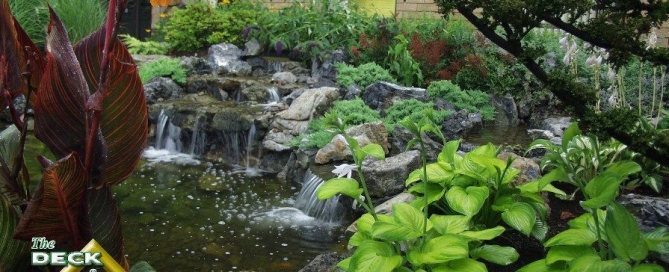
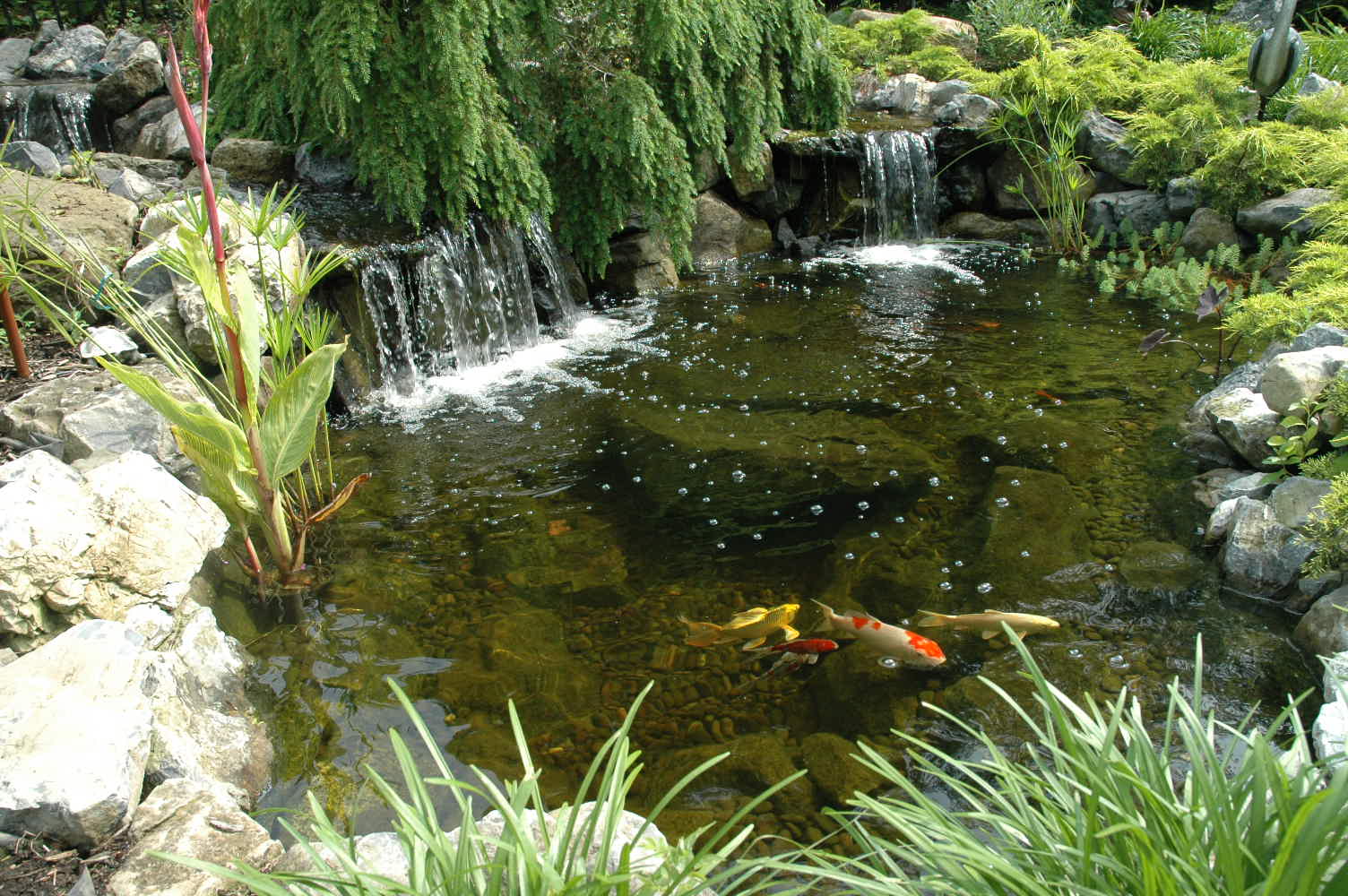
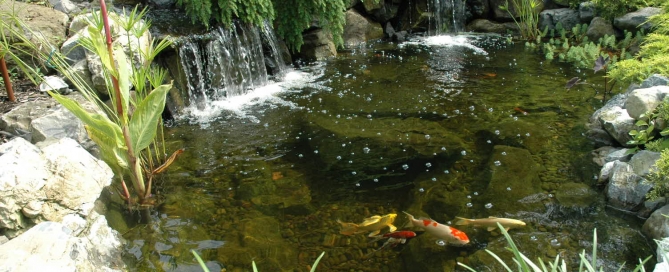
The tall aquatic plant on the left of the pond (a canna lily) thrives in water conditions that are 70-80 degrees F, with a pH of 6.5-7.5. They’re also easy to care for, love natural light and are ideally suited near the edges of a pond. The weeping hemlock at the top right in the photo flourishes in moist soil and offers a bit of shade which helps balance the water temperature.


Landscaping Around Ponds and Water Features:

Landscaping Around Ponds and Water Features:

This photo was taken just after we built the pond. Lily pads, and other in-pond aquatic plants, had yet to be added. But we had installed some attractive peripheral landscaping using plants that like moist, but well-draining soil. These do well around a pond but not in one. The red/pink flowers in the foreground are roses. To the right of them are variegated hydrangea and to the left are variegated hosta. All of these plants attract birds and butterflies.


Aquatic Plants:

Aquatic Plants:

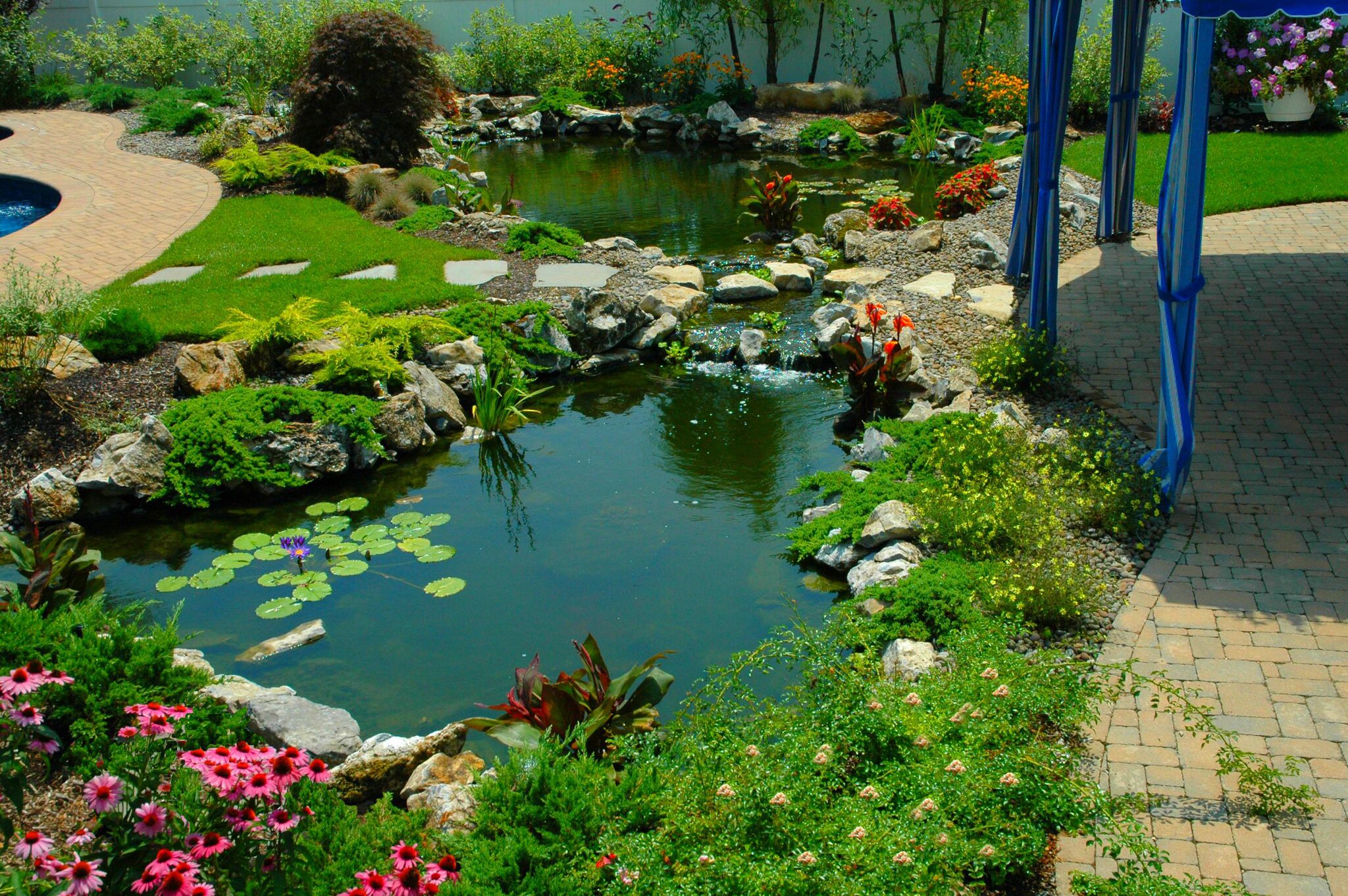
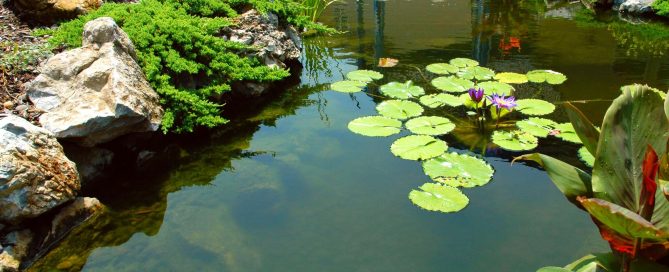
In addition to the canna lily, this pond boasts water lilies — both tropical and hardy ones. The pinkish coneflowers on the right are not aquatic and are not in the water but are perfect edging plants as they attract desirable wildlife — one of the reasons we love our ponds.


“Pondless" Waterfall Landscaping:

“Pondless” Waterfall Landscaping:

Pink petunias add a bright statement away from where the waterfalls spill and seep into the ground. Close to the waterfall area we added grassy plants like Liriope that thrive in moist soil.


How To Choose the Perfect Pond for Your Property

Whether your property is large and expansive — or no bigger than a postage stamp — most yards can accommodate some type of pond. As you’ll see from examples we’re highlighting today, ponds come in many sizes, shapes, and depths, and sometimes these water features may not be classified as ponds at all.
“When it comes to the pond’s location on the property, we recommend locating it where it can be enjoyed from a patio or deck, bedroom, or kitchen,” says Dave Stockwell, owner of Deck and Patio.”


Ponds, Decks, and Landscaping

Ponds, Decks, and Landscaping

This deck, for example, was designed with a viewing platform from where the clients can enjoy the pond and the robust landscaping — rich with aquatic and other plantings. Also note that we  installed large stepping stones for walking across the pond to other areas of the water feature.

“However, if the clients are hoping for a more private escape for relaxing and meditating, the ideal spot for a pond may be farther away from the house,” says Dave.


Ponds With Additional Waterfalls

Ponds With Additional Waterfalls

In this case (above), the homeowners wanted the best of both worlds: a glorious private pond-escape further away on the property, and an additional waterfall located near the house. Deck and Patio set the extra waterfall at the top of a slope facing the clients’ indoor kitchen.

“From inside their home the family can enjoy the sights and sounds of this waterfall. A stream on its right flows down through five separate cascades into the lower, and more private pond area — a beautiful oasis for stillness and quiet,” says Dave.


Fitting Ponds Into Tight Spaces

Fitting Ponds Into Tight Spaces

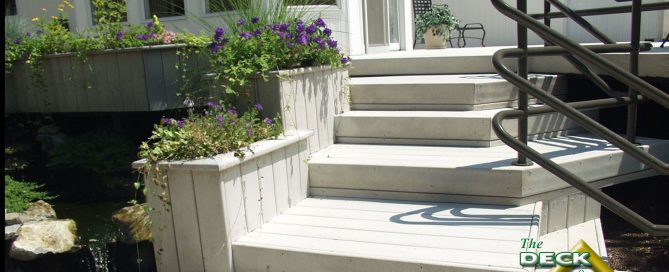
When space is at a premium (and even when it’s not), Deck and Patio can help clients find ways  to creatively add a pond. The above photo showcases a Trex deck with two handsome “platform” staircases; we installed a beautiful micro pond and waterfall in and around the staircases in what was a former planting bed. “Every time they enter or leave the house they enjoy the sounds and sights of a delightful pond,” says Dave.


Photo courtesy of Aquascape Inc.

Photo courtesy of Aquascape Inc.


When children are very young, clients often opt for a “pondless” waterfall, in lieu of a pond. With these water features river rock allows flowing water from a waterfall to seep down into the ground where a reservoir captures the water and recirculates it.


Natural Playscape with Pond

Natural Playscape with Pond

In the case of these clients, their children were not toddlers. However, they thought them still young enough that some safety precautions should be taken. So Deck and Patio designed/built their city oasis (above) with a temporary 8” shallow pond.

The pond was constructed to “grow” with them. It is actually a deeper pond with boulders that are covered with fabric and gravel which, when they are older, can be removed, exposing a full-sized pond they can stock with koi — offering an entirely different experience for more mature children.


Perfectly Placed Pond

Perfectly Placed Pond

Deck and Patio located this pond in view of the home’s back patio and pool area, as well as from the house. Part of what makes a pond spectacular to look at is its landscaping. This requires knowledge of not just soil and sun but how each planting is affected by water and moisture. Here (above) we included Cone flowers, Spirea Anthony Waters and Coreopsis for pops of bright color along with deep green ground cover and tall grasses.


“Whatever the size or shape of your yard, there is a perfect pond for your property,” says Dave.


When To Start Planning a Backyard Retreat

When landscaping firms such as Deck and Patio recommend planning an outdoor retreat before spring arrives, it isn’t self-serving. It is because, if left too late, it may not be possible for a client’s dream backyard to be completed for the year’s outdoor season.

“It’s best to begin in late winter,” says Deck and Patio owner Dave Stockwell. “Beginning early not only allows time to come up with a design plan that isn’t rushed, but it also provides sufficient time to check on local variances and secure permits. Many towns and villages on Long Island, for example, have different codes and requirements, and delays in approval are common.”

Other key parts of the design/bid process, says Dave, include pulling together those needed for every aspect of the project. Starting early ensures each team will be available at the right time to work in a way that doesn’t slow the job down.

Deck and Patio at work

Deck and Patio at work

Choosing the Right Designer/Builder

Choosing the right designer/builder is perhaps the most important decision you have to make when planning your outdoor retreat. Here are just a few of the questions you should consider:

—  Will your design/build firm be using subcontractors and if so, are they licensed and insured? Who will be responsible for any repairs during the warranty?

—  Will your design/builder obtain town codes and zoning information or will you be doing this? Some firms such as The Deck and Patio Company can introduce you to an expeditor to help in the permit process, if required.

—  Take the time necessary to verify the references of your designer/builder and how many workers will be on the site at any given time. Will there be a supervisor there, for example.

—  Review any contracts carefully before signing on. Ensure you have all the warranty information that was promised.


Deck and Patio brochure

Deck and Patio brochure


“In fact, there are so many important things to consider early in the process that we have created a booklet, “10 Things You Should Know Before Hiring a Landscape Contractor,” says Dave.

“This brochure spells out in detail a variety of things to be considered before you begin. You can get a copy by stopping by our design center, or just call or email us for one.”


Landscape Planning Should Begin in Winter (Long Island/NY):

Landscape Planning Should Begin in Winter (Long Island/NY):

Even if there’s snow on the ground, a good design/build firm is able to see underneath it to plan an outdoor retreat. “We use surveys and Google Earth, etc. to plan any backyard refurbishment,” says Dave Stockwell, owner of Deck and Patio.


Planning Landscape Projects in 3-D Animation (Long Island/NY):

Planning Landscape Projects in 3-D Animation (Long Island/NY):

As we highlighted in last week’s blog, it is great if your designer/builder can show you through computer animation what your backyard upgrade will look like before you commit to the plan. Everything in this project, including the house (unseen here) patio, pool, waterfalls, outdoor kitchen and expanded pond were shown clearly in the animation — even the natural gas campfires.


Home Contractor and Landscaper Cooperation (Long Island/NY):

Home Contractor and Landscaper Cooperation (Long Island/NY):

These homeowners brought Deck and Patio on board early on when they were designing their home. This helped create a seamless integration of the landscape and nature with the home’s architecture — the architect even changed his design of the home’s turret in order ensure views from within would capture the various outdoor vistas. (Note: The town involved had strict setback requirements; we brought our 3-D animated landscaping plan to the town which aided in getting the permit granted quickly.)


Natural Vanishing Edge Pond (Long Island/NY):

Natural Vanishing Edge Pond (Long Island/NY):

This serenely beautiful vanishing edge pond belies the challenges (town codes/design planning) that were required to bring it all about. Being located on a bluff on a highly regulated area of Long Island’s north shore (Eaton’s Neck), there were lots of regulations regarding building near the cliff’s edge. Deck and Patio came up with a natural vanishing edge pond design instead of a pool which satisfied the code regulations. But it took early planning to not only get permits but to also create the pond’s complex natural biological filtration system that maintains the pond’s crystal clear water.


Backyard Water Features (Long Island/NY):

Backyard Water Features (Long Island/NY):

Planning glorious backyard water features takes time, especially if you want a man-made feature like this to appear as if Mother Nature designed it herself. This requires ordering and installing the perfect-sized rocks and boulders that urge the water to flow in natural spills into either a pond or pondless-reservoir.


Can Beautiful Landscaping Improve My Well-Being?

A few years ago, The Atlantic magazine published a news feature outlining how “natural environments refocus our attention, lessening stress and hastening healing.”

In the article, a study was referenced that was conducted by a researcher at Paoli Memorial hospital (Paoli, PA). After visiting patients recovering from the same type of surgery, she noticed that some had improved at a faster rate. Since most everything else was the same, she wondered if the faster recovery could have been related to the differences in patients’ rooms.

Sure enough. While the rooms were basically identical, some of the hospital rooms on the same recovery floor faced a brick wall, while others looked out onto a small group of deciduous trees.

As the researcher dug further, she noted interesting details in the patients’ recovery charts.

For example, the charts showed how much more work was required by the nursing staff for those facing the brick wall. Their chart comments included:  “needs much encouragement” and “upset and crying.” However, those looking out onto to a natural view had higher spirits and needed fewer pain killers as they progressed than the others.

“Since I was a young man, I’ve always had an sense that beautiful landscapes healed the spirit,” says Dave Stockwell, owner of Deck and Patio. “It’s one of the reasons I do this work. But I was surprised myself to learn that natural beauty can also speed up recovery of the sick.

“I have always been aware of the effect a green landscape has on children, including my own,” continues Dave. “Even when they have had a bad day, like challenges at school, they pick up quickly once they get to play in a pleasant outdoor space.”

Dave also agrees with The Atlantic’s explanation as to why nature revives us.

“When you’re busy dealing with the demands of every day life, it can be exhausting. We are overwhelmed with stimuli. A peaceful surrounding calms you right down as you take in the serenity and quiet.”

Deck and Patio has a history of creating beautiful landscaping projects (including many award-winning) where families can revive themselves. Various elements are frequently involved:

  • sounds (moving water, chirping birds, croaking frogs, the rapid flaps of hummingbirds)

  • colors and textures (aquatic plants, seasonal plants, bright and soft colors, rich greenery, leafy shrubs, interesting barks, winter berries, etc.)

  • overall harmony (when things fit together in a beautiful way), including a right balance between hardscapes (patios, decks, pool surrounds, driveways, walkways) and softscapes (gardens, grass, trees, soil gradations).


A body of research on how landscaping can affect our well-being continues to grow, says Dave. “Studies from Stanford University, for example, are some of the many ways experts continue to explore this connection.

“It also doesn’t require a large area to create a restful contemplation-scape,” adds Dave. “When you realize that the patients in the Paoli Memorial hospital study improved just by looking at a nice group of trees, imagine the positive effects that a fuller nature-escape provides, when it’s right in your own yard and can be enjoyed every day.”


Contemporary Style Water Features:

Contemporary Style Water Features:

You can plan/design a contemplation-scape just about anywhere, and in any style you like. Where new sheet-falling waterfalls (right) flow into this backyard pool, there had been a moss rock waterfall. Adding new sleek waterfalls and bright greenery, along with the Asian touches chosen by the homeowners, Deck and Patio turned this backyard escape into a Zen-like atmosphere perfect for their tastes.


Serene Walking Spaces:

Serene Walking Spaces:

According to published reports (see above), serene areas are healing areas. Here, Deck and Patio created a special walking area for the homeowners when they move from one space to the next. This also allowed us to hide their pool equipment in a way that offers contemplation moments as they move around their larger backyard retreat. “However, this kind of walking space is ideal on its own,” says Dave Stockwell. “It was part of a larger project, but it doesn’t need to be.”


Beautiful Contemplation-Scapes:

Beautiful Contemplation-Scapes:

Deck and Patio not only built a natural pond for these homeowners, but we installed stepping stones out to a stone “island” so they could actually sit out in the middle of their pond. The whole area is surrounded with beautiful colorful plantings at the water’s edge as well as aquatic plants and grasses, not to mention beautiful waterfalls (unseen). “Here, sights, sounds and harmony all come into play,” says Dave Stockwell.


The Healing Benefits of a Garden:

The Healing Benefits of a Garden:

“Gardens and chocolate both have mystical qualities.” said Edward Flaherty, author of landscape stories. We couldn’t agree more! And while this garden photo isn’t of one of our own projects, Deck and Patio designs gardens with the same variations in color and texture, as well as slope gradations whenever possible. The result is a relaxing and healing place for young and old alike.


Backyard Water Features Are Magical in Winter

We had a little snow this week on Long Island, and a cold snap is definitely trying to take hold. So, we thought it the perfect time to rerun a blog we posted last December on how winter turns backyard water features into something magical.

Yesterday, we also shared a great post on Facebook from Aquascape Inc. that suggested a great Christmas present: outdoor lighting for your pond or water feature. Outdoor lighting does, indeed, turn night into magic any time of year, not just winter.

Enjoy!

In a previous blog, we showcased Aquascape Inc.’s Fountainscapes as a great way to experience a water feature in your yard without committing to a larger pond or waterfall system.

You might be wondering, why bring this up now, when winter is about to set in? Actually winter is the point. This blog focuses on just how beautiful water features — of any size — are during winter.

In fact, when the temperature drops, flowing water can turn into art as it crystalizes.

Take for example, the waterfalls we created a few years back on Long Island (NY) as part of a double-pond, stream and multiple-waterfall feature. When months later we stopped by during a strong cold snap, we couldn’t resist taking a photo of the sparkling water falls as they crystalized (first photo below).

In order to give you a fuller picture of the winter beauty that can be part of a water feature, we also posted below four glorious fountains capes operating in winter.


Water Features in Winter: (Long Island/NY) - During a prolonged cold snap, ice forms on the natural stone boulders of this water feature; the water falling over the stones crystalizes into glistening flowing threads — an exquisite sight!

Water Features in Winter: (Long Island/NY) – During a prolonged cold snap, ice forms on the natural stone boulders of this water feature; the water falling over the stones crystalizes into glistening flowing threads — an exquisite sight!


Fountainscapes in Winter: This fountainscape is part of a fountain/miniature pond feature that is arguably even more delightful in winter months than in summer. Note how the small stream of water has become a jeweled thread of ice.

Fountainscapes in Winter: This fountainscape is part of a fountain/miniature pond feature that is arguably even more delightful in winter months than in summer. Note how the small stream of water has become a jeweled thread of ice.


Commercial Fountainscapes


Fountains are not just for backyards. No sir, they are a wonderful indulgence at business offices as well — and as you can see from this winter scene,  clearly a year-round uplift for management and staff.


Winterizing Waterscapes: If you do not want the water to freeze, you can choose to winterize your water gardens/waterscapes by running them with heat, which will melt the ice dams. But that is not necessary and might you miss some gorgeous winter scenes.

Winterizing Waterscapes: If you do not want the water to freeze, you can choose to winterize your water gardens/waterscapes by running them with heat, which will melt the ice dams. But that is not necessary and you might miss some gorgeous winter scenes.


Winter Backyard Pond (Long Island/NY):

Winter Backyard Pond (Long Island/NY):

This was actually a pond that we had just built but had not started up. It was crushed with snow from the Northeast Blizzard of 2013. You can see the boulder stepping stones and Moss Rock Island in the middle of the pond. The deck and Bullfrog Spa were completely covered by snow in the shot under the pergola. Despite the storm completely covering the water feature, we think the pond was as beautiful a picture as it was come spring.


Fountainscapes: Of course, winter isn’t the only time of year you’ll appreciate a water feature; even a simple fountain will provide the delightful sound of moving water and a picturesque setting.

Fountainscapes: Of course, winter isn’t the only time of year you’ll appreciate a water feature; even a simple fountain will provide the delightful sound of moving water and a picturesque setting.


Preparing Ponds for Winter


We are not alarmists at The Deck and Patio Company, but our job requires that we pay attention to credible weather forecasts. And according to Accuweather, the Northeast may be in for an extended snowy winter, stretching into spring of 2017. If you have a backyard pond, there are a few things you can do to get ready for this onslaught.

Pond Fish in Winter

First, let’s deal with the misconception that you can’t leave your fish in the pond during winter months. Actually fish do just fine in winter. They go dormant and hibernate. However, our pond expert, Bill Renter, does add that it’s well to be especially alert to their needs once water starts to freeze. Should ice, for example, completely cover your pond, the fish could become starved for oxygen.

“This can be remedied by ensuring the pond has at least two feet of water for them to swim in,” says Bill. “It’s also key for the water to remain oxygenated by keeping a little hole in the ice with a heater, bubbler, and an aerator. We use products from Aquascapes Inc. — pond experts from St. Charles, Illinois.”

Aquascapes’ designs manager, Gary Gronwick agrees it’s important to use a pond de-icer. “This will keep a little hole in the ice so gases can escape,” he says. “While some recommend boiling water to create an opening in frozen-over ponds, that should be discouraged. It will only ice up again quickly.“

Gronwick also says to avoid chopping or sawing the ice to open a hole. The noise and vibrations will stress out the hibernating fish to a point they could die.

These things done, Mother Nature will do the rest. The fish will spend the entire winter hibernating at the bottom of the pond, or in a cave designed for this, and then will slowly wake up as the water warms in the spring. The fish do not need to eat during this time and, in fact, shouldn’t be fed at all.

We’ve included in our photo captions below more tips on preparing your pond and fish for winter and how to watch over it all. Happy ponding.


Prepare Ponds in Fall for Winter:

Prepare Ponds in Fall for Winter:

Before winter sets in, carefully look over your plants and remove any dying material. These materials rot and build up poisonous gases that can’t escape through ice when it forms. Such conditions might mean the koi are no longer simply hibernating, but are in a dangerous state of torpor.


Pond Waterfalls in Winter: (Photo/Aquascapes Inc.)

Pond Waterfalls in Winter: (Photo/Aquascapes Inc.)

Keeping any waterfalls running during cold months helps move the water so ice doesn’t form. But if ice builds up, pond aerators can put bubbles back in the water to add oxygen for the fish.


Contented Pond Fish in Winter: (Photo/Aquascapes Inc)

Contented Pond Fish in Winter: (Photo/Aquascapes Inc)

This pond has been cleared of excessive plant material and ice does not cover over the pond so the fish are happily hibernating.


Water Plants in Winter:

Water Plants in Winter:

Hardy water lilies (shown here) that float on the water’s surface and have a short blooming period can withstand the cold winter months nicely. Lotuses also can withstand the cold winter months because they bloom in summer and go dormant in winter. Note that frost kills water hyacinths; water lettuce, which fights algae, should be wintered in a warm spot that is well lighted as they will not survive in the pond over winter.


Prepare Pond Fish for Winter:

Prepare Pond Fish for Winter:

To be on the safe side, take water temperature regularly once it hits 55 or lower. If your pond jewels are hungry and moving about and you haven’t fed them, they will find something in the pond to eat and soon will be dormant anyway.


 Pond Caves for Fish:

Pond Caves for Fish:

Ask your pond designer/builder to create a small cave, or caves, where the fish can hide from predators in warm weather, and where they can also lie dormant during the winter months. Caves are easily made from the way rocks are positioned in and around the pond.


Are Koi Carp Difficult to Keep in Backyard Ponds?


Koi are delightful ornamental versions of the more common fish known as “carp.” Koi were bred for color by the Japanese for their private ponds or water gardens. But, as some of you may already know, these lovely creatures aren’t just for show. Their presence can help balance the entire pond’s ecosystem and even help to reduce pond maintenance.

Why, then, are so many pond owners anxious about keeping them in their ponds?

“People fear they won’t survive. It is true that koi can be tempting to cats, raccoons, herons, etc., but there is much that can be done to reduce such threats,” says Bill Renter from Deck and Patio.

Renter suggests adding koi castles and tunnels at the bottom of the pond to give fish a safe place to hide from many predators.

Rock overhangs look natural

Rock overhangs look natural

Additionally, including rock overhangs around the outside of the pond, which first and foremost will make any pond appear more natural, help discourage cats and raccoons from reaching into the water after the fish.

“Planning a water feature with sufficient water depth can also dissuade raccoons and cats further, since neither enjoy swimming to get their dinner,” says Renter. “Plus deeper water at the edges — more than 18” deep — discourages heron wading.”

Another helpful idea is adding a waterfall feature. Continuous flowing water into the pond isn’t just beautiful and pleasant sounding, but the ongoing movement from the falls will put off many avian predators and even stop mosquitos from breeding.

Other precautions koi pond owners can take is adding scarecrows, such as owl statues. But with ongoing climate change and continued new construction, changes to their habitat are also causing changes in the behavior of local wildlife. “If all else fails, a netting can be installed over the pond,” says Renter.

Tips for Keeping Koi Safe:

— make your pond as large and deep as possible

— try to locate your pond in an area that you can see from inside your home so you can chase away any predator that isn’t deterred by other means

—  try to include a waterfall to aerate the pond and scare away some predators

— lighting with movement sensors near the pond can frighten away an animal at night

— scarecrows (like owls) discourage many predators — herons and kingfishers in particular; some scarecrows also have moving sprinklers which do double duty to dissuade prey

—  don’t put food for the birds you’re trying to attract near the pond — put it as  far away as possible

—  create hiding places for the koi inside the pond such as castles and tunnels

—  if you still have problems, a pond net will do the trick.


Here’s a small sampling of our favorite Deck and Patio pond features. And, yes, even if not picked up in the photos, there are koi in each and every one.


Pond Koi:

Pond Koi:

Contrary to popular belief, pond fish will actually reduce pond maintenance, as they graze on string algae and bottom feed from the pond floor. (Note: Plants in this pond include bullrush, pink canna lilies, horsetail, and a “rose arey” hybrid water lily.)


Pond Netting:

Pond Netting:

It’s wise to have pond netting even if you don’t need it to keep away predators. In order not to let a collection of debris into your clean pond water, you’ll want to put a net in place before leaves begin falling in autumn. Then, simply pull it out when they’ve all dropped. You can tent the net so it doesn’t sag into the pond when it gets weighted with leaves, say experts at Aquascape Inc. (Photo/Pond Net: Aquascape Inc)


Ponds with Waterfalls:

Ponds with Waterfalls:

The continuous movement of the pond water because of  waterfalls not only oxygenate the water to keep it healthy and free of mosquitos, but the spilling water will put off many avian predators


Pond Ecosystems:

Pond Ecosystems:

Koi is a healthy part of this pond’s natural ecosystem; this pond also offers koi lots of room to hide as well as swim. There are also plenty of rock overhangs to discourage predators.


Keeping Koi Safe:

Keeping Koi Safe:

Planning a water feature with sufficient water depth can help dissuade raccoons and cats, since neither enjoy swimming to get their dinner. Plus deeper water at the edges — more than 18” deep — discourages heron wading.


Water Features for Pools

There are several enticing styles of water features you can add to your pool. However, in today’s blog, we are focusing on a particular water feature stand-out: stream-fed waterfalls.

While pools, themselves, are the most prevalent water features, the amenities you add to them, in particular water features, can take them from ordinary to sublime.

Reminiscent of Mother Nature’s own ponds and lakes — where water pools are the outcome of streams and rivers feeding oxygenated waterfalls cascading from above — adding water features provide a very special dimension to a backyard pool.

A key element in giving the feature a natural feel is the use of moss rock. Of course, the skill comes in positioning the rocks in such a way so the water spills over them just like you would see on a mountain hike or woodland stroll.

The first project we are highlighting today showcases a majestic high waterfall spilling over natural boulders into a freeform concrete pool and spa. The waterfall doesn’t flow out from the walls of the pool, but like all the ones in today’s blog, it is fed by a meandering man-made stream.


Water Feature for Freeform Pool:

Water Feature for Freeform Pool:

The spa in this project is private — nestled inside a cove made from moss rock boulders fitted with a structural steel and concrete ceiling. The entire project included a freeform pool with grotto spa, Techo-Bloc tumbled paver patio and in-pool tanning shelf; it won for Deck and Patio a prestigious Silver medal for design from the Northeast Spa and Pool Association (NESPA).


Spa and Pool Waterfalls:

Spa and Pool Waterfalls:

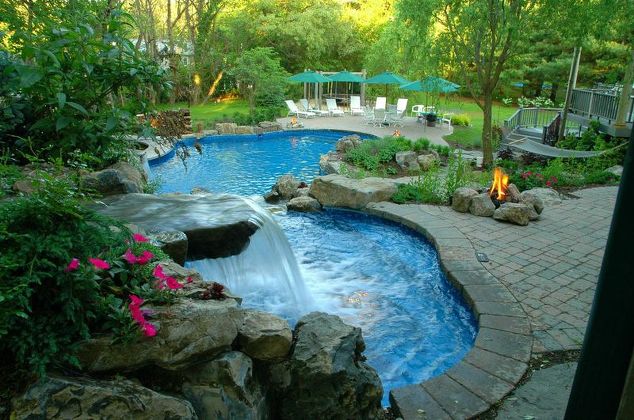
A rushing stream of hot water flows over a large moss rock into a new spa built by Deck and Patio. From there, a spillover waterfall flows out from the spa five feet above the main swimming pool.


Swimming Pool Water Features:

Swimming Pool Water Features:

Imagine sitting at a granite-topped swim-up bar on comfortable in-pool stools while enjoying the sounds and beauty of several stream-fed waterfalls. For this project, Deck and Patio was able to turn the biggest challenge of the property — its rising elevation — into a benefit. Gravity alone moves the water down the slope into the waterfalls. This project won us several gold meals; one from NSPI and one from NESPA.


Natural Swimming Pools with Waterfalls:

Natural Swimming Pools with Waterfalls:

Although we have successfully built natural swimming pools for clients with waterfalls fed by streams, this project is not one of our own.  We are using it today because it so beautifully showcases how much children love natural swimming pools. It was supplied to us by the company that manufacturers much of our water feature equipment — Aquascape, Inc. (St. Charles, IL). The pool waterfalls are stream-fed into a “natural” swimming pond. Swimming in such pools isn’t any different from taking a swim in an old fashioned swimming hole, or the ocean for that matter. Photo: Courtesy of Aquascape, Inc.


 Pool Waterfalls:

Pool Waterfalls:

The sound of waterfalls cascading over natural rock offers relaxing sounds as well as a beautiful vista when dining al fresco. Here, Deck and Patio also added a sound system in this backyard retreat that pumps music; together with the waterfalls the sounds are wonderful for entertaining or family fun.


Pool Water Features:

Pool Water Features:

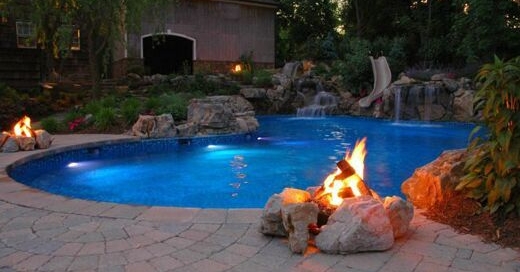
Sunset is a glorious time to be by the pool, especially when the sounds of multiple waterfalls complete the scene. Here a stream feeds two separate waterfalls on either side of a water slide that makes its own waterfall. This is definitely where you want to be at the end of each workday.


Nature Lovers Find Backyard Escapes An Elixir

Don’t you love all the beautiful landscaping photos available on social media? Certainly, Deck and Patio’s team does. We even post a lot of our own. But while it’s an incredible uplift to catch glimpses of serene images of nature during the workday, photos, alas, can’t substitute for the real thing.


Lake Winnipesaukee

Lake Winnipesaukee


Nature as Elixir

Albert Einstein once said: “Look deep into nature, and then you will understand everything better.” Without question, early Native Americans did just that. Chief Ahanton, of one of New Hampshire’s Eastern Woodlands tribes, for example, named the state’s majestic great Lake: Winnipesaukee, — or the smile of the Great Spirit.

And it’s no different today. Pure flowing water — and all that it nourishes — is still considered by many to be sacred. Such scenes touch something deep within, causing us to pause, rest our minds, and rejuvenate.


INSERT 2Travel Not Required

Since we can’t travel daily to natural habitats like Lake Winnipesaukee, the Adirondacks, or the White Mountains, etc., how can we pause daily to rest our minds? The answer may be found right in our local communities.

Did you know that since Deck and Patio began designing/building ponds and pondscapes, we have created over 300 such peaceful water features here on Long Island alone? This is because local nature lovers have found that their backyards don’t have to be just a patch of green with some flower beds. They can be transformed into glorious escapes that act as the perfect elixir.


Backyard Escape:

Backyard Escape: For this project, Deck and Patio carefully selected boulders and stones, along with bright plantings, to help create a beautiful vista. And as Chief Ahanton would no doubt agree, it would not have been an ideal outdoor refuge without some sort of water feature. A stream with waterfalls flowing under a charming wooden bridge, combined with the imported boulders and rocks we chose, created a natural walking trail like one would find in the mountains.


Mixing Softscapes with Hardscapes:

Mixing Softscapes with Hardscapes:

There’s no need to sacrifice a patio with spaces for entertaining to a natural vista that will nourish your soul. You can have both. For this project we built multi-level patios and carefully delineated how each space was to be used. One area was set up for relaxing and taking in a section of the yard’s multi-faceted water feature. Another spot off to the side — in front of a thicket of trees — was designed as a private patio. Sections for sunning and being near their pool were also mapped out.


Award-Winning Backyard Twin Ponds:

Award-Winning Backyard Twin Ponds:

This project is a great example of building a nature lover’s escape on a property that did not have a lot of slope. It is actually three bodies of water: twin ponds and a swimming pool. The lower pond was intended to be the fish pond, with the upper pond for aquatic plants. However, Mother Nature is always boss. For not long after this award-winning* project was complete, the pond fish began jumping over the waterfall stone that separated the ponds, to swim upstream into the upper pond. (*This project won an international silver medal for water features from the Association of Pool and Spa Professionals (APSP).


Backyard Nature Walk:

Backyard Nature Walk:

Because these clients had a beautiful wooded yard, Deck and Patio had a beautiful backdrop to work our magic. We weaved stone steps, streams, and waterfalls in an around the property’s existing bridge and nature walks — all just below a park-style bench. We also lavished it all with robust plantings and green ground cover. To just about any eye, the completed nature walk appears as if Mother Nature put it all together herself.


Natural Stepping Stone Bridge:

Natural Stepping Stone Bridge:

Taking a walk in this backyard is as much meditation as exercise. In homage to Japanese Garden styles, Deck and Patio fitted large natural stones with smooth walking surfaces across a newly completed backyard pond. When doing the landscaping, we anchored each side of the pond with beautiful deep colors midst the lush green ground cover.


Ideal Landscaping Takes Planning


Lush beautiful landscaping that lasts and expresses those who live there is rarely random. It involves a thoughtful plan, which means that any expert professional involved needs to understand the client.

When planning a delightful outdoor landscape, it is key to consider such questions as: how do you feel about the upkeep of the space? Frequently that means choosing plants that will survive with little effort, with shade, and are generally easy to maintain.

However, to complete the right outdoor vistas, it’s not just the softscapes (or plantings) that are important. Where additional hardscaping is desired, the types of materials used need to fit the mood and tastes of those living there. It is equally important to soften around these areas with hardy plants and shrubs, along with dramatic statements like a mature Japanese maple — all of which add a soft allure to any patio, walkway, walls and steps.

Another crucial consideration is how do you want to use the space, with the size of your property – and, of course, budget –  affecting these decisions.

In the end, the ideal project begins with the right plan to express those who live there – and express them ‘beautifully.’


Hardscapes That Look Natural:

Hardscapes That Look Natural:

This beautiful walking area in the clients’ yard appears to have been designed by Mother Nature herself. Stepping stones leading to steps of natural stone  are flanked by lush plantings that include bright red “Wave Petunias” and colorful purple and yellow “Coneflowers.”


Landscaping Around a Pond:

Landscaping Around a Pond:

These clients wanted a water feature as part of their landscaping plan. Along with robust green ground cover that Deck and Patio added in and around the waterfall’s natural rocks, the pond also bursts alive with color. Bright orange blossoms of “Canna Lilies” (left), which take full sun but can thrive in partial shade, offer up tropical-like blossoms. The green-leafed plant to the right is “Hosta” which boasts delightful waxy leaves and produces white flowers in late summer.


Backyard Streams with Landscaping:

Backyard Streams with Landscaping:

So many clients these days want a stream with waterfalls that they can stroll or sit beside to enjoy peaceful contemplative moments. The key is to making such a delightful experience is for it to appear as if Mother Nature carved it out long ago. This means careful thought must go into the plants and rocks used along the banks.

The bright reds seen along this stream are “Wave Petunias” which are summer favorites. They are definitely easy-care as well as fast growing. Note: they are not the cascading Petunias you see growing in porch hanging baskets, but are garden favorites that spread and trail along full of flowers. The pretty bluish-purple flowers just behind them are “Russian Sage” and the robust green evergreens rolling along the banks are “Procumben Junipers.”


A Pond Monet Would Love:

A Pond Monet Would Love:

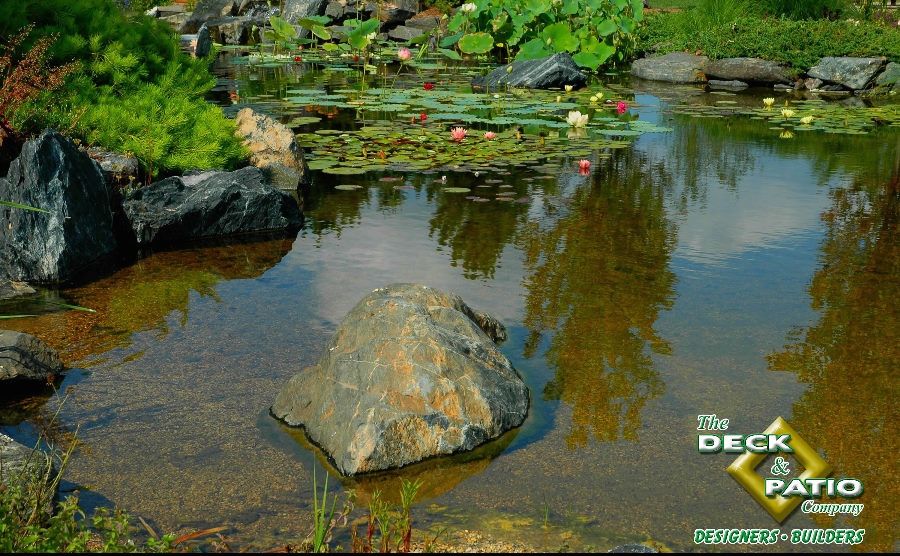
These clients wanted a stunning, natural looking expansive pond and if we say so ourselves, the finished water feature is a spot the painter Monet would appreciate. The joyous colors bobbing in the water are tropical water lilies that come in a variety of colors and are seen here in white, red and pink varieties. In choosing these plants, you’ll want to be sure they are mostly day-bloomers, but if you have good landscape lighting, and want to experience something very special once the sun goes down, include a few night bloomers in your pond.


Dramatic Curb Appeal:

Dramatic Curb Appeal:

When you want your entranceway to say “wow” like these clients did consider a hardscape in muted soft colors. Around the walkway and porch, we lavishly landscaped the area with bright eye-catching plantings. On the far left, for example, there is a blush of purple “Coneflowers” shining out from a much more expansive swath of sunny yellows of the same variety.


Go to Top