Gardening

What is Involved in Creating a Backyard Oasis Landscape?

You know it when you see it, a backyard so tranquil and lovely — and beautifully designed for entertaining — that it didn’t come about without expert planning.

Of course, you’ll no doubt turn to a professional to install any pool or spa, and perhaps the deck or patio areas. But for you hardy do-it-yourselfers out there, if you want to do the landscaping yourself, for picture-perfect, and useful, outdoor living spaces, here’s a few tips.

It is key to learn which plantings work well together, their bloom periods, those that thrive in full or partial shade, as well as plantings that will need the least care.

In addition, a beautiful backyard retreat can require selectively removing what is already there: trees and shrubs, as well as undesirable rocks and boulders that may be in the way. It’s also important to learn what is needed to nourish your particular property’s soil.

When it comes to soil nutrients, there are several places you can go for information, such as the Cornell Cooperative Extension in your area, where experts can guide you and sometimes even help analyze the soil.

As for the landscape design plan, take into consideration your home’s architecture as well as your style preferences.

“It’s also key to pay close attention to your property grades,” adds Dave Stockwell, owner of Deck and Patio. “We plan so that the landscape will flourish and last for years. Our designs include a layering technique that offers privacy on the periphery and vibrancy where it will be best enjoyed.”

Dave adds that another trademark of great design is the careful combining of ‘softscape’ with ‘hardscape.’ “Careful placement of moss rock will also add to the dimension and texture and a natural appearance.”


Landscaping Techniques:

Landscaping Techniques:

Because this property was open on three sides with three homes in full view, we added Skip Laurels, Leyland Cypress, and Cedars on the periphery to create a natural privacy screen. Texture and color were brought in to the buffering divider by incorporating flowering deciduous shrubs.


Landscaping Techniques:

Landscaping Techniques:

For the same project above, Deck and Patio’s Marc Wiener incorporated creeping evergreen ground covers that cascade and wind over and between the rocks we used. His selection of plants provide color from April through October; the whole design flows beautifully into the back property.


Year Long Garden Color:

Year Long Garden Color:

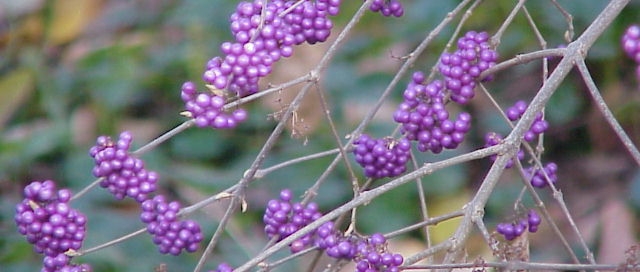
Sandra Vutaggio, Horticulture Consultant at the Cornell Cooperative Extension in Riverhead, NY says that there are many plant choices that will provide either bark interest, colorful berries/seedheads late-season. The beautiful purple berries of the Callicarpa plant pictured here, for example, begin in fall and last through winter. Photo: Missouri Botanical Garden


Crepe Myrtle Trees:

Crepe Myrtle Trees:

The Crepe Myrtle thrives on Long Island and the northeast. It’s offers delicate clusters of pink blossoms in late spring (shown behind waterfall); in fall, it shows bright red-orange leaves, and in winter it has interesting bark.


Purple Allium Sphaerocephalon:

Purple Allium Sphaerocephalon:

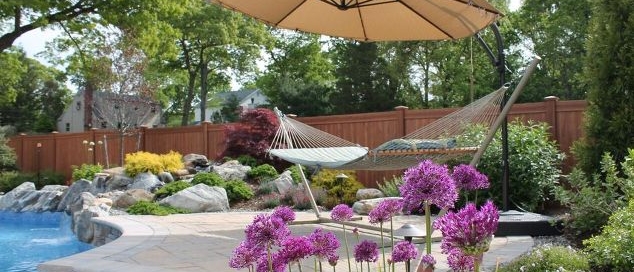
These beautiful purple flowers (seen in the foreground) are planted in the fall and are one of the many plantings that offer robust color in the summer outdoor season and thrive nicely on Long Island and in the northeast. Deck and Patio’s Marc Wiener chose them for this design plan for their height as well as their lovely color contrast.


Rainwater Harvesting Incentive Programs: Savings From a Rainy Day

Because water is so important to our every day lives, improving and maintaining water quality is our passion at Deck and Patio. In fact, we have a special division — Rainwater Harvesting Group — dedicated to installing rainwater collection systems that alleviate demand on municipal systems, reduce water bills and beautify and enhance landscaping and properties.

In addition to saving on water bills, fortunate residents in other parts of the United States, who have installed rainwater harvesting collection systems (alas not New York as of this writing), can take advantage of state and/or local rebates — the amount of the rebate being frequently determined by the type and size of the harvesting system installed (i.e., barrel collection or pump driven).

One city — Austin, TX — has an excellent rebate program. Granted, Texas has suffered through five straight years of droughts until last year’s spring rains were finally sufficient, so saving rainwater there is a high priority. However, other areas in the country, not so plagued by droughts, offer similar water rebates through their own state and local initiatives.

To find out how such programs might benefit Long Island, we spoke with Nick Menchyk, Assistant Professor (Urban Horticulture & Design) at SUNY Farmingdale.

“On the east coast, we typically get plenty of rain. However, any time we can harvest and use rainwater for irrigating our landscape — as opposed to pulling it from our aquifers — is going to be beneficial. Where government programs around the country exist, these programs have worked very well, and we should look at this at the local level here on Long Island,” says Professor Menchyk.

He adds that in California, for example, they offered rebates to remove turfgrass in favor of drought tolerant landscapes and that state funding ran out of money because so many people jumped at it.

“So any time you can encourage people to use that rain barrel or an in-ground system to collect rainwater is bound to be effective.”

While he does not consider himself an expert in rainwater harvesting and rain gardens, Professor Menchyk is convinced that it’s only a matter of time when the greater eastern seaboard will be looking to how we irrigate, as well as which plants work well in droughts and in rain gardens.

“Whether we like it or not, the future holds limitations in the amount of water we use. Rainwater harvesting is a way we can be responsible stewards of our environment now. We have such a unique area on Long Island. Along the coast, we are less than 11 feet from ground water. Any way we can capture water from impervious parts of our landscapes — and prevent it from leaving our property — is going to reduce the number of pollutants and nutrients getting into our lakes, streams, oceans and potentially into the ground water.”

A special thanks to Professor Menchyk. As an additional note: While harvesting rainwater is not a new idea, rebates for installing such systems are still very new. Deck and Patio’s research shows that only the following states, either through state or local municipalities, offer incentives for rainwater harvesting at this time: Arizona, California, Colorado, Florida, Illinois, Indiana, Maryland, Minnesota, Nevada, New Mexico, Oregon, Texas, Virginia, Washington. and Washington D.C.


Capturing Rainwater Runoff:

Capturing Rainwater Runoff:

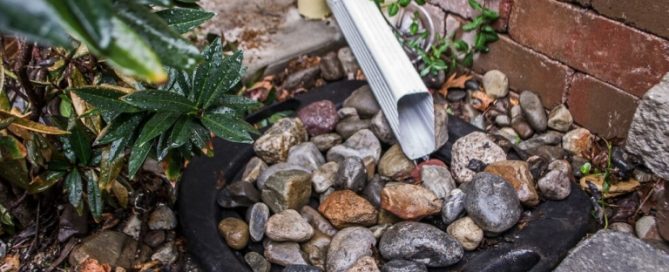
The average homeowner uses about 3,000 gallons of water a week, 70% of which is for irrigation — or water that doesn’t need to be treated. For this project, four downspouts collects about three quarters of the clients’ roof runoff, which goes through containers with filters to screen out twigs and small debris before sending the rainwater down into the reservoir for reuse in irrigation and to top off a backyard pond when needed.


Healthy Eco-Systems:

Healthy Eco-Systems:

Deck and Patio frequently uses rainwater harvesting as part of a complete, self-sustaining eco-system. This water feature includes a stream and multiple waterfalls — all recirculated through the same Aquascape RainXchange water collection system. City water is not used. The feature attracts desirable wildlife such as frogs, butterflies, birds etc. creating a delightful wildlife refuge.


Rainwater Harvesting at Huntington Railroad Station:

Rainwater Harvesting at Huntington Railroad Station:

Here is a great example of government and business working hand-in-hand to beautify the landscape while capturing rainwater for irrigation. Where once was only a dirt path from the sidewalk to the train parking lot, permeable pavers allow easy walking (arrow area pavers) while capturing and filtering rainwater for reuse. The pavers used are Techo-Bloc Victorien Permeable Pavers.


Water Features:

Water Features:

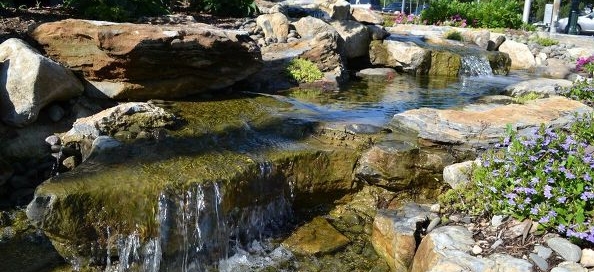
All rainwater harvesting systems need some way to aerate the water. In this case, a beautiful water feature with waterfalls provides this service. The waterfall aerates the water — or oxygenates it — and the right water plants will absorb nutrients and pollutants  to help purify the water. All together, the gravel, under-ground liner, and plants create a self-sustaining rainwater harvesting garden. The area is a magnet for local birds who come to bathe and drink.


US Green LEED Grants:

US Green LEED Grants:

These Brooklyn clients have a four-story walk-up and they wanted to collect all the water that comes off their roof. In addition to the obvious “green” aspects, they hoped to take advantage of certification from the U.S. Green Building Council’s LEED (Leadership in Energy & Environmental Design) program. According to the Council, certification may allow property owners to qualify for a host of incentives like tax rebates and zoning allowances. Not to mention they retain higher property values.


Landscaping Trends 2024: The Benefits of Harvesting Rainwater

Updated 1-4-24

Living in the northeast, we don’t usually experience a shortage of rain. So why bother harvesting rainwater you might ask? 

Major Benefits to Rainwater Harvesting

Major Benefits to Rainwater Harvesting

As the Washington Post reminded us this week in their report, capturing rainwater isn’t just about saving water for potential droughts. Capturing rainwater — and using it for tasks such as watering the garden or landscape, topping off water features, washing the car, etc. — has some major benefits that should be very dear to the hearts of Long Islanders.

When rainwater rushes along our roads and byways into sewers, it picks up contaminants along the way. By the time it makes it to our waterways, The rainwater is not healthy and is deposited where swimming, surfing, boating and other water sports are a passion for many. 

But when homeowners capture and use rainwater, it stops a lot of that runoff from flooding or carrying pollutants into natural bodies of water, says the Washington Post. This helps avoid flooding as well.’


Average Homeowner Water Use


Rainwater will not soak into asphalt or concrete.

Rainwater will not soak into asphalt or concrete.

Did you know that according to statistics the “average” homeowner uses approximately 3,000 gallons of water weekly with about 70% used outdoors?

And have you considered that freely available rainwater does not soak into asphalt and concrete for us to capture, but, instead, flows away, picking up contaminants as it goes, on into over-burdened sewer systems (and hence on into our area waterways)?

Well, this runoff is not just water over the dam, if it highlights how valuable rainwater is to us as an, albeit, neglected, but available precious resource. The trick is: how to keep the rain where it falls to be reused.


Rain Runoff: Instead of being just runoff like pictured here, the trick is to capture rain where it falls to be reused.

Rain Runoff: Instead of being just runoff as pictured here, the trick is to capture rain where it falls to be reused.


# 3 insertHarvesting rainwater is not a new idea. People have been collecting it for generations, frequently storing it in rain barrels.

And this is still a viable method. But there’s a lot more that can be done with falling rain than saving small amounts in unattractive above-ground  containers.


Healthy Ecosystems:

Healthy Ecosystems:

Through our Rainwater Harvesting Group, Deck and Patio specializes in installing rainwater harvesting systems that capture rainwater as part of a complete self-sustaining eco-system.


Beautiful Backyard Water Features:

Beautiful Backyard Water Features:

Captured, filtered and recirculated rainwater, in sufficient amounts to supply attractive water features, work together with carefully chosen plants, fish, rocks and gravel, to maintain a balanced system for long-term sustainability.


Rainwater Harvesting:

Rainwater Harvesting:

Using Aquascape’s RainXchange, and sometimes permeable pavers as pictured here, today’s rainwater harvesting systems capture sufficient rainwater to also wash your car and/or hose down the deck and patio. And when you consider that  local Long island water companies frequently charge an incremental rate, based on the amount of water used, capturing all the non-ingestive water you need from rainfall, the lower your rate will be.


Harvesting Rainwater Roof Runoff:

Harvesting Rainwater Roof Runoff:

For this project, four downspouts collects about three quarters of the clients’ roof runoff, which goes through containers with filters to screen out twigs and small debris before sending the rainwater down into the reservoir for reuse in irrigation and to top off a backyard pond when needed.


Backyard Wildlife Refuge:

Backyard Wildlife Refuge:

This water feature by Deck and Patio includes a stream and multiple waterfalls — all recirculated through the same RainXchange water collection system. City water is not used. Such a feature attracts desirable wildlife such as frogs, butterflies, birds etc. creating one’s own wildlife refuge.


Enjoying Your Deck in Winter: Expert Tips from Fiberon Decking

“Enjoying my deck in winter?” you might be asking. Actually, yes!

To get the snowdown on how to enjoy our decks even when it’s snowy outside, we spoke to Edie Kello, Director of Marketing Communications at a leading capped-composite decking manufacturer: Fiberon Decking.

# 1Removing Snow from Your Deck

Kello says the most important aspect to outdoor winter enjoyment is to remove any existing snow.

“Whether you have a wood or capped-composite deck, we recommend not using metal shovels for this, but plastic ones. If you feel it necessary to use de-icing materials, rock salt is the best choice for any deck surface.  Be sure to choose rock salt that is labeled safe for flagstone or concrete and will not kill grass.”

Kello does not recommend using sand to remove ice and snow because that can mar a deck’s surface; if the snow is light, a broom is a good choice or, again, a plastic shovel, Kello recommends sweeping the used rock salt into the trash, then rinsing the deck off to remove any residue. This is especially important if you have pets.

“You can use a pressure washer if you like, but we recommend not going beyond 3,000 PSI (pounds per square inch). Also, keep the nozzle about 10” above the deck. This applies to both wood and composite decking.“


Removing Snow and Ice from Decks:

Removing Snow and Ice from Decks:

Removing snow is key to outdoor winter enjoyment. Photo: Fiberon Decking and Railing


Keeping Warm on Your Deck

Having a heat source, such as a deck heater (or patio heater), permits you to enjoy your winter wonderland and the fresh crisp air longer. Not to mention you can make s’mores and keep hot cider and hot chocolate warm. Available in building supply stores, they come free standing, fit on a table top, and usually run on propane gas.
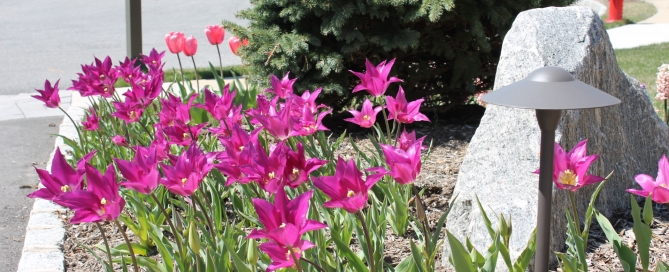
“These heaters will throw heat down and around where you are sitting,” says Kello.

“Fire pits and fireplaces are other popular choices. If you are not using a natural gas heat source, we recommend putting a fiber-cement mat (made of a mix of wood pulp and cement) underneath a fire pit to catch any embers.

It is also important to ensure heat doesn’t build up against the wood or composite decking, so keep any heat source up off the deck by at least a foot.”


Fire Pits/Fire Tables:

Fire Pits/Fire Tables:

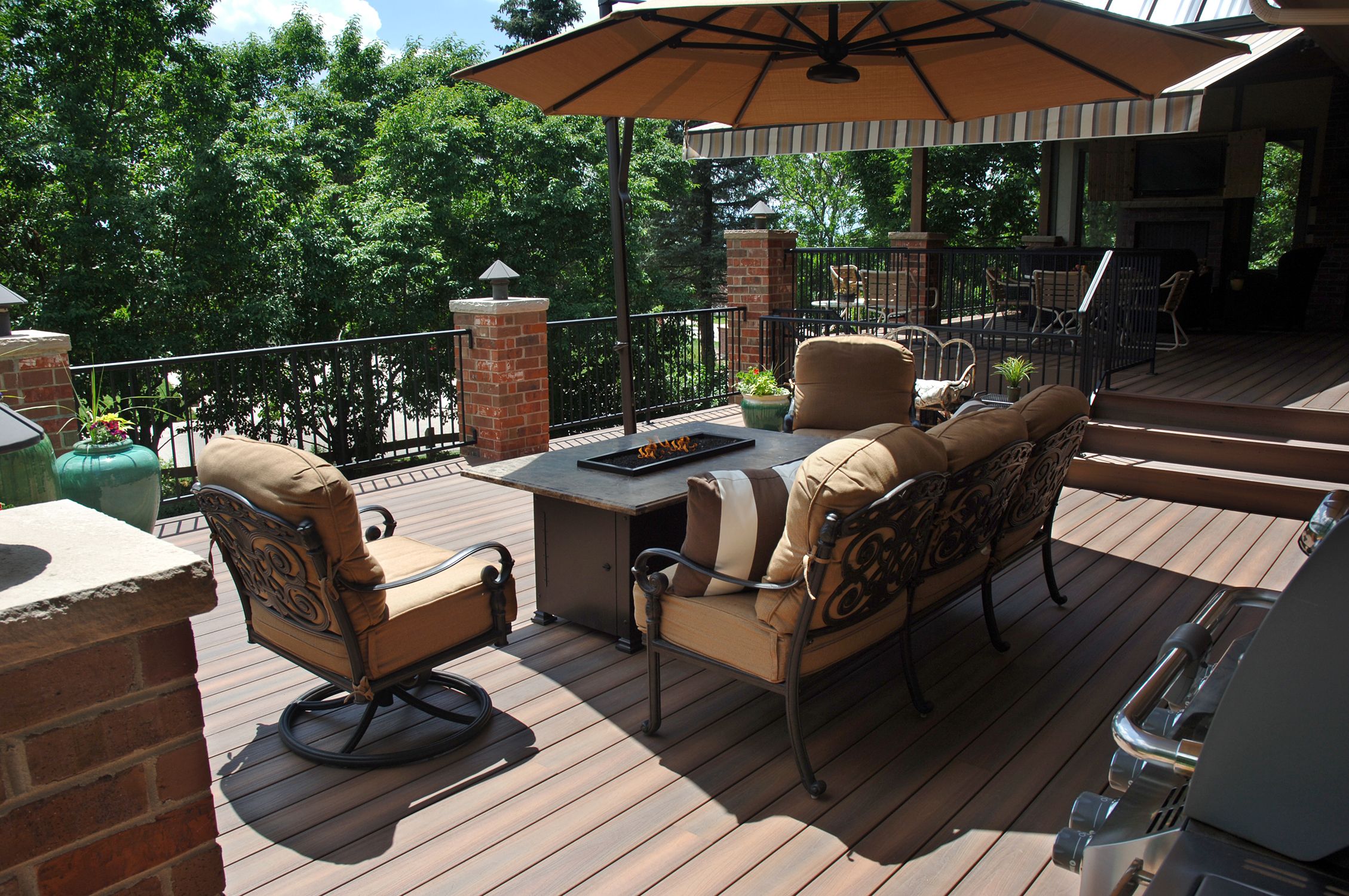
A fire pit adds warmth and is the perfect place to roast a marshmallow for s’mores. Photo: Fiberon Decking and Railing


Trapping Your Heat

Since heat rises, Kello says you probably want some sort of deck covering that will help trap the heat. “It’s great if you can add a roof, but if you have a pergola, you can put a tarp or outdoor fabric over it, or add an awning. These options help keep harsh elements off the deck as well, so there’s less shoveling.


 Deck Covering:

Deck Covering:

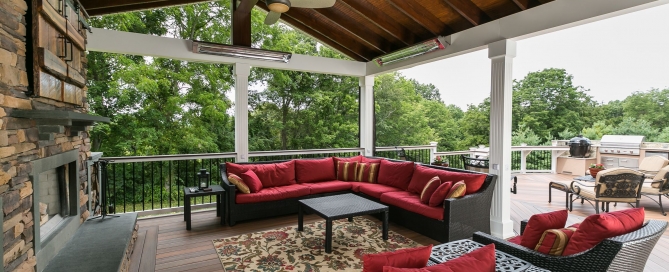
A roof is an ideal way to trap heat when it’s cold; plus a fireplace not only adds warmth, but it provides a lot of ambiance. Photo: Fiberon Decking and Railing


Now, for the Enjoyment!

If we go through the effort of keeping our decks clear of snow and add a source of warmth, that means we get to use our outdoor grills much longer into the winter season.


Photo # 5


Additionally, some people install a hot tub to take full advantage of winter outdoor living — even when there is a massive amount of snow. Just be sure any hot tub is properly supported within the sub-structure of the deck, says Kello.


# 6


She also suggests the addition of lights for a cozy winter atmosphere. “If you don’t have any deck lights built into the railing, just add Christmas/holiday lights, or snowflake lights along the railing, pergola, shrubs/planters, or even on a deck umbrella.”


Other suggestions:


# 7

add color and life on your deck by including flowers such as Pansies, Johnny Jump Ups, Cabbage and Kale, or perennials such ornamental grasses and lavender.

“The point is, even when it snows, you really can enjoy the crisp fresh air right outside your door if you make it comfortable enough,” says Kello.

More: Fiberon Decking


Fall/Winter Garden Color for Long Island and the Northeast


Did you know that even during winter northeastern gardens can be full of color and interest? Have you spied any of the gorgeous berries blossoming right now around Long Island?

For example, Callicarpa bodinieri, aka “Beautyberry,”  is one of Mother Nature’s delights that thrive locally and is offering lovely color right now (see large feature image above). This ‘beauty’ not only makes a sublime colorful statement in fall, but the berries remain through winter.

To obtain a comprehensive list of what will lift winter doldrums with outdoor color and texture, Deck and Patio spoke with Sandra Vutaggio, Horticulture Consultant at the Cornell Cooperative Extension in Riverhead, NY. She shared a substantial list of choices that will provide either bark interest, colorful berries/seedheads, late-season foliage, flowers or evergreen (see list below).

Some of the listed flora actually fit under multiple categories: Skimmia, for example, offers crimson-red berry interest in fall and winter, and also bright white flowers in spring.

“Deciduous plants like Oakleaf Hydrangea have late season foliage and later offer nice bark in winter,” says Vutaggio.

“All on the list grow well in the northeast, although some can be a little fussy. The Skimmia are an example of those that are a little temperamental and harder to grow. Camellias, which thrive much further south, can be marginally hardy, if planted in a good protected spot where they will get a wind break; then they’ll do fine on Long Island.”

Vutaggio adds that any winter interest in the garden should include some evergreens because they will be the backdrop to anything else that you plant.

Other Tips from Vutaggio:

For perennials — e.g., Hellebore (listed under Flowers) and Rudbeckia (under Seeds): if instead of cutting them down you leave them planted, they provide interest amid snow; the Rudbeckia will provide seed heads which will draw birds to them during winter.

You can still get perennials into the ground right now, but for the larger trees and shrubs, you should wait until early spring until the ground is workable to give them time to grow roots and adjust to your property.

Trees like the Crepe Myrtle, which offer beautiful pink spring flowers and, in fall, finish flowering when the leaves pod up into pretty berries, also provide interesting bark color in winter. More on Crepe Myrtle: https://deckandpatio-uz5hx1gru4.live-website.com/for-fiery-fall-foliage-are-you-barking-up-the-right-trees/

Evergreens of all shapes, sizes and variegation add winter interest. Many junipers turn a bronze/purple in the winter as well. Just google the names on the following list to discover all the wonderful options available for winter color and interest.


Cornell Coop Ext List jpeg


Callicarpa (or Beautyberry):

The beautiful purple berries of the Callicarpa begin in fall and last through winter. Photo: Missouri Botanical Garden


Crepe Myrtle:

Crepe Myrtle:

Thriving on Long Island and the northeast, the Crepe Myrtle brings delicate clusters of pink blossoms in late spring (shown behind waterfall); in fall, it offers bright red-orange leaves and in winter interesting bark. Photo: With Permission: Southern Lagniappe)


Skimmia:

Skimmia:

These evergreen shrubs sport bright green leaves and, in spring, bring vibrant white flowers; in fall, they offer up crimson red fruits (berries) that last all through winter and are especially fine in December. In fact, they make great Christmas or Thanksgiving hostess gifts as they are slow growers that are ideal starting out in pots and containers.  Photo Credit: Musical Linguist at the English language Wikipedia


Infinity Pool Project in Cove Neck, Long Island (NY)

Swimming at the edge of your world


Some say the first infinity pool was built at France’s Palace of Versailles, where from, say, one of the palace’s gardens, the eye is enticed across an expansive “infinite” pool of water up to the panoramic King’s palace.

Now perhaps it’s a breathtaking sunset that you want to draw the eye to on your property, or a gorgeous flower garden, or scenic bay. Indeed, in today’s project showcase, it was their property’s spectacular views of Oyster Bay on Long Island’s North Shore that drew these Deck and Patio clients to such a pool.

Infinity Pools

Man-made infinity (aka vanishing edge) pools expand the serenity of a backyard pool by drawing the eye to some other exquisite scene, thereby substantially increasing the restful beauty of any backyard retreat.  However, the finished results belie their underpinnings. These pools — no matter which focal point you are drawing the eye to — require experts to design and install it.

“Vanishing edge pools are an optical illusion that suggest the water is vanishing out of the back edge of the pool,” says our outdoor living expert, Bill Renter. “Nothing is, of course, vanishing in a vanishing edge pool. The water is actually clinging to a recess in the pool wall which then drops into a catch pool below. And while this sounds simple enough, it requires a good deal of mastery to design it correctly. An undersized catch pool can almost never be corrected.”

Bill explains that if the catch pool or basin isn’t large enough there won’t be enough water returning to the main pool and can cause serious problems. Insufficient water may also be a real disappointment, since many like the idea of an infinity pool precisely because the water they swim in will never be stagnant, but will be continually recycled through the pool.

The key, then, is to make sure you deal with experts. And what you get for your effort, is — dare we say it — fit for a king.


___________

Additional note on catch basins: If the catch pool or basin isn’t large enough there won’t be enough water returning to the main pool and the catch pool will run dry. That can trigger huge water bills because it would have to be constantly refilled to compensate for not having enough room to store water. In addition,  during rain falls, the basin could be overwhelmed, leading to it overflowing, or eroding or liquefying the soil behind it.

___________


Infinity Pool (Cove Neck/NY): Depending on where you are in this vanishing edge pool will determine which extraordinary vista your eyes are drawn to.

Infinity Pool (Cove Neck/NY): Depending on where you are in this vanishing edge pool will determine which extraordinary vista your eyes are drawn to.


Pool Landscaping (Cove Neck/NY): Landscaping can play a key role in enhancing the experience of an infinity pool.

Pool Landscaping (Cove Neck/NY): Landscaping can play a key role in enhancing the experience of an infinity pool.


Infinity Pool Catch Basin (Cove Neck/NY): One reason people love infinity pools is that the water is never stagnant but flows into a catch pool and is recycled.

Infinity Pool Catch Basin (Cove Neck/NY): One reason people love infinity pools is that the water is never stagnant but flows into a catch pool and is recycled.


Vanishing Edge Pool (Cove Neck/NY): In addition to the recycled pool water, for this project, a custom “spillover” spa offers healthy aeration to the pool water.

Vanishing Edge Pool (Cove Neck/NY): In addition to the recycled pool water, for this project, a custom “spillover” spa offers healthy aeration to the pool water.


Pool Landscaping (Cove Neck/NY): Everywhere you look in this completed backyard project there is a lovely scene worth pausing for.

Pool Landscaping (Cove Neck/NY): Everywhere you look in this completed backyard project there is a lovely scene worth pausing for.


Infinity Pool and Spa (Cove Neck/NY): It’s wonderful when you can’t decide which is the best seat in the ‘house’ — the pool or the spa!

Infinity Pool and Spa (Cove Neck/NY):: It’s wonderful when you can’t decide which is the best seat in the ‘house’ — the pool or the spa!


Vanishing Edge Pool (Cove Neck/NY): You don’t have to be a descendant of Louis IV to swim in royal waters.

Vanishing Edge Pool (Cove Neck/NY): You don’t have to be a descendant of Louis IV to swim in royal waters.


Fall Planting Tips: Color Interest for All Seasons

The color and the delicacy of flowers inspire us in every season. As winter fades, for example, even when leaves haven’t yet appeared on the trees, blasts of color from Crocuses, Daffodils, and Tulips lift our spirits.

The best time to plant the bulbs that will raise up such spring glory is just around the corner — late October to early November. However, you might want to first ensure there’s color and textural interest right now.

For tips on how to ensure color for all seasons, Deck and Patio’s own Marc Wiener, ASLA, Director of Sales and Construction, offers some key planting tips:


Why Fall is the Best Time of Year to Plant:

Foreground: Purple Allium Sphaerocephalon

Foreground: Purple Allium Sphaerocephalon

Fall is the ideal time to plant trees, shrubs, and perennials when floras slowly begin their dormancy process. “They require less watering because the temperatures are cooler during the day and overnight,” says Marc.

“In addition, watering is typically less because they are using less energy to push foliage and roots; although the first two weeks are critical to ensure they get proper watering to ‘heal’ themselves in for the winter.”


Adding Fall Annual Color Interest Right Now

Hardy Mums outside The Deck and Patio Design Center

Hardy Mums outside The Deck and Patio Design Center


Decorative Peppers (Photo Hicks Nursery)

Decorative Peppers (Photo Hicks Nursery)

“Many of us use annuals to provide color when certain plants are no longer in bloom,” says Marc.  “Kale, Cabbage, Decorative Peppers, Mums, Cyclamen, etc. are great color producers for fall and will last well into several frosts before dying back to the ground.”

Marc adds that it’s important to add compost to these plants so they get plenty of food while they are blooming. If you are planting cold hardy mums, they require water every other day as they have profuse flowers and use up a lot of energy and will require additional watering if there’s isn’t sufficient rainfall.


Housekeeping Your Plants

Photo: Berkshire Botanical Garden http://bit.ly/1KWYPW2

Photo: Berkshire Botanical Garden http://bit.ly/1KWYPW2

“Early fall is also a good time to prune your plants,” says Marc. “Be careful not to prune too late into the fall as frost can damage the stems that have been cut if they haven’t calloused over — inadvertently causing the tree and/or shrub to not bloom or have significant die back.”


Planting Bulbs in Fall for a Beautiful Spring

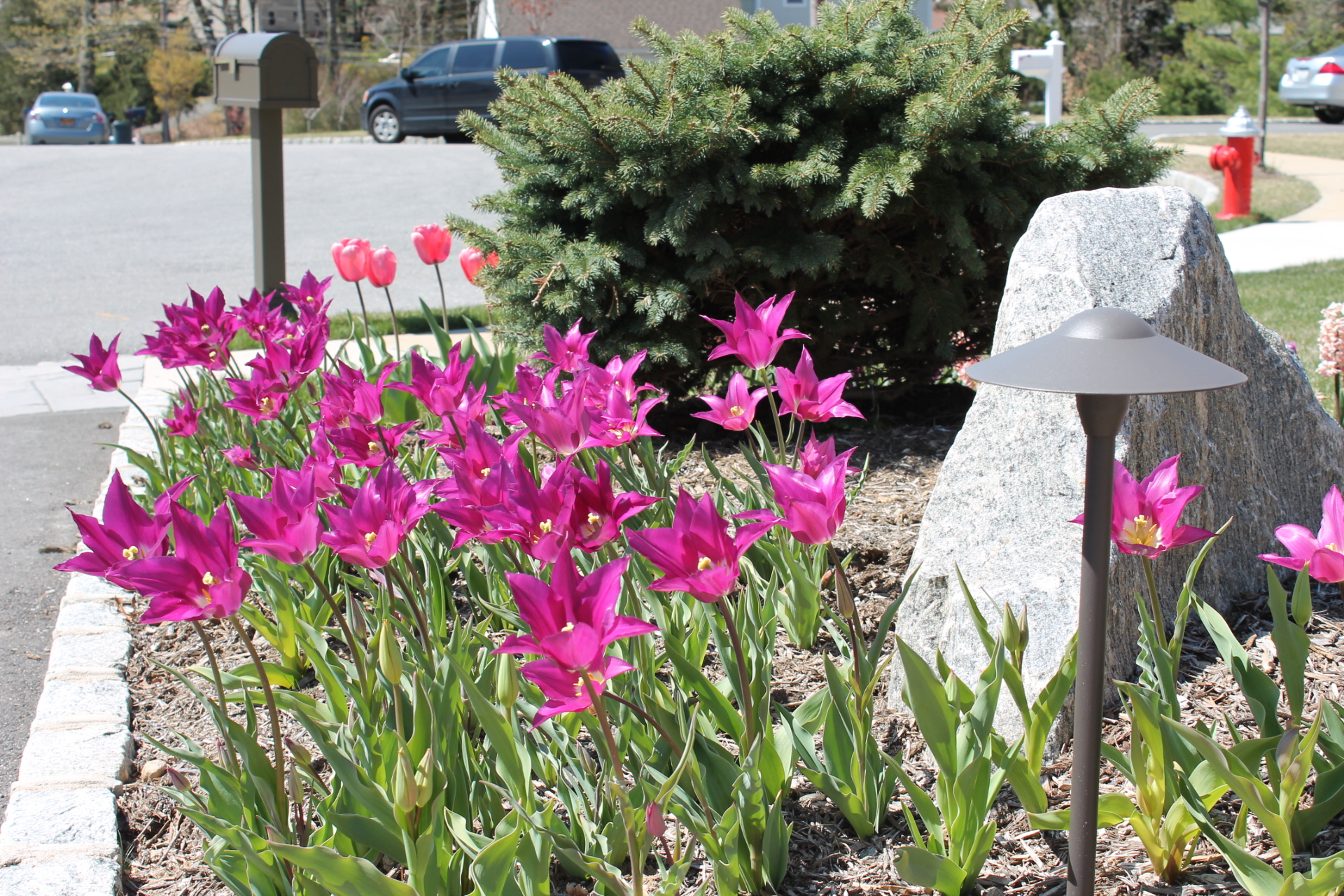
Parrot Tulips

Parrot Tulips

Bulbs are a inexpensive solution in providing very early color in your garden beginning in early March through late mid-June.

“The best time for planting bulbs is late October, early November,” says Marc. “Bulbs, such as Daffodils, Tulips, Hyacinths, Allium, Crocus, Lilies, etc. all add their own unique color, texture, height, sun and shade tolerance; and some have fragrance (i.e. – Hyacinths),”  says Marc.

He adds that how you install bulbs is probably the most important aspect of ensuring they flower in the following spring. “Each type of bulb has it’s own specified planting depth and spacing. It is extremely important that you follow this rule (see following depths) — if not, the bulbs will not flower or may not leaf out. In addition, the pointy tip of the bulb must be planted straight up; otherwise the bulb will definitely not perform as intended.

Planting Depths for Spring Bulbs

Alliums: 8 inches

Crocus: 3 inches

Daffodil: 6 inches

Hyacinth: 7 inches

Tulips: 6 inches


Hyacinths

Hyacinths


Tulips

Tulips


Thanks to Marc Wiener, Deck and Patio’s Director of Sales and Landscape Construction,  for his tips today!


Marc Wiener, ASLA

Marc Wiener, ASLA


(Note: All photos are by The Deck and Patio Company except where indicated.)


Water Fountains / Fountainscapes To Match Your Style, Personality and Budget

Looking for an elegant splash or a spray of whimsy in your garden? Passionate about the sound of bubbling water but don’t have the budget or space for a large waterfall or pond? If that’s the case, an attractive water fountain might be the answer.

Those who know Deck and Patio for our larger pond/water feature installations (we’ve done over 300 on Long Island alone) might be surprised at one of our most recent jobs: an attractive garden water fountain that took up hardly any space.

It was done for clients who had recently moved to a new home. When working at their property, one of our team members, Marc Wiener, mentioned that it felt like the garden was missing something — a feature that would offer both the sound and relaxing sight of water movement. The clients agreed that a garden fountain would be an ideal finishing touch in such limited space.

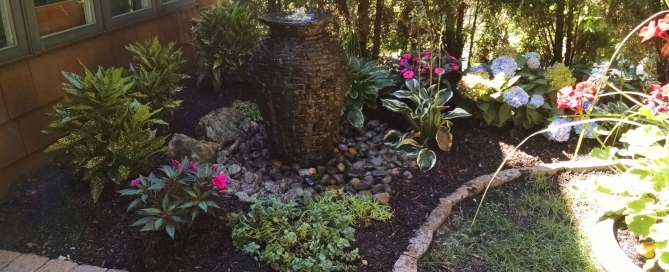
In this case, they asked us to order and install the fountain. However, fountainscapes make a very easy DIY project. The ‘stacked stone urn’ fountain seen here is from Aquascape Inc. (St. Charles, IL). As a certified Aquascape Inc. contractor, Deck and Patio has used their products in many of the ponds and water features we have designed/built across Long Island. As for their fountains, Aquascape offers a nice variety in various styles, sizes and prices.

If you’d like to add one on your own, all you need is a shovel, a wheelbarrow and a level. Then, adding a bag of decorative gravel and mulch, you have a picture-perfect-and-sound-perfect-fountain that not only you will enjoy, but butterflies and birds will appreciate your efforts as well.

The first two photos and first video show the fountain we installed for our new clients. Below these, we include a DIY video from Aquascape followed by a link to the various fountains they have available.


Aquascape Inc. Garden Fountain:

Aquascape Inc. Garden Fountain:

Although we installed this “stacked stone urn” fountain for the clients, they are easy DIY projects. The kits come pretty well fabricated with a catch basin, pump, piping, and in different sizes. The one we used is the smallest (32” tall) — a perfect scale for this garden.


Garden Fountains:

Garden Fountains:

When adding a garden fountain, it is a good idea to locate it near your patio/deck so you can enjoy it whenever you are outside. And if you can position it close to a window, you will be able to not only enjoy the fountain indoors, but also the birds and butterflies who stop by to take a drink.


Hear the water music! 5-second Deck and Patio video of stacked stone urn fountain:


Aquascape has made a great DIY video for installing their fountains:


You can see some of Aquascape’s different fountains available at:

Let us know on our Facebook page or by comment here how your project goes!


In-ground Swimming Pool Trends: What’s Making a Splash?

Talk about making a splash with beautiful backyard escapes! Swimmingpool.com recently highlighted some of the hottest trends in swimming pool design under such sub-headings as: “Attached Hot Tubs,” “Hardscapes,” “Geometric Design,” and “Go Big at Home.”

We can attest to much of the specifics of their post. As Long Island swimming pool designers and builders, we’ve been including many of these amenities for some time. Here’s some examples of how Deck and Patio has incorporated these trends into swimming pools we’ve done for a few of our savvy clients:


Attached Hot Tubs:

Attached Hot Tubs:

According to Swimmingpool.com, a growing trend is to “make the hot tub appear ‘invisible’ in the design.” These spa beauties are often placed with walkways or steps as you see here.

For these clients, an up-to-date style wasn’t the only inspiration for the design. With three young children, safety had become a major concern and they also wanted an automatic pool cover. Designing a geometric pool with a built-in spill-over spa recessed inside the pool allowed us to give them one automatic cover for both bodies of water. In addition, special automation allows them to isolate the spa and heat only the spa water.


Raised Spas:

Raised Spas:

In order to better view a beautiful pool when in the spa, another trend covered under Attached Hot Tubs is elevating spas “above” the pools. Indeed, we proved this a stunning choice for an existing pool by installing a portable Bullfrog Spa with a beautiful natural stone raised above the pool.

Special plumbing was added to regulate the new spa’s sheer descent water feature: water spills from the fire bowl into the hot tub; in turn, spa water flows out into the pool for a beautiful hot springs/Roman pool effect, and, of course, you have the perfect vantage point to enjoy the pool.


In-ground Swimming Pool “Hardscapes”:

In-ground Swimming Pool “Hardscapes”:

Sometimes, only elegance will do. One of the trends listed for pool hardscapes is Travertine and we have used it for some of our clients such as in this pool surround. Cool even in the heat of summer, Travertine is a type of limestone and is quite different from marble or granite. In climates such as the Northeast, with our freeze/thaw conditions, we’ve found that where Travertine is quarried determines how practical it is. More vital Travertine info.


Geometric In-ground Pool Design:

Geometric In-ground Pool Design:

Free-form has been popular for a long time, and frankly still is, but there is a trend back to the geometric design. Here the striking geometric pool, with sheer descent waterfalls, is surrounded by a stunning patio in complementary random geometric patterns.

The steps at the far end of the pool — part of a natural retaining wall of boulders and plantings — lead to a delightful landscaped wilderness where pool equipment has been artfully hid.


Custom In-ground Swimming Pool Features:

Custom In-ground Swimming Pool Features:

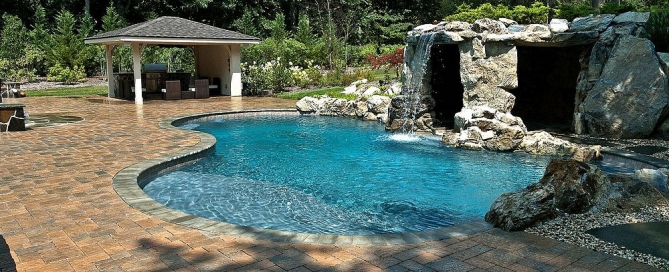
Under Swimmingpool.com’s trend “Go Big at Home” doesn’t mean building huge pools necessarily, but this trend is for incorporating ever more custom pool features. Here for drama you see a high waterfall spilling over a romantic grotto with spa inside. A gazebo with outdoor great room, elegant patio surround for entertaining and sunbathing, and lush colorful landscaping are just some of this backyard oasis’ amenities.


July 4th Weekend: Plant Some Zinnias for Long Lasting Color

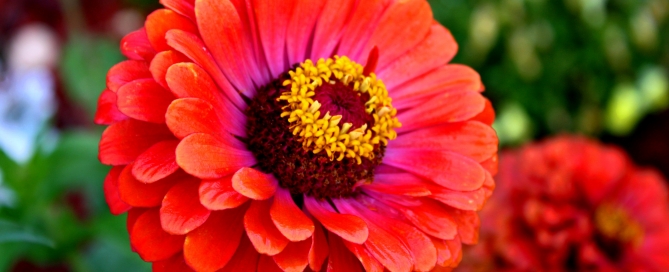
To enjoy three or more months of bright color, why not plant some Zinnia seeds when you are out barbecuing over July 4th weekend? These plants don’t like to be moved about, so seeds are not only an easy and inexpensive way to go, but the Zinnias will thank you for it.


red_zinnia


They should spring up nicely within 4-6 weeks and will last until the first frost!

Tip: These colorful beauties like sun and good drainage; plant them at least 4″ apart (up to a foot if plants are large…they hate being crowded together); fertilize every 4-6 weeks. Added bonus: butterflies love them.

They’re in the daisy family, so if you can’t resist, go ahead, find out if he or she loves you.

Happy 4th everyone!


stock-footage-common-zinnia-zinnia-violacea-syn-zinnia-elegans


Go to Top